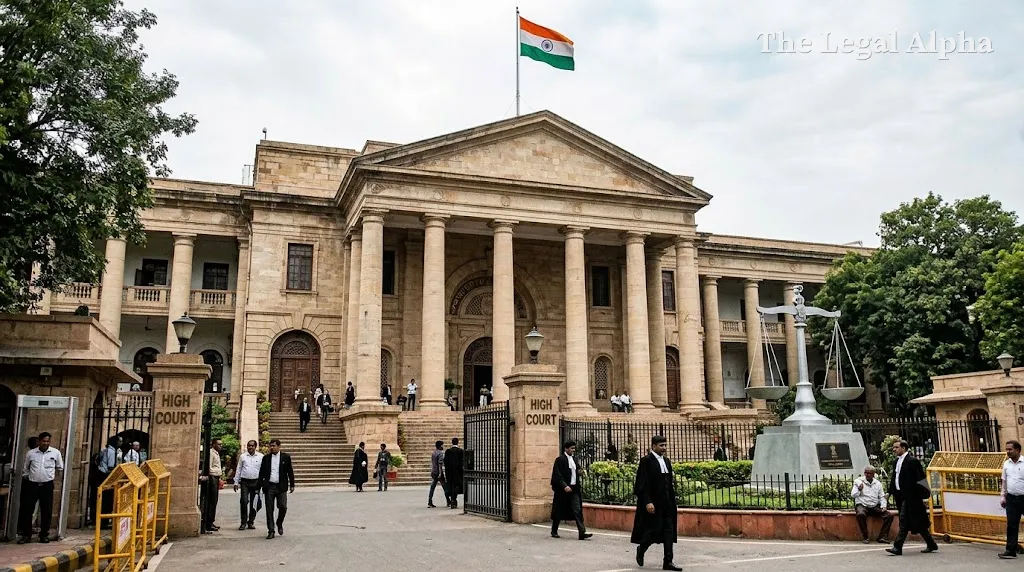
High Court Quashes Look Out Circular Against US Citizen in Matrimonial Dispute, Rebuffs State Over Lack of Judicial Order for Biometrics

The Punjab and Haryana High Court directed the Faridabad police administration to immediately revoke a Look Out Circular (LOC) issued against a United States citizen and long-time non-resident Indian (NRI) who faced domestic violence allegations stemming from a fractured marriage.
The petitioner, an NRI living in the US for over twenty-five years, had married an Indian woman in the United States, where the couple had two children before their marriage ended in a dissolution decree passed by an American court in August 2025. Following the separation, the former spouse returned to India with their children. Soon after, her father lodged a criminal complaint in Faridabad in April 2025, accusing the petitioner of domestic violence and criminal intimidation.
When the petitioner landed in Chandigarh in early October, immigration authorities briefly detained him under an active LOC requested by the Faridabad police. He was permitted to leave only after executing an undertaking. Challenging the travel restriction, the petitioner moved the High Court to safeguard his right to return abroad without coercive hindrances.
Legal Topic
Area of Law: Criminal Procedure / Constitutional Law
Sub-topic: Look Out Circulars / Right to Travel / Investigative Powers and Biometrics
Core Legal Issue
The core legal dispute turned on whether law enforcement authorities can keep an LOC operational to restrict personal liberty and prevent foreign travel merely because an accused declines voluntary biometric profiling, particularly when no judicial magistrate has authorized the collection of such measurements and a superior court has already shielded the individual from coercive action.
Specifically, the court examined whether the statutory and procedural threshold for sustaining an LOC—a mechanism reserved for securing attendance in severe or heinous offences—was satisfied in a private matrimonial dispute where protective interim relief was already active in favor of the accused.
What Did the Court / Authority Decide?
The Punjab and Haryana High Court ruled that the Faridabad police lacked valid legal justification to maintain the travel restriction against the petitioner.
The court specifically rejected the prosecution’s resistance based on the accused's refusal to voluntarily give biometric samples, clarifying that investigative agencies cannot extract biometrics at will without securing a proper order from a competent magistrate. Taking note of a previous order passed by a coordinate bench that had already stayed all coercive steps under the underlying FIR, the court determined that keeping the circular alive served no permissible legal purpose. The High Court ordered the Commissioner of Police, Faridabad, to issue formal withdrawal instructions for the LOC within two days.
Key Legal Points
-
Mandatory Judicial Oversight for Biometrics: Police agencies cannot withhold clearance or justify travel impediments over uncollected biometric data without obtaining a formal order from a competent judicial magistrate under applicable statutory procedures.
-
Incompatibility with Coercive Restraints: An LOC cannot be kept active when a coordinate bench of a constitutional court has already granted interim protection prohibiting coercive measures in the underlying criminal case.
-
Proportionality in Marital Disputes: The exceptional machinery of travel bans and border intercepts must not be deployed arbitrarily in matrimonial disagreements or non-heinous allegations where no flight risk evading an active trial has been substantiated.
-
Protection of Freedom of Movement: Administrative look-out directives remain strictly subject to Article 21 standards, ensuring that an individual’s fundamental right to travel abroad is not curtailed on untenable procedural pretexts.
Relevant Law
-
Article 21 of the Constitution of India: Guaranteeing the right to personal liberty, which encompasses the right to travel abroad.
-
Criminal Procedure (Identification) Act, 2022 (and corresponding CrPC / BNSS provisions): Governing the statutory parameters and requirement of magisterial orders for directing an accused to yield biometrics or measurements.
-
Ministry of Home Affairs Consolidated LOC Guidelines: Directives establishing that LOCs must generally be confined to serious, cognisable offences or cases where an individual deliberately evades court summons and arrest warrants.
-
Sections on Cruelty and Criminal Intimidation under Indian Penal Law: Underlying offences invoked in matrimonial complaints.
Arguments of the Parties
Petitioner
Counsel for the petitioner submitted that:
-
The marriage was solemnized abroad and formally dissolved by a US court decree in August 2025, making the belated Indian criminal complaint untenable.
-
The allegations did not involve any heinous or grave penal offence that would justify blacklisting at international borders.
-
A coordinate bench had already granted interim protection shielding the petitioner from coercive steps, and a separate petition seeking the quashing of the FIR was actively pending before the court.
-
Restraining his departure to the US, where he has resided and worked for over a quarter of a century, constituted an unlawful deprivation of liberty.
Respondent / State
The State opposed the plea on the following grounds:
-
The petitioner had refused to submit his biometric measurements during the investigative process.
-
The pending inquiry necessitated his availability within the jurisdiction, justifying the persistence of the travel alert until statutory and investigative formalities were fully complied with.
Why Does It Matter?
This ruling reinforces crucial curbs on the widespread misuse of Look Out Circulars as routine administrative leverage in private matrimonial rows. It is common for overseas residents entangled in matrimonial litigation to find themselves barred from exiting the country due to unilateral police alerts triggered upon arrival.
By underscoring that biometrics cannot be demanded as an extralegal prerequisite to revoke an LOC without a magisterial order, the High Court reiterates the limits of police power during criminal investigations. The decision provides meaningful guidance for trial courts and border authorities, reaffirming that when an accused is protected by a judicial stay against coercion, executive authorities cannot bypass that shield by weaponizing border look-out mechanisms.
Legal Takeaway
Investigative authorities cannot sustain a Look Out Circular solely because an accused refuses to provide biometrics unless a competent magistrate has explicitly ordered their collection. Where a court has already barred coercive action in a non-heinous matrimonial dispute, keeping an LOC in force constitutes an unjustified infringement on the right to travel.
Sources
Primary Source:
-
Judicial Order of the Punjab and Haryana High Court, Chandigarh, issued November 2026, directing the Commissioner of Police, Faridabad, to withdraw the Look Out Circular.
Additional Sources:
-
High Court reporting and registry updates on matrimonial jurisdiction and border intercept orders (November 2026).
-
Ministry of Home Affairs Office Memoranda on Issuance of Look Out Circulars in Criminal Matters.