Delhi HC Halts FSSAI Action on PepsiCo, Monster 'Energy Drink' Label
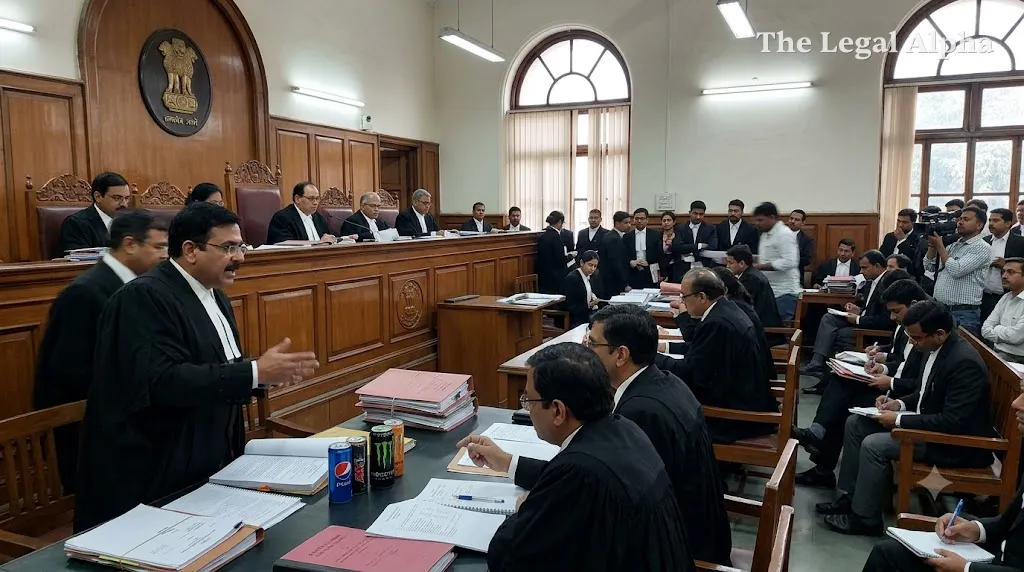
Court: High Court of Delhi at New Delhi
Bench: Justice Amit Mahajan
Date of Order: October 06, 2026 | Reported: October 07, 2026 (LiveLawBiz ID: 553479)
Subject: Food Safety Regulations | Caffeinated Beverages & 'Energy Drink' Descriptor
In September 2024 / 2026, the Food Safety and Standards Authority of India (FSSAI) issued administrative orders and letters directed at manufacturers and distributors of caffeinated beverages across India—including major global and domestic beverage brands such as PepsiCo India Holdings Private Limited (manufacturers of Sting), Monster Energy India Private Limited (Monster Energy), and Reliance Retail (Campa Energy).
In the impugned directives, FSSAI abruptly ordered these beverage companies to immediately stop using and drop the descriptor and branding nomenclature 'Energy Drink' from all product packaging, labels, and commercial advertising. Furthermore, FSSAI instructed state food safety commissioners and licensing officers to initiate coercive enforcement measures, including seizure of finished goods and packaged stocks bearing the 'Energy Drink' label. The regulatory authority took the stance that the term 'Energy Drink' is not a statutorily defined product category under the Food Safety and Standards (Food Products Standards and Food Additives) Regulations, 2011—where such drinks are classified under sub-regulation 2.10.6 as 'Caffeinated Beverages'—and that using the word 'Energy' misleadingly suggests enhanced physical or mental stamina.
These coercive directives were issued summarily without issuing any formal show-cause notice or granting any pre-decisional hearing to the beverage manufacturers. Facing massive commercial disruption, supply chain paralysis, and the imminent seizure of hundreds of crores of rupees worth of packaged inventory already distributed across wholesale and retail channels, Monster Energy and PepsiCo approached the High Court of Delhi by filing writ petitions under Article 226 of the Constitution challenging the FSSAI directives.
Legal Topic
Food Safety Regulation & Administrative Law – Food Safety and Standards Act, 2006 (FSS Act); Food Safety and Standards (Food Products Standards and Food Additives) Regulations, 2011 (Sub-regulation 2.10.6: Caffeinated Beverages); Food Safety and Standards (Packaging and Labelling) Regulations; Principles of Natural Justice (Audi Alteram Partem: Requirement of Prior Show-Cause Notice Before Imposing Coercive Commercial Restrictions); Regulatory Powers of FSSAI vs. Legitimate Marketing Descriptors; Article 19(1)(g) Freedom of Trade and Commerce; Interim Relief and Protection of Existing Inventory.
Core Legal Issue
Whether the Food Safety and Standards Authority of India (FSSAI) can unilaterally prohibit the established commercial descriptor 'Energy Drink' for licensed caffeinated beverages and direct coercive seizures of packaged goods without issuing a show-cause notice or affording a prior hearing to manufacturers, and whether existing manufactured inventory can be seized during the pendency of judicial review.
What Did the Court / Authority Decide?
The High Court of Delhi at New Delhi, through a Single Judge Bench comprising Justice Amit Mahajan, granted substantial interim relief to both PepsiCo India Holdings Private Limited and Monster Energy India Private Limited, staying the coercive operation of the impugned FSSAI directives.
Justice Amit Mahajan passed identical interim orders in both writ petitions on October 6, 2026, noting that the FSSAI directives were issued in patent violation of the principles of natural justice without issuing a show-cause notice or granting any opportunity of hearing to the affected manufacturers. The Court held that executive orders carrying severe penal and commercial consequences cannot be enforced unilaterally without adhering to procedural fairness. Consequently, the High Court directed that no coercive action—including seizure of products or disruption of supply chains—shall be taken by FSSAI or state food safety authorities against the companies or their distributors. The Court specifically permitted PepsiCo and Monster Energy to exhaust and sell their existing manufactured inventory and packaged stocks bearing the 'Energy Drink' label. The Bench issued formal notice to FSSAI and the Union of India, directing them to file counter-affidavits while maintaining the stay until the next date of hearing.
Key Legal Points
- Unilateral Directives Violate Natural Justice: Justice Amit Mahajan observed that FSSAI passed the impugned banning directives and seizure instructions without issuing a prior show-cause notice or granting a pre-decisional hearing, violating the foundational principle of audi alteram partem.
- Protection of Existing Packaged Stocks: The High Court granted crucial interim relief by permitting manufacturers and retailers to clear, sell, and distribute their existing manufactured stocks labeled with 'Energy Drink' without threat of confiscation or penalty.
- Stay on Coercive Seizures: The Court restrained FSSAI and state food safety officers from carrying out product seizures, cancellations of licenses, or punitive actions against retailers, wholesalers, and manufacturers regarding existing inventory.
- Consistency with Red Bull Coordinate Bench Precedent: The interim order follows the legal trajectory established by the coordinate bench of Justice Sanjeev Narula in Red Bull India Pvt. Ltd. v. FSSAI [W.P.(C) 14413/2026], which set aside a similar unilateral FSSAI label directive for procedural invalidity.
- Regulatory Scrutiny on 'Caffeinated Beverage' Nomenclature: The High Court will substantively examine whether the statutory classification of 'Caffeinated Beverages' under Regulation 2.10.6 legally bars brand owners from using the descriptive commercial term 'Energy Drink' when all caffeine, taurine, and statutory warning standards are strictly satisfied.
Relevant Law
- Section 16 & Section 23, Food Safety and Standards Act, 2006 (FSS Act): Delineates the statutory duties and functions of the Food Safety Authority regarding food standards, packaging, and labeling regulations.
- Regulation 2.10.6, Food Safety and Standards (Food Products Standards and Food Additives) Regulations, 2011: Prescribes safety standards, caffeine limits (145 mg/L to 300 mg/L), taurine limits, and mandatory advisory warnings (e.g., 'Not recommended for children, pregnant or lactating women') for Caffeinated Beverages.
- Section 24, Food Safety and Standards Act, 2006: Prohibits misleading advertisements and unfair claims regarding the nutritional value, efficacy, or characteristics of food products.
- Article 226, Constitution of India: Confers writ jurisdiction upon the High Court to issue orders, directions, or writs for the enforcement of fundamental rights and to correct jurisdictional overreach and breaches of natural justice by statutory bodies.
- Red Bull India Pvt. Ltd. v. FSSAI [W.P.(C) 14413/2026, Decided on September 29, 2026]: Coordinate Bench ruling of the Delhi High Court setting aside FSSAI's unilateral ban on the 'Energy Drink' label for failure to comply with the basic rules of natural justice.
Arguments of the Parties
- Contentions of the Petitioners (PepsiCo India & Monster Energy):
- Represented by Senior Advocate Sandeep Sethi (for PepsiCo) and Advocates Udayan Jain and Sandeep Devashish Das (for Monster Energy), the petitioners submitted that their products fully comply with all statutory chemical and safety parameters prescribed for 'Caffeinated Beverages' under Regulation 2.10.6.
- Counsel argued that the term 'Energy Drink' has been a recognized commercial descriptor globally and in India for over two decades, helping consumers identify the nature of the drink alongside mandatory statutory warnings.
- It was submitted that FSSAI's sudden orders were issued without a show-cause notice, without scientific consultation, and without a hearing, causing an immediate threat of arbitrary stock seizures worth hundreds of crores.
- Counsel contended that prohibiting the term without an amendment to the regulations violates their constitutional right to trade under Article 19(1)(g).
- Contentions of the Respondents (FSSAI & Union of India):
- Represented by CGSC Avshreya Pratap Singh Rudy and Counsel Suransh Chaudhary, the respondents argued that the Food Safety Regulations recognize only 'Caffeinated Beverages' and do not contain any category called 'Energy Drinks'.
- Counsel submitted that the word 'Energy' creates a misleading impression among adolescents and consumers that the beverage provides physical nutrition or replenishes metabolic energy, whereas it only contains caffeine stimulants.
- The authority maintained that the directive was issued in the interest of consumer protection and public health under Section 16 of the FSS Act.
Why Does It Matter?
The Indian energy drink and caffeinated beverage market has experienced explosive growth over the last five years, expanding into a multi-billion dollar sector driven by youth consumption, sports marketing, and aggressive retail penetration of brands like Sting, Monster, Red Bull, and Campa Energy. However, the regulatory friction between product innovation and FSSAI standards has generated acute legal uncertainty.
By staying FSSAI’s abrupt ban and preventing disruptive nationwide product seizures, Justice Amit Mahajan’s order protects the food and beverage industry from regulatory unpredictability and administrative high-handedness. The ruling reinforces that even statutory regulators vested with public health mandates cannot bypass constitutional due process or inflict hundreds of crores in financial losses without giving notice and a hearing. The impending final adjudication will set a nationwide legal benchmark defining the boundary between statutory product classifications and commercial brand descriptors in India.
Legal Takeaway
Statutory regulators such as the Food Safety and Standards Authority of India (FSSAI) cannot issue coercive commercial bans, mandate immediate packaging overhauls, or direct the seizure of licensed goods without issuing a prior show-cause notice and affording an opportunity of hearing to affected manufacturers. Where an administrative directive is challenged for gross violation of natural justice, the High Court under Article 226 will grant interim protection to prevent disruption of lawful trade and permit manufacturers to exhaust existing packaged inventories.
Sources (Primary & Additional)
- Primary Judicial Order: High Court of Delhi at New Delhi, Monster Energy India Private Limited v. Food Safety and Standards Authority of India & Ors. and PepsiCo India Holdings Private Limited v. FSSAI & Ors. [Writ Petitions heard and interim orders passed on October 06, 2026], per Justice Amit Mahajan. Delhi High Court Repository / LiveLawBiz.
- Authoritative Legal Reporting (LiveLawBiz): Riya Rathore, \"Delhi High Court Stays FSSAI Orders Forcing PepsiCo, Monster Energy To Drop 'Energy Drink' Label\" (Article ID: 553479, Published on October 07, 2026). LiveLawBiz Article.
- Legal News Coverage (Bar & Bench): Prashant Jha, \"Delhi High Court says PepsiCo, Monster can sell existing stocks of 'energy drinks' but can't make more\" (Published on October 06-07, 2026). Bar and Bench Report.
- Coordinate Bench Precedent: High Court of Delhi at New Delhi, Red Bull India Pvt. Ltd. v. FSSAI [W.P.(C) 14413/2026, Decided on September 29, 2026], per Justice Sanjeev Narula, setting aside FSSAI's unilateral label directive on natural justice grounds. LiveLawBiz Top Stories.