Centre Defends Central Delhi Internet Suspension in Supreme Court, Denies Wilful Contempt
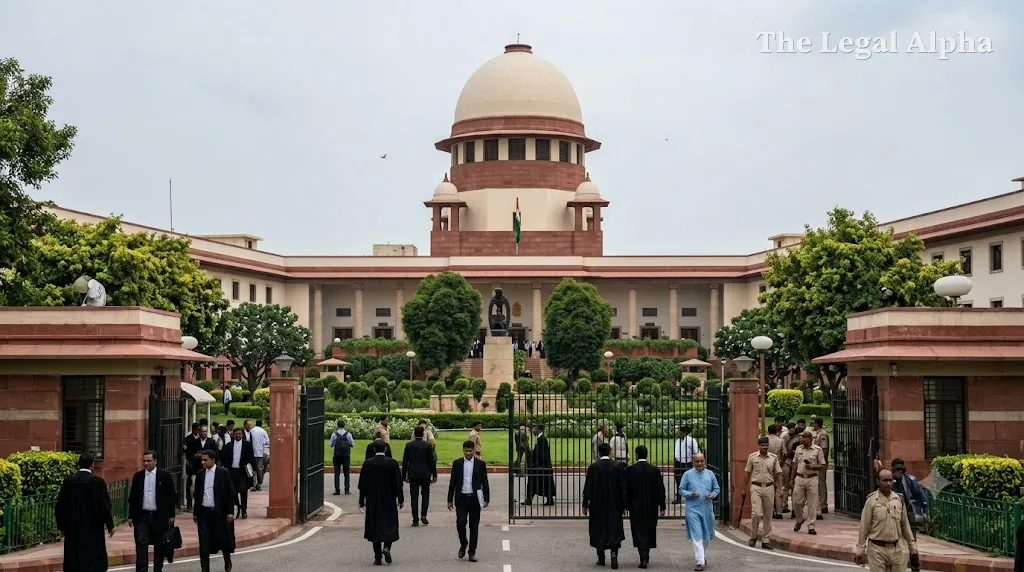
The Union Government has submitted a counter-affidavit before the Supreme Court of India justifying a 24-hour suspension of mobile internet connectivity across parts of central Delhi on October 10. The response follows contempt notices issued by the apex court to top officials, including Union Home Secretary Govind Mohan, over alleged non-compliance with earlier judicial directions regarding public transport and unhindered telecommunication access during a political protest.
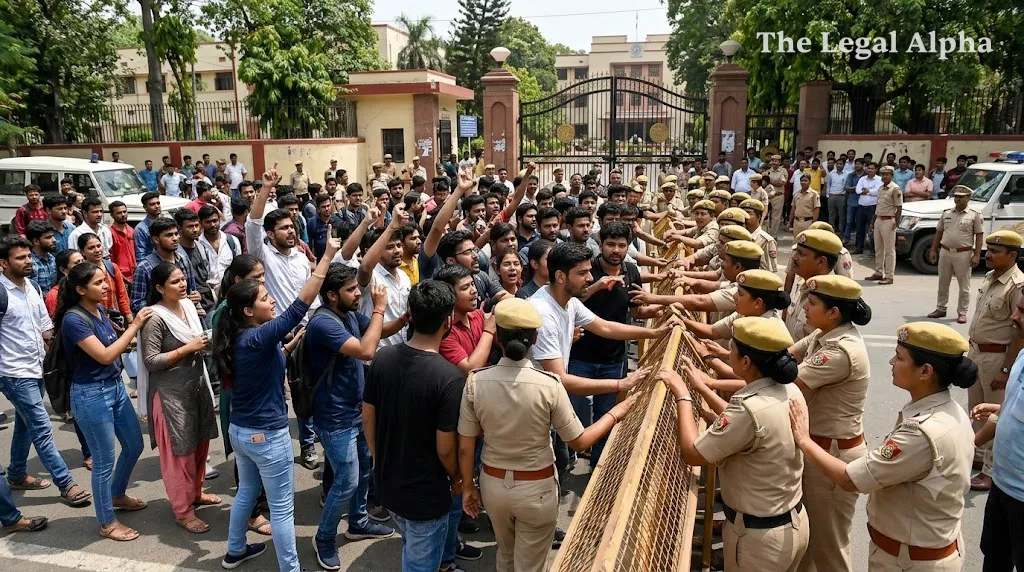
While the Home Secretary tendered an unconditional apology, the Centre firmly contested any charge of wilful disobedience. The government maintained that the temporary restriction on cellular data was an essential, localized measure requested by the Delhi Police to avert a severe breakdown of public order during an unauthorized march toward Raisina Hill.
Legal Topic
-
Area of Law: Constitutional Law & Administrative Law
-
Sub-topic: Contempt of Court / Freedom of Speech & Internet Suspension / Maintenance of Public Order
Core Legal Issue
The controversy turns on whether the executive's unilateral imposition of a localized mobile internet blackout constitutes wilful disobedience of explicit Supreme Court instructions to maintain unhindered communications during public protests.
At a systemic level, the court is addressing the threshold between executive discretion to manage emergent law-and-order threats and the constitutional mandate that speech and digital connectivity restrictions adhere strictly to established proportionality tests and procedural safeguards.
What Did the Court / Authority Decide?
The Supreme Court previously issued contempt notices on October 11 to the Union Home Secretary, the Delhi Police Commissioner, and the Chairperson of the Delhi Metro Rail Corporation for restricting transit services and shutting off internet access despite earlier protective directions.
In its latest counter-affidavit, the Centre has:
-
Tendered an unconditional apology on behalf of the Union Home Secretary while seeking discharge from the contempt proceedings.
-
Formally applied for a modification of the Supreme Court's October 11 direction, urging the bench to clarify that temporary internet suspensions remain permissible when carried out strictly under statutory authority and procedural safeguards.
The contempt proceedings and the application for modification remain pending adjudication before the Supreme Court.
Key Legal Points
-
Absence of Wilful Defiance: The executive argued that the element of intentional disregard required to sustain contempt was absent, stating the measure was a bona fide preventive step to secure public safety.
-
Application of Proportionality: The Centre framed the restriction as geographically and temporally constrained, pointing out that it spanned a four-kilometer radius for 24 hours and exempted fixed-line broadband and Wi-Fi networks.
-
Reconciliation of Directives with Statutory Powers: The government sought an explicit caveat in the court's stance to avoid a blanket judicial bar on executing statutory suspension powers during volatile security situations.
-
Scrutiny Under Established Standards: The intervention tests executive adherence to procedural publishing and review mandates laid down in landmark telecommunications jurisprudence.
Relevant Law
-
Constitution of India: Article 19(1)(a) (Freedom of speech and expression), Article 19(1)(g) (Freedom of trade and profession), and Article 129 (Supreme Court’s power to punish for contempt).
-
Telecommunications Act, 2023: Section 20(2)(b) (Powers of the Central Government to suspend telecommunication services during a public emergency or in the interest of public safety).
-
Telecommunications (Temporary Suspension of Services) Rules, 2024: Procedural standards, duration caps, and mandatory review committee oversight.
-
Judicial Precedent: Anuradha Bhasin v. Union of India (2020), which established that digital communication is constitutionally protected under Article 19, indefinite blackouts are illegal, and all suspension orders must pass the four-pronged test of proportionality and undergo public publication.
Arguments of the Parties
The State / Union Government
The Centre submitted that the 24-hour suspension within a four-kilometer zone around Raisina Hill was a direct, necessary response to specific operational intelligence. Authorities contended that protest organizers planned to march despite being formally denied permission, raising credible fears of civil disturbance comparable to previous volatile demonstrations. The government argued that limiting the shutdown to mobile data while preserving broadband ensured minimum public disruption, satisfying the doctrine of least restrictive means. It further asserted that exercising valid statutory powers under emergent conditions cannot be categorized as deliberate or contemptuous defiance of judicial authority.
Contempt Petitioners / Aggrieved Parties
The petitioners argued that executive agencies acted in direct contravention of binding Supreme Court orders instructing authorities not to cripple communication networks and public transit. They contended that arbitrary mobile internet blackouts circumvent constitutional rights, disrupt civic mobility, and disregard procedural duties—including the mandatory publication of suspension orders required under Anuradha Bhasin to enable immediate judicial review.
Why Does It Matter?
This development highlights the ongoing tension between public-order policing and constitutional limits on digital shutdowns. By seeking a modification of the court's order, the Union government is asking the judiciary to reinforce administrative flexibility under the Telecommunications Act, 2023.
If the Supreme Court adopts a strict contempt standard, it will send a firm signal to administrative and police authorities that generic law-and-order concerns cannot override specific judicial commands protecting fundamental communication rights. Conversely, any modification recognizing executive leeway during flashpoints will delineate how far authorities can deploy localized digital blockades without triggering judicial sanction.
Legal Takeaway
Contempt proceedings require proof of deliberate, wilful disobedience rather than an emergency administrative action taken under statutory authority. However, executive authorities invoking public order to suspend communications must continue to satisfy the constitutional tests of necessity, proportionality, and transparency established in landmark precedent.
Sources
Primary Source:
-
Counter-Affidavit filed on behalf of the Union Home Secretary, Ministry of Home Affairs, in the Supreme Court of India (In re: Contempt Petition concerning October 10 Delhi restrictions).
-
Anuradha Bhasin v. Union of India, (2020) 3 SCC 637.
Additional Sources:
-
Telecommunications (Temporary Suspension of Services) Rules, 2024.
-
Mid-Day / Mathrubhumi / Times Now court reports on the Centre's response to the Supreme Court contempt notice (October 15, 2026).