California Appellate Court Rules Municipalities Can Face Damages for Prolonging ADU Permits
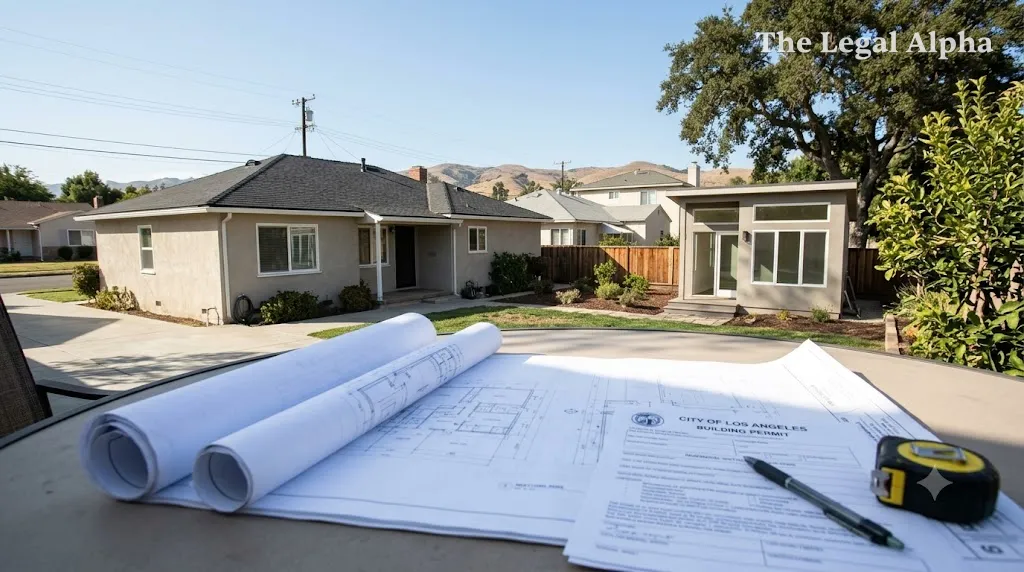
A California appeals court has revived a damages lawsuit brought by a residential property owner against the City of Palos Verdes Estates over a three-year administrative delay in approving an accessory dwelling unit (ADU).
The homeowner, Wei Shi, applied for a municipal permit in 2020 to construct an ADU alongside his primary home. Instead of granting ministerial review as mandated by California housing statutes, municipal authorities subjected the project to discretionary reviews and protracted planning demands, taking until 2023 to issue the final permit. Alleging the delay caused more than $1 million in escalating construction expenses, professional fees, extra interest charges, and lost property utility, Shi filed suit under the California Government Claims Act. While a trial court initially threw out the lawsuit, the California Court of Appeal overturned that dismissal, establishing that local governments cannot evade liability when they stall state-mandated housing approvals.
Legal Topic
-
Area of Law: Municipal Law / Real Estate & Land Use
-
Sub-topic: Government Tort Liability / Accessory Dwelling Units (ADU) Statutory Mandates
Core Legal Issue
The dispute centers on California Government Code section 815.6, which imposes government liability when an agency breaches a mandatory statutory duty designed to prevent the specific injury suffered by a claimant.
The primary question before the court was whether California’s statutory deadlines and ministerial requirements for ADU permit reviews (codified under former Government Code section 65852.2 and renumbered under section 66317) were enacted solely to alleviate California’s broad housing crisis, or whether they were also designed to protect individual applicants from the economic fallout caused by municipal foot-dragging.
What Did the Court Decide?
The California Court of Appeal, Second Appellate District (Division Four), unanimously reversed the trial court's judgment sustaining the city's demurrer.
The appellate panel held that California's statutory scheme imposes a mandatory, non-discretionary duty on municipalities to process and act on eligible ADU applications swiftly. The court explicitly determined that permit applicants like Shi are intended beneficiaries of this legislation and that financial losses resulting from bureaucratic stalls are precisely the injury the statute sought to curtail.
Crucially, the decision does not find the city liable on the merits or award damages yet; rather, it rules that Shi’s complaint validly states a recognized cause of action under section 815.6, clearing the lawsuit to proceed toward trial in the Los Angeles County Superior Court.
Key Legal Points
-
Direct Beneficiaries of Housing Mandates: While statutory ADU reforms serve statewide public policy by expanding residential density, the specific duty imposed on local planning departments is explicitly intended to protect individual permit applicants from regulatory red tape.
-
Overcoming Government Immunity via Section 815.6: A public entity can be held liable for monetary damages under the Government Claims Act if a mandatory enactment intended to prevent individual project delays is breached and proximately causes financial harm.
-
Ministerial Duty Means No Discretionary Stalls: Local authorities have no legal discretion to layer discretionary hearings, subjective architectural hurdles, or unauthorized planning procedures onto ministerial ADU applications.
-
De Novo Review on Demurrer: The appellate court reviewed the pleading dismissal independently, concluding that the trial court took an overly narrow view of legislative intent by treating statewide policy goals and individual protections as mutually exclusive.
Relevant Law
-
California Government Code Section 815.6: The statutory basis establishing public entity liability for failure to discharge a mandatory statutory duty.
-
California Government Code Section 66317 (formerly Section 65852.2): California's streamlined accessory dwelling unit statute mandating ministerial, non-discretionary, and prompt municipal review of conforming ADU applications.
-
California Code of Civil Procedure Section 430.10: Standards governing demurrers for failure to state facts sufficient to constitute a cause of action.
Arguments of the Parties
Appellant / Plaintiff (Wei Shi)
Shi argued that state law unambiguously commanded the city to act ministerially and without delay on his qualifying application. He asserted that the statutory time limits were enacted precisely to prevent municipalities from running applicants through endless bureaucratic hurdles, making private property owners direct beneficiaries entitled to seek compensation when bad-faith or unlawful delays cause demonstrable financial harm.
Respondent / Defendant (City of Palos Verdes Estates)
The city contended that California’s ADU legislation was enacted exclusively to address the statewide housing shortage for the general public, not to safeguard the private financial investments or profits of individual homeowners. Consequently, the municipality argued that Shi suffered no legally compensable injury under Government Code section 815.6 because the statute was never designed to protect individual developers or applicants from economic loss.
Why Does It Matter?
For years, local governments and affluent municipalities across California have attempted to resist state-mandated housing expansion by weaponizing administrative delays, repetitive design comments, and slow-walked review procedures. Because local agencies frequently rely on sovereign immunity shields against monetary damages, applicants typically had little practical remedy beyond filing an expensive writ petition to force a permit decision.
This ruling reshapes the land-use dynamic in California. By confirming that municipal planning departments can face direct civil liability and substantial monetary damages when they blow past statutory deadlines or impose unauthorized discretionary review, the appellate court provides genuine financial teeth to state housing mandates. City councils and building departments will now have to weigh the risk of seven-figure municipal liability when choosing to obstruct or delay conforming ADUs.
Legal Takeaway
State-mandated time limits for ministerial housing approvals are not aspirational guidelines—they create an enforceable mandatory duty under government tort law. When a city unlawfully delays an ADU permit through unauthorized administrative hurdles, affected homeowners can sue the local government for resulting economic damages.
Sources
Primary Source:
-
Shi v. City of Palos Verdes Estates, No. B350195 (Cal. Ct. App., 2d Dist., Div. 4, Oct. 23, 2026) (Certified for Publication; Los Angeles County Super. Ct. No. 24TRCV03628).
Additional Sources:
-
California Government Code §§ 815.6, 66317 (former § 65852.2).
-
Appellate records and statutory filing history via California Appellate Courts and Justia Law.