Calcutta HC Bars Fresh Factual Pleas in Section 37 Arbitration Appeals
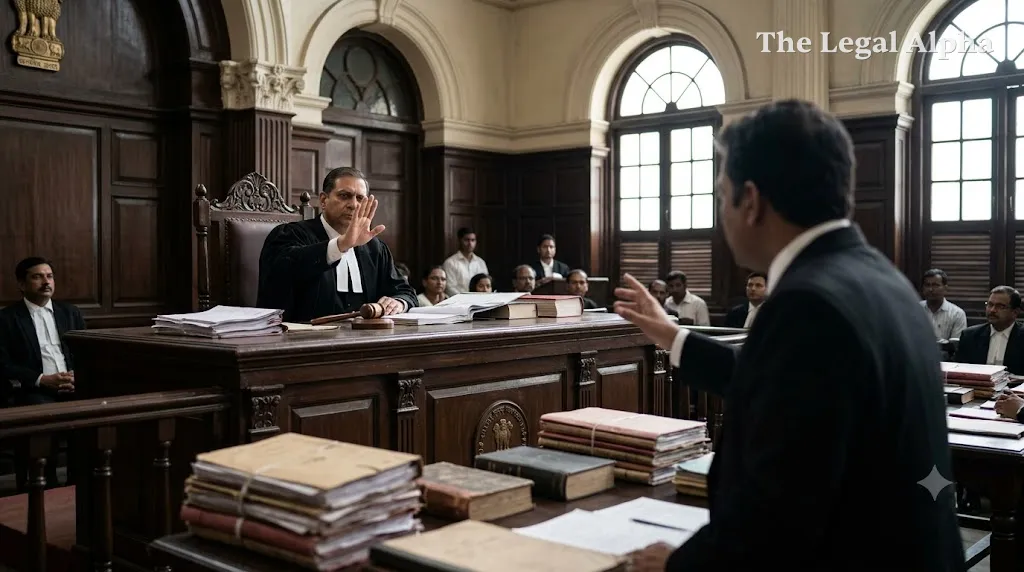
Court: High Court at Calcutta (Commercial Appellate Division)
Bench: Justice Debangsu Basak & Justice Aryak Dutt
Case Record: FMAT No. 219 of 2021 | Citation: 2026 LLBiz HC (CAL) 247
Date of Pronouncement: October 07, 2026 (LiveLawBiz ID: 553582)
Subject: Arbitration Act (Section 37 & 34) | Bar on Fresh Factual Pleas in Appeal
On September 5, 1997, state-owned telecom enterprise Bharat Sanchar Nigam Limited (BSNL) entered into a registered lease agreement with private landlords Joysri Sengupta and another for commercial premises located at Shyamnagar, West Bengal, to set up and operate a telephone exchange.
On March 21, 2006, the Appellate Authority of the West Bengal Pollution Control Board directed BSNL to cease operating its diesel generator set at the leased premises and permitted operation of the facility only until August 31, 2006. In compliance, BSNL shifted the active telephone exchange equipment to adjoining premises. Subsequently, BSNL issued a termination notice dated February 23, 2007, purporting to terminate the lease with effect from August 23, 2007, and stopped paying rent.
The lessors initiated dispute resolution, and on April 4, 2013, the Calcutta High Court appointed a Sole Arbitrator. On May 13, 2016, the Sole Arbitrator delivered an arbitral award in favour of the landlords. The arbitrator held that under Clause 7.1 of the lease, six months' previous written notice was mandatory, that notice takes effect only upon communication, and that BSNL’s notice failed to provide the full six-month period. The arbitrator awarded unpaid rent, rejected BSNL’s counter-claim for damages, and awarded ₹3 Lakhs towards costs. BSNL challenged the award under Section 34 of the Arbitration and Conciliation Act, 1996 before the Additional District Judge at Barasat, who dismissed the challenge on March 16, 2020.
BSNL then preferred a commercial appeal under Section 37 of the Arbitration Act [FMAT No. 219 of 2021, Citation: 2026 LLBiz HC (CAL) 247] before the High Court at Calcutta. In its appeal memorandum, BSNL sought for the very first time to question the validity of the lease by invoking Section 106 of the Transfer of Property Act, 1882, and argued that the lease was rendered void under Section 108(B)(e) due to the Pollution Control Board's orders.
Legal Topic
Commercial Arbitration & Property Jurisprudence – Section 37 read with Section 34 of the Arbitration and Conciliation Act, 1996 (Scope and Limits of Appellate Interference); Inadmissibility of Fresh Factual Pleas in Section 37 Appeals; Transfer of Property Act, 1882 (Section 106: Termination Notices; Section 108(B)(e): Avoidance of Lease due to Property Being Rendered Permanently Unfit); Plausibility of Arbitral Interpretations of Contractual Clauses; Arbitrator's Discretion in Awarding Costs.
Core Legal Issue
Whether a party appealing under Section 37 of the Arbitration and Conciliation Act, 1996 can introduce new factual and legal pleas—specifically challenging lease validity under Section 106 or Section 108(B)(e) of the Transfer of Property Act—for the first time before the High Court to impeach an arbitral award, when such pleas were never raised before the Arbitrator or the Section 34 Court.
What Did the Court / Authority Decide?
A Division Bench of the High Court at Calcutta, comprising Justice Debangsu Basak and Justice Aryak Dutt, dismissed BSNL's appeal [FMAT No. 219 of 2021, Citation: 2026 LLBiz HC (CAL) 247], affirming the Barasat Commercial Court's order dated March 16, 2020 and upholding the arbitral award dated May 13, 2016 in its entirety.
Justices Debangsu Basak and Aryak Dutt held that a new plea which depends on facts cannot be raised for the first time in an appeal under Section 37 to impeach an arbitral award. The Bench observed: "In the memorandum of appeal, the appellant has questioned the validity of the lease and relied on Section 106 of the Transfer of Property Act, 1882. This plea was not raised before the learned Arbitrator. As far as the impugned judgment shows, it was not raised before the learned Court below. A new plea which depends on facts cannot be raised for the first time in an appeal under Section 37 to impeach an award." The Court emphasized that the scope of appellate interference under Section 37 cannot exceed the narrow grounds available under Section 34, and appellate courts cannot reappreciate evidence or substitute their views for a plausible interpretation adopted by the arbitral tribunal. Rejecting BSNL's arguments on pollution directions, counter-claims, and costs, the High Court held that the arbitral award suffered from no patent illegality or jurisdictional defect.
Key Legal Points
- New Factual Pleas Barred in Section 37 Appeals: The Division Bench laid down that an appellate court hearing an appeal under Section 37 cannot permit a litigant to introduce fresh factual grounds or statutory defenses (such as Section 106 TPA) that were never pleaded before the arbitral tribunal or the Section 34 court.
- Supervisory Limits Under Section 37: The High Court reaffirmed that Section 37 jurisdiction is strictly supervisory and co-terminus with Section 34. Appellate courts are barred from acting as regular courts of civil appeal, conducting de novo re-appreciation of evidence, or substituting their subjective interpretations.
- Plausible Contractual Interpretation Precludes Interference: The Bench held that the Sole Arbitrator’s construction of Clause 7.1—holding that the termination notice took effect upon communication and did not satisfy the mandatory six-month period—was a possible and plausible contractual view that warrants no judicial disruption.
- Strict Threshold for Lease Avoidance under Section 108(B)(e): The Court noted that BSNL had merely shifted its active telephone exchange to adjacent premises and had failed to demonstrate that the leased premises had become substantially and permanently unfit for the purpose for which they were let out.
- Arbitrator’s Discretion on Costs and Damages Upheld: The High Court affirmed the rejection of BSNL’s counter-claim for damages, noting that its witness lacked personal knowledge, and confirmed the arbitrator's discretionary award of ₹3 Lakhs costs against the public sector appellant.
Relevant Law
- Section 37, Arbitration and Conciliation Act, 1996: Governs appeals against orders setting aside or refusing to set aside an arbitral award under Section 34.
- Section 34, Arbitration and Conciliation Act, 1996: Confines judicial interference with domestic arbitral awards strictly to grounds of patent illegality, public policy violation, or lack of jurisdiction.
- Section 106 & Section 108(B)(e), Transfer of Property Act, 1882: Prescribes the statutory rules governing duration and termination of leases, and rights of a lessee to avoid a lease when the property is destroyed or rendered permanently unfit by unavoidable circumstances.
- MMTC Ltd. v. Vedanta Ltd. (2019) 4 SCC 163: Supreme Court landmark ruling establishing that Section 37 does not permit independent re-adjudication and is confined to verifying whether the Section 34 court exceeded its narrow jurisdiction.
- Associate Builders v. Delhi Development Authority (2015) 3 SCC 49: Supreme Court benchmark precedent ruling that the arbitrator is the ultimate master of quantity and quality of evidence and contractual interpretation.
Arguments of the Parties
- Contentions of the Appellant (Bharat Sanchar Nigam Limited):
- Represented by Advocates Kallol Basu and Suman Banerjee, BSNL submitted that the West Bengal Pollution Control Board’s closure direction made it legally impossible to operate the telephone exchange from the leased premises.
- Counsel argued that the lease was invalid and stood terminated under Section 106 and Section 108(B)(e) of the Transfer of Property Act, 1882.
- It was contended that the arbitrator erred in interpreting the six-month notice clause, improperly rejected BSNL’s counter-claim for damages caused by alleged lessor obstructions, and erroneously imposed ₹3 Lakhs costs.
- Contentions of the Respondents (Joysri Sengupta & Anr.):
- Represented by Advocates Anupa Banerjee and Rohan Shaw, the lessors argued that BSNL was barred from introducing fresh factual pleas regarding Section 106 TPA that were never raised during arbitration or Section 34 proceedings.
- Counsel proved that BSNL continued to occupy the premises and merely shifted active operations next door without establishing that the premises were rendered permanently unfit.
- It was submitted that the arbitrator’s interpretation of Clause 7.1 was thoroughly reasoned and plausible, and that Section 37 does not permit the High Court to sit as a court of appeal over arbitral evidence.
Why Does It Matter?
In Indian commercial dispute resolution, public sector undertakings (PSUs) and institutional litigants frequently treat arbitration as a multi-stage rehearsal—raising basic defenses before the arbitrator, advancing secondary arguments before the Commercial Court under Section 34, and then inventing novel factual and statutory defenses for the first time during High Court appeals under Section 37. This practice undermines the finality of arbitral awards and draws out commercial disputes for decades.
The Calcutta High Court’s Division Bench ruling in BSNL v. Joysri Sengupta delivers a decisive judicial rebuke against this trend. By establishing that new pleas that depend on facts cannot be introduced for the first time in Section 37 appeals, Justices Debangsu Basak and Aryak Dutt reinforce strict procedural discipline. The judgment cements the principle that litigants must present their entire factual case before the arbitral tribunal, protecting commercial parties and property owners from perpetual appellate re-litigation.
Legal Takeaway
A party appealing under Section 37 of the Arbitration and Conciliation Act, 1996 cannot raise new factual or statutory pleas for the first time before the High Court to impeach an arbitral award. Section 37 jurisdiction is strictly supervisory and limited to the narrow grounds available under Section 34. Where an arbitral tribunal adopts a possible and plausible interpretation of a contractual notice clause, appellate courts cannot re-appreciate evidence, examine unpleaded statutory defenses under the Transfer of Property Act, or substitute their own view for that of the arbitrator.
Sources (Primary & Additional)
- Primary Judicial Order: High Court at Calcutta (Commercial Appellate Division), Bharat Sanchar Nigam Ltd. v. Joysri Sengupta & Anr. [FMAT No. 219 of 2021, Neutral Citation: 2026 LLBiz HC (CAL) 247, Decided on October 07, 2026], per Justice Debangsu Basak and Justice Aryak Dutt. Calcutta High Court Appellate Side Judgment Repository / LiveLawBiz.
- Authoritative Legal Reporting (LiveLawBiz): Kirit Singhania, \"New Factual Plea Cannot Be Raised For First Time In Appeal Against Arbitral Award: Calcutta High Court\" (Article ID: 553582, Published on October 07-08, 2026). LiveLawBiz Article.
- Commercial Arbitration Precedent Analysis: Editorial Desk, \"Scope of Appeal Under Section 37 of the Arbitration Act: Limits on Introducing Fresh Grounds\" (Published on October 08, 2026). Corporate Legal News Round-Up.