Arbitration Clause in GCC Binds Work Orders: Bombay High Court
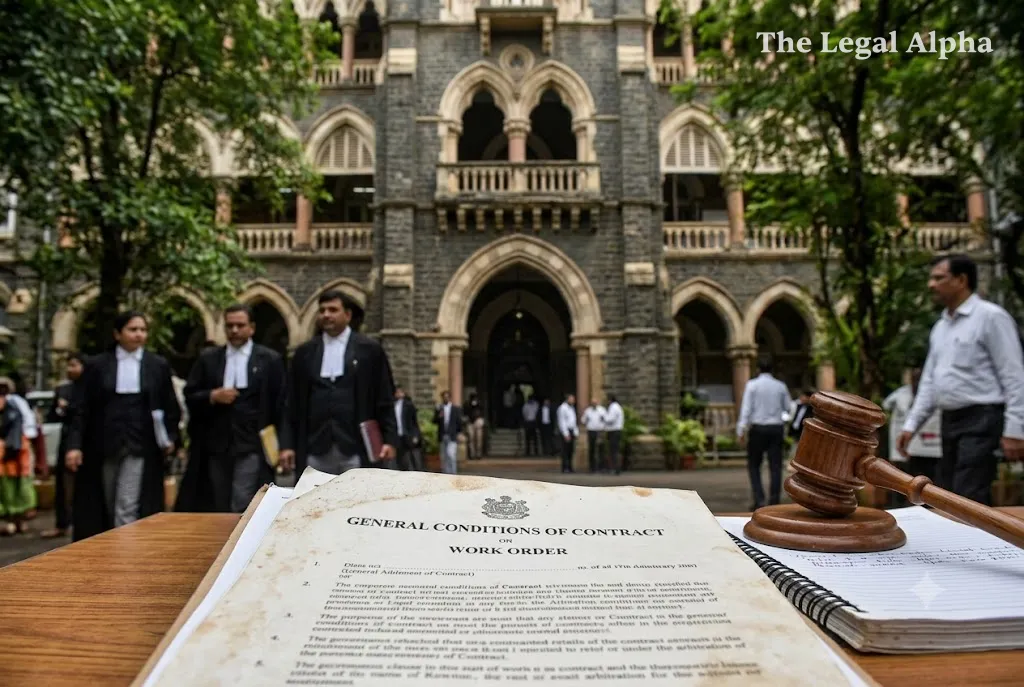
Court: High Court of Judicature at Bombay (Commercial Division)
Bench: Justice Amit Borkar
Case Record: Arbitration Application (L) No. 15672 of 2026
Date of Pronouncement: September 07, 2026 | Reported: October 08, 2026 (LiveLawBiz ID: 553713)
Subject: Arbitration Act (Section 7(5) & Section 11(6)) | Incorporation by Reference
Category
Judgements | Commercial Arbitration & Contract Law
The applicant, Shivkumar Enterprises, was awarded four separate commercial Work Orders by infrastructure and engineering giant TATA Projects Limited for the execution of civil and construction works. Each Work Order specifically referenced and incorporated the company's General Conditions for Contract Services ('GCC'), bearing reference number TPL/SCM/GCC/C4-HV/R3. Clause 20 of these standard GCC terms contained an explicit dispute resolution mechanism mandating that all disputes arising out of the work orders be referred to a sole arbitrator.
Following the completion of the contracted works, Shivkumar Enterprises raised running invoices. When TATA Projects Limited withheld outstanding payments across all four work orders despite repeated demands, the contractor invoked the arbitration agreement contained in Clause 20 of the GCC via a formal legal notice dated December 17, 2025.
Upon TATA Projects Limited's failure to concur on the nomination of an independent arbitrator, Shivkumar Enterprises moved the High Court of Judicature at Bombay under Section 11(6) of the Arbitration and Conciliation Act, 1996 [Arbitration Application (L) No. 15672 of 2026]. TATA Projects Limited vehemently resisted the application, contending that the four work orders were distinct independent contracts that did not individually contain or reproduce the arbitration clause, that a general reference to the GCC was insufficient under Section 7(5) without a specific reference to Clause 20, that claims across four separate work orders could not be clubbed into a single Section 11 petition, and that pre-arbitral informal settlement procedures had not been exhausted.
Legal Topic
Commercial Arbitration & Contract Law – Section 11(6) read with Section 7(5), Arbitration and Conciliation Act, 1996 (Incorporation of Arbitration Clause by Reference); Doctrine of 'Two-Contract' vs. 'Single-Contract' Incorporation; General Conditions of Contract (GCC) vs. Individual Work Orders; Maintainability of Composite Section 11 Application for Multiple Work Orders; Arbitrability of Pre-Arbitral Escalation Procedures.
Core Legal Issue
Whether an arbitration clause contained in General Conditions of Contract (GCC) is validly incorporated into individual work orders by a general reference under Section 7(5) of the Arbitration and Conciliation Act, 1996 without being explicitly reproduced in each work order, and whether disputes across multiple work orders sharing common GCC terms can be referred to a single arbitral tribunal.
What Did the Court / Authority Decide?
The High Court of Judicature at Bombay, through a Single Judge Bench comprising Justice Amit Borkar, allowed the application [Arbitration Application (L) No. 15672 of 2026, Decided on September 7, 2026 / Reported October 08, 2026], rejecting all objections raised by TATA Projects Limited and appointing Advocate Shadab Jan as the Sole Arbitrator to adjudicate disputes arising from all four work orders.
Justice Amit Borkar held that an arbitration clause need not be physically reproduced in individual work orders where the General Conditions of Contract containing the clause have been incorporated by reference under Section 7(5) of the Act. The Court explained that in a 'two-contract' scenario between the same contracting parties—where work orders are issued pursuant to general contract terms—a general reference to the standard GCC is sufficient to incorporate the arbitration clause. The Bench held: "It is correct that each Work Order may contain its own scope of work, obligations, payment terms and claim. Therefore, the claim under each Work Order may have to be separately examined. But the fact that there are four Work Orders does not mean that there is no common arbitration agreement." The High Court further clarified that procedural objections concerning pre-arbitral settlement talks and tax documentation do not defeat the arbitration agreement and can be addressed by the arbitral tribunal.
Key Legal Points
- Incorporation by Reference Under Section 7(5): The High Court reaffirmed that an arbitration clause in standard General Conditions of Contract (GCC) is validly imported into individual work orders if the work orders make a clear reference incorporating the GCC.
- No Need to Reproduce Arbitration Clause: Justice Amit Borkar clarified that parties are not required to physically restate or type out the arbitration clause in each sequential work order or purchase order.
- Two-Contract Principle Between Same Parties: The Court highlighted that when a contract refers to standard form conditions of one of the parties or a recognized trade body, a general reference is legally sufficient to incorporate the arbitration clause, distinguishing it from references to contracts involving third parties.
- Multiplicity of Work Orders Does Not Bar Single Tribunal: The Bench ruled that while claims under each work order may require separate factual examination, the existence of multiple work orders governed by common GCC terms does not negate a common arbitration agreement or prevent the appointment of a single sole arbitrator.
- Pre-Arbitral Steps are Non-Jurisdictional: The Court held that alleged failures to follow informal pre-arbitral negotiation steps or submit tax invoices do not invalidate the arbitration agreement at the Section 11 stage and must be raised before the arbitral tribunal.
Relevant Law
- Section 7(5), Arbitration and Conciliation Act, 1996: Stipulates that the reference in a contract to a document containing an arbitration clause constitutes an arbitration agreement if the contract is in writing and the reference is such as to make that arbitration clause part of the contract.
- Section 11(6), Arbitration and Conciliation Act, 1996: Confers jurisdiction on the High Court to appoint an arbitrator upon the failure of the agreed appointment procedure.
- M.R. Engineers and Contractors Pvt. Ltd. v. Som Datt Builders Ltd. (2009) 7 SCC 696: Landmark Supreme Court ruling establishing the principles governing incorporation of arbitration clauses by reference, drawing a crucial distinction between standard terms of one party versus third-party contracts.
- Inox Wind Ltd. v. Thermocables Ltd. (2018) 2 SCC 519: Supreme Court precedent affirming that a general reference to standard terms and conditions of one of the parties is sufficient to incorporate the arbitration clause.
Arguments of the Parties
- Contentions of the Applicant (Shivkumar Enterprises):
- Represented by Advocates Hamid Ansari and Madhusmita Sahoo, instructed by Prashant D. Jadhav, the applicant submitted that all four work orders explicitly incorporated TATA Projects' standard GCC terms.
- Counsel argued that Clause 20 of the GCC unambiguously provided for arbitration, and under Section 7(5) of the Act and the law in Inox Wind, the clause was fully binding.
- It was contended that non-payment of invoices gave rise to arbitrable disputes and technical objections regarding separate work orders could not defeat commercial arbitration.
- Contentions of the Respondent (TATA Projects Limited):
- Represented by Advocates Aushi Doshi and Surbhi Ahuja, instructed by India Law LLP, the respondent argued that the work orders did not contain an independent arbitration clause and only made a general reference to the GCC.
- Counsel submitted that without a specific reference to Clause 20, the arbitration clause could not be treated as incorporated under Section 7(5).
- The respondent further contended that the applicant failed to comply with pre-arbitral dispute settlement mechanisms and had outstanding tax documentation issues, making the Section 11 plea premature.
Why Does It Matter?
In modern infrastructure, construction, and engineering industries, commercial relationships are governed by umbrella framework contracts, standard General Conditions of Contract (GCC), and hundreds of subsequent project-specific work orders or purchase orders. Drafting parties often omit repetitive dispute resolution clauses from individual purchase orders, relying on standardized references to master GCC terms. When disputes erupt, principal contractors frequently raise hyper-technical jurisdictional objections—claiming that every work order requires an independent, explicitly typed arbitration agreement.
Justice Amit Borkar’s ruling in Shivkumar Enterprises delivers vital commercial certainty and efficacy to corporate contract management. By affirming that a general incorporation of standard GCC terms in individual work orders satisfies Section 7(5), the Bombay High Court protects contractors and vendors from procedural obstructionism. The judgment streamlines dispute resolution in multi-work-order infrastructure projects, preventing fragmented litigation and upholding the commercial expectation that master arbitration terms bind all subsidiary project executions.
Legal Takeaway
An arbitration clause contained in standard General Conditions of Contract (GCC) is validly incorporated into individual work orders by a general reference under Section 7(5) of the Arbitration and Conciliation Act, 1996, without needing to be separately reproduced in each work order. Where multiple work orders between the same parties are governed by common master terms, the existence of separate claims does not preclude the constitution of a single arbitral tribunal to adjudicate all connected disputes.
Sources (Primary & Additional)
- Primary Judicial Order: High Court of Judicature at Bombay, Shivkumar Enterprises v. TATA Projects Limited [Arbitration Application (L) No. 15672 of 2026, Decided on September 07, 2026 / Uploaded September 18, 2026], per Justice Amit Borkar. Bombay High Court Commercial Division / Casemine Law Intelligence and IBC Laws Portal.
- Authoritative Legal Reporting (LiveLawBiz): Shivani PS, \"Arbitration Clause Need Not Be Reproduced In Work Orders If GCC Is Incorporated: Bombay High Court\" (Article ID: 553713, Published on October 08, 2026). LiveLawBiz Article.
- Supreme Court Benchmark Precedent: Supreme Court of India, Inox Wind Ltd. v. Thermocables Ltd. (2018) 2 SCC 519, establishing the rule that general reference to standard form conditions of a party incorporates the arbitration clause. SCC Online / IndianKanoon.