Accepted VAT Return Guarantees Refund: Delhi High Court Rebuffs Revenue
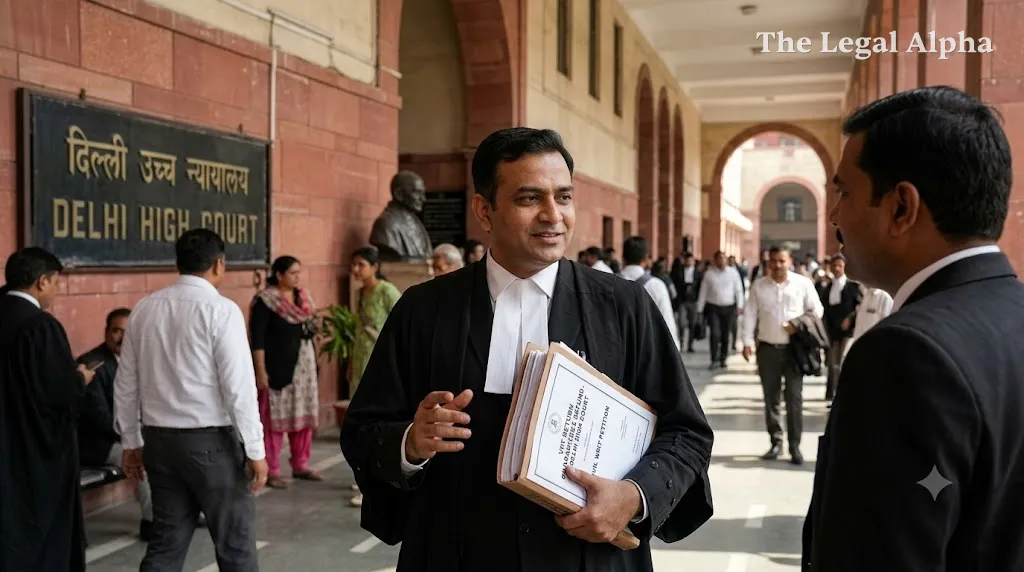
Court: High Court of Delhi at New Delhi
Bench: Justice Avneesh Jhingan & Justice Shail Jain
Case Record: VAT Appeal 2/2024 | CNR No. DLHC010027242024 | Citation: 2026 LLBiz HC (DEL) 1077
Date of Pronouncement: September 30, 2026 | Reported: October 06-07, 2026 (LiveLawBiz ID: 553408)
Subject: Delhi Value Added Tax Act, 2004 (Section 38 & Section 40A) | Finality of Self-Assessed Refunds
The respondent, M/s Uno International, is a registered commercial dealer under the Delhi Value Added Tax Act, 2004 (DVAT Act). For the fourth quarter of Assessment Year 2013-14, the dealer filed a revised VAT return claiming a legitimate tax refund of ₹15,31,661/-.
Under the statutory architecture of the DVAT Act, the revised return was accepted under self-assessment. Crucially, the Department of Trade and Taxes did not initiate any default assessment proceedings under Section 32, nor did it commence any special audit or investigation under Section 58 or Section 59 of the Act within the mandatory periods of limitation. There was no outstanding tax demand pending against the dealer.
Notwithstanding the absence of any adverse assessment order, the Value Added Tax authorities withheld the refund amount of ₹15,31,661/-. The Department harboured suspicions that the underlying transactions involved circular trading without physical movement of goods, and that there were alleged discrepancies in the Input Tax Credit (ITC) chain of the upward suppliers. To justify withholding the refund, the Revenue sought to invoke Section 40A of the DVAT Act (which renders void any arrangement entered into to defeat the provisions of the Act) and further argued that the refund claim was time-barred under Section 34 of the Act.
Aggrieved by the Department's refusal to disburse the funds, the dealer approached the Delhi Value Added Tax Appellate Tribunal. The Tribunal ruled in favour of Uno International, holding that the Department had never initiated statutory audit or reassessment, had never declared the transactions void, and had presented zero evidence of collusion or fraud. The Tribunal directed the Revenue to refund the entire amount of ₹15,31,661/- along with statutory interest. Aggrieved, the Commissioner of Trade and Taxes appealed before the High Court of Delhi under Section 81 of the DVAT Act [VAT Appeal 2/2024, Citation: 2026 LLBiz HC (DEL) 1077].
Legal Topic
Indirect Taxation & Value Added Tax Jurisprudence – Delhi Value Added Tax Act, 2004 (Section 38: Processing and Release of Tax Refunds; Section 34: Limitation on Default Assessment and Reassessment; Section 40A: Avoidance of Tax and Collusive Arrangements; Section 32, Section 58 & Section 59: Assessment, Audit, and Investigation); Finality of Self-Assessment Returns; Inapplicability of Assessment Limitation to Taxpayer Refund Applications.
Core Legal Issue
Whether the tax department can withhold a tax refund claimed in a return accepted under self-assessment by invoking Section 40A or Section 34 of the DVAT Act, when the Department never initiated default assessment, audit, or investigation, never declared the transactions void, and produced no evidence of fraudulent collusion.
What Did the Court / Authority Decide?
A Division Bench of the High Court of Delhi at New Delhi, comprising Justice Avneesh Jhingan and Justice Shail Jain, dismissed the Revenue's appeal [VAT Appeal 2/2024, CNR No. DLHC010027242024, Citation: 2026 LLBiz HC (DEL) 1077], affirming the Appellate Tribunal's order directing the immediate release of the ₹15,31,661/- refund along with statutory interest.
Justice Avneesh Jhingan and Justice Shail Jain held that where a return has been accepted under self-assessment, no outstanding tax demand remains, and no proceedings were ever initiated under Sections 32, 58, or 59, Section 38(3) of the DVAT Act statutorily mandates the Department to release the refund within the prescribed period. The Court firmly rejected the Revenue’s argument on limitation, holding that Section 34 relates strictly to assessment or reassessment proceedings by the Department and has no application to a refund application filed by a dealer. The Bench also rejected the Revenue’s invocation of Section 40A, noting that the Department had never declared the arrangement between the parties null and void, had made no effort to collect evidence of collusion, and had identified no fraudulent contract. In the complete absence of an inquiry or investigation, Section 40A could not be invoked as an afterthought to obstruct a refund.
Key Legal Points
- Section 34 Limitation Inapplicable to Refund Claims: The Division Bench held that the limitation prescribed under Section 34 of the DVAT Act governs the department's power to make default assessments or reassessments. It does not apply to refund applications under Section 38. The Revenue cannot cite its own lapse in failing to assess within time as a reason to withhold refunds.
- Mandatory Statutory Duty Under Section 38: Once a return is accepted under self-assessment and no proceedings under Sections 32, 58, or 59 are pending, Section 38 creates an enforceable statutory obligation upon the tax authorities to disburse the refund, subject only to adjustment against existing outstanding demands.
- Section 40A Requires Proof of Collusion and Formal Declaration: The Court ruled that Section 40A (anti-avoidance provision) cannot be invoked on mere suspicion or conjecture. The Department must conduct an inquiry, establish evidence of collusion between seller and purchaser, and formally declare the arrangement void before seeking to deny statutory credits or refunds.
- Self-Assessed Returns Attain Finality Absent Assessment Notice: In the absence of an assessment or audit notice issued within the prescribed statutory period, an accepted self-assessed return attains finality and cannot be questioned indirectly at the stage of refund processing.
- Entitlement to Statutory Interest: The High Court affirmed that the taxpayer is entitled to statutory interest under Section 42 of the DVAT Act for the period during which the refund was illegally withheld by the department.
Relevant Law
- Section 38, Delhi Value Added Tax Act, 2004: Governs refunds of excess tax, input tax credit, or penalties, mandating refund within the prescribed period and outlining provisions for adjustment against outstanding tax demands.
- Section 34, Delhi Value Added Tax Act, 2004: Prescribes statutory time limits for making default assessments or reassessments of tax, interest, and penalty.
- Section 40A, Delhi Value Added Tax Act, 2004: Stipulates that any arrangement entered into with the intention of defeating the provisions of the Act shall be void against the Commissioner.
- Sections 32, 58 & 59, Delhi Value Added Tax Act, 2004: Framework governing default assessments of tax and penalties, special tax audits, and inspection/investigation powers of the department.
- Sales Tax Bar Association (Regd.) & Ors. v. Commissioner of Value Added Tax (2013) 57 VST 408 (Del): Landmark Delhi High Court ruling establishing that refunds under Section 38 must be processed strictly within the statutory timeline and cannot be blocked on administrative whims.
Arguments of the Parties
- Contentions of the Appellant (Commissioner of Trade and Taxes):
- Represented by learned standing counsel, the Department submitted that the dealer’s refund claim arose from suspicious non-genuine transactions involving circular trading without physical delivery of goods.
- The Revenue argued that under Section 40A of the DVAT Act, arrangements entered into to defeat the Act are void, and the Department was entitled to disallow input tax credit and withhold the refund.
- Counsel contended that the refund claim was time-barred under Section 34 of the Act and that the Tribunal erred in ordering disbursement with interest.
- Contentions of the Respondent (M/s Uno International):
- Represented by Advocate Ajit Singh Joher, the dealer submitted that the revised return for Q4 of AY 2013-14 was duly accepted under self-assessment.
- Counsel proved that no notice was ever issued under Section 32, 58, or 59, and no finding of collusion or illegality was ever recorded through any inquiry.
- It was argued that Section 34 applies to default assessments, not refund claims, and the Department cannot indefinitely detain a taxpayer's legitimate refund based on unverified allegations.
Why Does It Matter?
Across value-added tax and modern Goods and Services Tax (GST) regimes in India, tax authorities frequently treat refund claims with deep institutional reluctance. Assessing officers routinely park legitimate refund applications in administrative limbo for years—raising informal suspicions of 'circular billing' or 'supplier defaults', while failing to initiate formal assessment or investigative proceedings within the statutory limitation period.
The Delhi High Court’s Division Bench judgment in Uno International provides a critical precedent protecting commercial taxpayers. By clarifying that Section 34 limitation cannot be weaponized to choke refund claims, and holding that anti-avoidance powers under Section 40A require concrete investigation and proof of collusion rather than departmental suspicion, Justices Avneesh Jhingan and Shail Jain uphold the integrity of self-assessment. The decision establishes an unequivocal principle: the state cannot retain taxpayer funds without a valid, legally sustainable assessment order, ensuring commercial liquidity and reinforcing the rule of law in indirect tax administration.
Legal Takeaway
Where a taxpayer's return is accepted under self-assessment and the tax department initiates no assessment, audit, or investigation within the statutory period, the taxpayer is entitled to a full refund under Section 38 of the DVAT Act. The limitation on assessment under Section 34 does not apply to refund applications. Furthermore, the Department cannot withhold refunds under Section 40A based on unverified suspicions of circular trading without conducting a formal inquiry, producing evidence of collusion, and declaring the underlying transactions void.
Sources (Primary & Additional)
- Primary Judicial Order: High Court of Delhi at New Delhi, Commissioner of Trade and Taxes v. M/s Uno International [VAT Appeal 2/2024, CNR No. DLHC010027242024, Neutral Citation: 2026 LLBiz HC (DEL) 1077, Decided on September 30, 2026 / Uploaded October 05-06, 2026], per Justice Avneesh Jhingan and Justice Shail Jain. Delhi High Court Judgment PDF Repository / LiveLawBiz.
- Authoritative Legal Reporting (LiveLawBiz): Kapil Dhyani, \"Delhi High Court Upholds VAT Refund To Taxpayer After Return Accepted Under Self-Assessment\" (Article ID: 553408, Published on October 06-07, 2026). LiveLawBiz Article.
- Indirect Tax Analysis (CA Sansaar): Editorial Desk, \"Delhi HC Upholds VAT Refund After Self-Assessed Return Accepted: 2026 LLBiz HC(DEL) 1077\" (Published on October 07, 2026). CA Sansaar Tax Intelligence.