Vacancies at Assam Human Rights Commission Bring Supreme Court-Ordered Probe into 171 Police Encounters to a Standstill
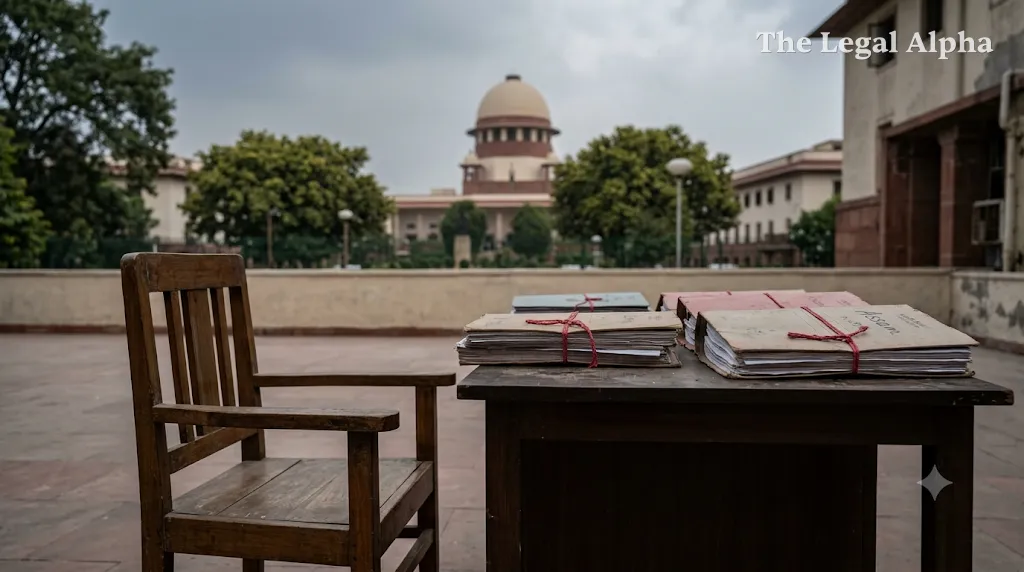
An independent investigation ordered by the Supreme Court of India into 171 alleged fake police encounters in Assam has ground to a halt because key leadership positions at the Assam Human Rights Commission (AHRC) remain unfilled.
In May 2025, the Supreme Court directed the AHRC to conduct an impartial and expeditious inquiry into the police shootings, which took place across Assam between May 2021 and August 2022 and resulted in 56 deaths and 145 injuries. However, the commission is currently operating without a Chairperson and one of its two members. Non-judicial member Santanu Bharali completed his tenure in April 2026, and Chairperson Justice (Retd.) Arup Kumar Goswami stepped down after his term ended in July/August 2026. Because the Assam government has neither extended their tenures nor appointed successors, the commission lacks the quorum and authority needed to take final decisions on the court-mandated inquiry.
Legal Topic
Area of Law: Constitutional Law and Human Rights Law
Sub-topic: Police Accountability / Extrajudicial Killings / Statutory Commissions
Core Legal Issue
The core legal issue revolves around how constitutional safeguards under Article 21 (the right to life and personal liberty) and mandatory procedural guidelines governing police encounters can be enforced when the statutory body entrusted with conducting an independent inquiry is rendered non-functional by executive inaction.
Specifically, the situation tests the practical efficacy of judicial remedies when a State government delays appointments to a State Human Rights Commission that is actively investigating allegations of excessive force by that very State’s police force.
What Did the Court / Authority Decide?
No fresh judicial order has been passed regarding the current administrative logjam, as the stall stems from executive vacancies rather than a court stay. However, the ongoing inquiry is governed by the Supreme Court’s landmark judgment in Arif Md. Yeasin Jwadder v. State of Assam & Ors. (delivered on May 28, 2025, by a bench of Justices Surya Kant and Nongmeikapam Kotiswar Singh).
In that ruling, the Supreme Court:
-
Set Aside Prior Orders: Quashed a January 2023 Gauhati High Court order that had dismissed a Public Interest Litigation (PIL) as "premature," as well as a January 2022 AHRC order that had prematurely closed its suo motu inquiry.
-
Mandated an Independent Inquiry: Directed the AHRC to reinstate the matter and independently investigate all 171 encounter cases reported between May 2021 and August 2022.
-
Issued Procedural Safeguards: Ordered the AHRC to publish statewide notices in English and vernacular newspapers inviting victims and their families to participate, ensure strict witness confidentiality, and engage retired or serving police officers unconnected to the cases to assist the probe.
-
Directed State Support: Instructed the Assam government to provide full logistical, financial, and forensic support, while directing the Assam State Legal Services Authority (ASLSA) to offer free legal aid to affected families.
While the Supreme Court settled the framework for the investigation in May 2025, the substantive inquiry and findings on individual encounter cases remain pending. State officials have stated that the process of filling the AHRC vacancies is underway, though no timeline has been provided.
Key Legal Points
-
Mandatory Compliance with Encounter Guidelines: Every death or grievous injury resulting from police firing must strictly adhere to the 16-point guidelines laid down by the Supreme Court in PUCL v. State of Maharashtra (2014), including independent investigations and magisterial inquiries.
-
Proactive Role of Human Rights Commissions: Under the Protection of Human Rights Act, 1993, State Human Rights Commissions are statutory watchdogs obligated to act proactively and cannot summarily dispose of serious human rights complaints merely because parallel litigation is pending.
-
Standing in Public Interest Litigation: Third-party public-spirited petitioners have valid locus standi to raise systemic human rights concerns when direct victims or their families may be deterred by fear of retaliation or lack of resources.
-
Conflict of Interest Prevention: Inquiries into alleged police excesses cannot be left solely to the same police station or unit involved in the shooting; independent institutional oversight is essential to preserve public trust in the rule of law.
Relevant Law
-
Article 21 of the Constitution of India: Guarantees the fundamental right to life and personal liberty, requiring that any deprivation of life by state agents follow fair, just, and reasonable legal procedure.
-
The Protection of Human Rights Act, 1993 (Sections 12, 21, and 29): Governs the constitution, appointment of Chairperson and members, and investigative powers of State Human Rights Commissions.
-
People’s Union for Civil Liberties (PUCL) v. State of Maharashtra, (2014) 10 SCC 635: Established mandatory guidelines for investigating police encounters, including registration of FIRs, independent CID/external probes, forensic verification, and magisterial inquiries.
-
Arif Md. Yeasin Jwadder v. State of Assam & Ors., 2025 INSC 785: The Supreme Court ruling that revived the AHRC inquiry into the 171 Assam police encounters.
Arguments of the Parties
Petitioner (Arif Md. Yeasin Jwadder)
During the Supreme Court proceedings, the petitioner—a practicing advocate—contended that Assam police had engaged in a pattern of extrajudicial shootings following a uniform script of suspects attempting to snatch weapons and flee. He argued that authorities bypassed mandatory PUCL safeguards by registering FIRs against the injured or deceased victims rather than the police personnel, allowing the same police stations to investigate their own officers, and failing to conduct timely forensic analyses and magisterial inquiries.
Respondent (State of Assam)
The State government denied allegations of fake encounters and maintained that police personnel acted in self-defense. Submitting affidavits before the Supreme Court, the State argued that FIRs were duly registered, magisterial inquiries were conducted in death cases, and PUCL guidelines were followed "as far as possible" in injury cases. The State contended that automatic external investigations in every incident without concrete evidence of bias would hamper routine law enforcement.
Why Does It Matter?
This stalemate highlights a critical vulnerability in India's human rights enforcement architecture: judicial orders are only as effective as the institutions tasked with carrying them out. When a constitutional court relies on a statutory body like a State Human Rights Commission to serve as an independent fact-finding mechanism, delays by the executive branch in appointing its leadership directly stall justice.
For victims and their families, prolonged administrative paralysis risks the loss of crucial physical evidence, fading witness memories, and continued fear of seeking legal aid. More broadly, the situation underscores the tension between executive control over statutory appointments and the independence required of bodies meant to hold state agencies accountable.
Legal Takeaway
While the Supreme Court established strict procedural rules in May 2025 to ensure an impartial inquiry into the 171 Assam police encounters, an independent probe cannot function without an active quorum at the Assam Human Rights Commission. Until the State government fills the vacant posts of Chairperson and member—or the Supreme Court intervenes with alternative monitoring directions—accountability in these cases remains effectively on hold.
Sources
Primary Source:
-
Judgment of the Supreme Court of India in Arif Md. Yeasin Jwadder v. State of Assam & Ors., 2025 INSC 785 (decided on May 28, 2025, by Justice Surya Kant and Justice N.K. Singh).
Additional Sources:
-
Official status and administrative updates regarding vacancies at the Assam Human Rights Commission (AHRC) as reported on November 15–16, 2026.
-
The Protection of Human Rights Act, 1993.
-
People’s Union for Civil Liberties (PUCL) v. State of Maharashtra, (2014) 10 SCC 635.