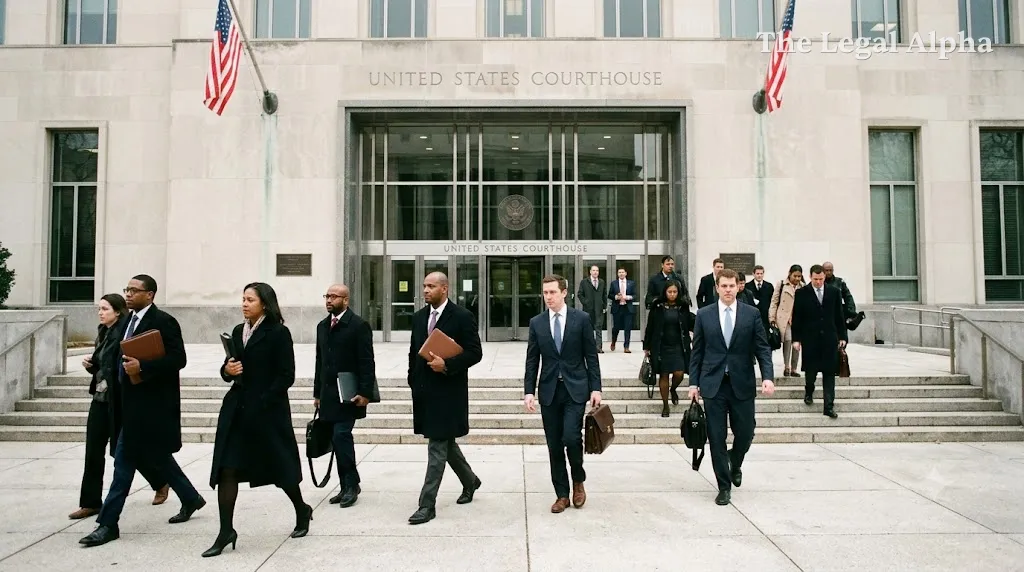
U.S. Justice Department Files Emergency Lawsuit to Restrict California From Tabulating Flagged Mail Ballots
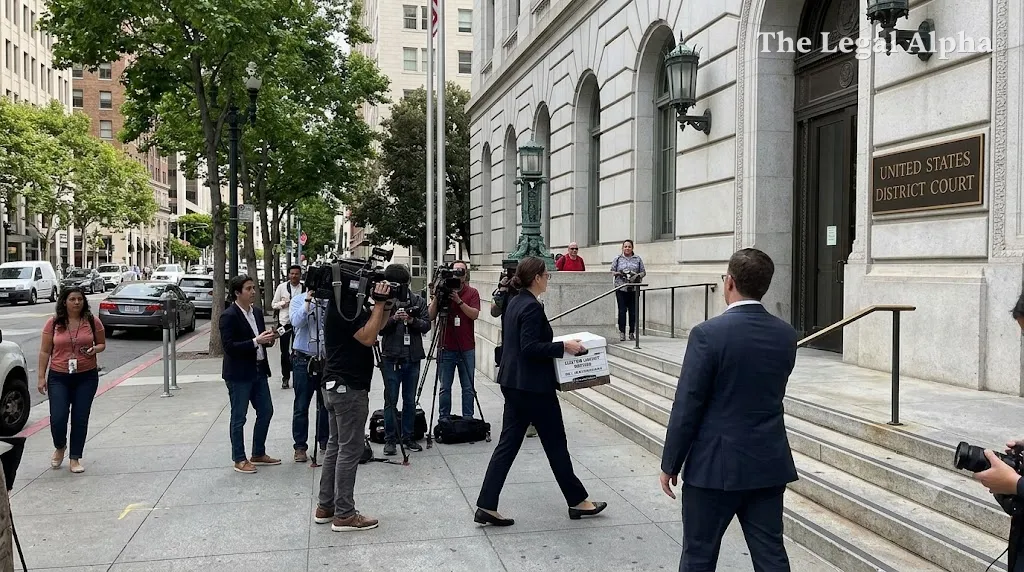
The U.S. Department of Justice filed an emergency civil action against California election officials in federal district court, seeking an injunction to stop the state from counting certain mail-in ballots ahead of the upcoming election.
The action follows a 48-hour administrative ultimatum issued by federal authorities, demanding that state election officials cross-reference and verify a password-protected database of roughly 20,000 registered individuals whom federal agencies flagged as suspected noncitizens. California, which universalises voting access by mailing ballots to every registered voter, declined to purge or segregate ballots based on the federal roster within the expedited two-day window. With early voting underway and ballots actively landing in voters' mailboxes, the federal government initiated litigation to mandate that local election boards hold the flagged ballots in escrow until citizenship verifications are finalized.
Legal Topic
Area of Law: Constitutional & Election Law
Sub-topic: Voter Roll Maintenance, Federal Injunctions, and the Quiet Period Safe Harbor
Core Legal Issue
The primary legal controversy centers on whether the federal government possesses the statutory authority to mandate emergency list maintenance and segregation of cast ballots during the final weeks before a federal election, or whether such compulsory action runs afoul of federal safe harbor provisions governing systematic voter roll purges.
A secondary question turns on evidentiary standards: whether preliminary agency data matches, delivered without substantiated methodologies or opportunities for individual administrative notice and hearing, provide a legally sufficient basis for an Article III court to order the disenfranchisement or segregation of timely returned mail-in ballots.
What Did the Court / Authority Decide?
The lawsuit was filed in federal district court, and the presiding judge has taken the emergency application for preliminary relief under review.
No final ruling on the merits has been entered. The court has scheduled expedited preliminary hearings to determine whether an immediate restraining order is warranted to isolate the contested voter records, or whether altering election protocols while ballots are already in transit would violate established procedural safeguards. The dispute currently remains an active, pending proceeding.
Key Legal Points
-
Quiet Period Constraints: Federal election statutes prohibit systematic purges or mass removals from voter registries within the 90 days preceding a federal election to prevent erroneous disenfranchisement.
-
Evidentiary Threshold for Segregation: Securing an emergency injunction against ballot counting requires demonstrating irreparable harm and reliable evidence, a standard tested when the government relies on algorithmic data-matching without verified methodology.
-
State vs. Federal Preemption in Administration: Under the Elections Clause, states retain primary authority over the times, places, and manner of conducting elections, restricting unilateral federal interference in state tabulation processes.
-
Procedural Due Process: Removing or sequestering ballots based on ex parte agency determinations without adequate notice or a cure process poses distinct constitutional due process questions.
Relevant Law
-
National Voter Registration Act of 1993 (NVRA), 52 U.S.C. § 20507(c)(2)(A): Mandates that states complete systematic voter removal programs no later than 90 days before a federal primary or general election.
-
Help America Vote Act of 2002 (HAVA), 52 U.S.C. § 21083: Governs computerized statewide voter registration list maintenance and verification requirements.
-
U.S. Constitution, Article I, Section 4, Clause 1 (Elections Clause): Grants states the default authority to regulate federal elections, subject to explicit congressional preemption.
-
Purcell v. Gonzalez, 549 U.S. 1 (2006): Landmark Supreme Court precedent discouraging federal courts from altering state election rules on the eve of an election.
Arguments of the Parties
The U.S. Department of Justice
The federal government contended that noncitizens are explicitly barred under federal law from voting in federal elections, and that failing to segregate the flagged ballots could result in unlawful votes diluting the franchise of eligible citizens. The Department argued that requiring California to review its encrypted dataset and sequester identified ballots until citizenship can be confirmed does not constitute a formal purge, but rather an administrative safeguard necessary to maintain ballot integrity.
The California Secretary of State
California election authorities argued that the federal demand is an unlawful, last-minute mandate that violates the 90-day statutory quiet period designed to prevent bureaucratic errors right before an election. State officials submitted that the Department provided an unsubstantiated roster without disclosing its underlying data sources or error rates, creating an unacceptable risk of disenfranchising legally eligible American citizens without due process.
Why Does It Matter?
This litigation tests the limits of federal intervention in state election procedures during the critical weeks before a national vote. For election administrators across the country, an emergency order forcing the segregation of thousands of ballots based on preliminary federal datasets would upend long-standing reliance on the Purcell principle and the NVRA's 90-day blackout window.
If courts allow federal agencies to demand rapid list purges under the threat of emergency litigation, state election boards could face recurring, last-minute administrative disruptions. Conversely, if the court denies the injunction for lack of evidentiary transparency, it reinforces the principle that federal citizenship-matching programs must comply with rigorous procedural review before infringing upon state certification timetables.
Legal Takeaway
Under federal election statutes and judicial precedent, attempts to systematically segregate or purge voter rolls on the eve of an election face an exceptionally steep legal hurdle. Federal courts rarely sanction eleventh-hour administrative disruptions to ballot counting, particularly when the underlying eligibility claims rely on unverified cross-agency databases lacking transparent methodology.
Sources
Primary Source:
United States v. California Secretary of State, Complaint and Emergency Application for Injunctive Relief (U.S. District Court, October 2026).
Additional Sources:
-
Official Public Statement, California Secretary of State Shirley N. Weber (October 2026).
-
National Voter Registration Act of 1993, 52 U.S.C. §§ 20501–20511.