Delhi Police Inform Court: No Cognisable Offence Disclosed, No Basis for FIR Against Chief Minister
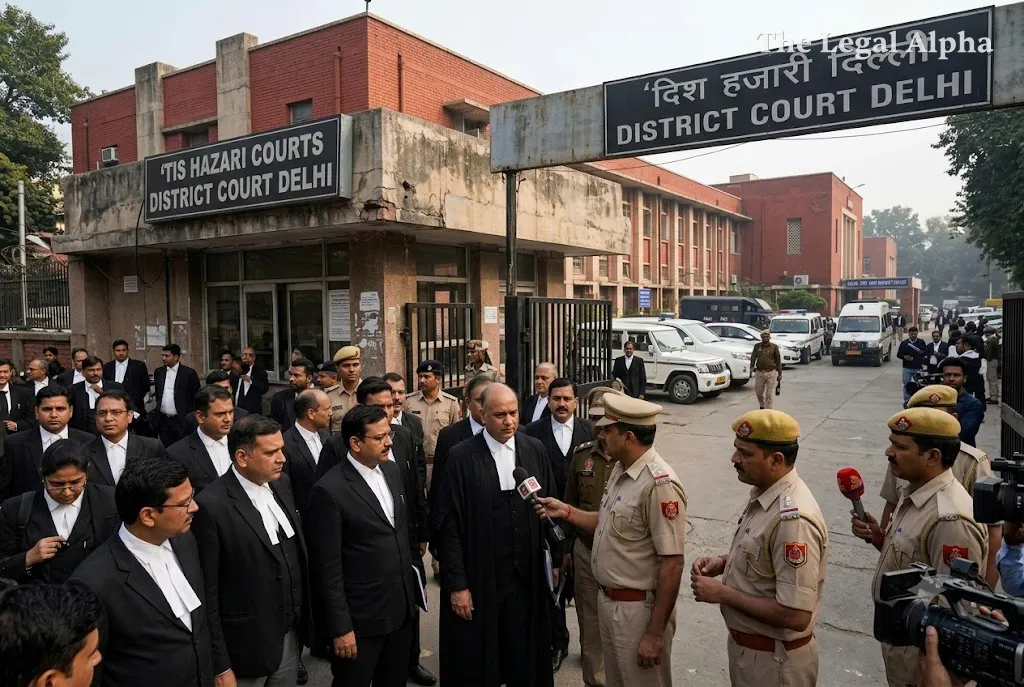
Delhi Police have submitted a status report before Additional Chief Metropolitan Magistrate (ACJM) Ashwani Panwar stating that no cognisable offence is made out to warrant the registration of a First Information Report (FIR) against the Chief Minister of Delhi.
The matter stems from a criminal complaint filed against remarks allegedly made by the Chief Minister during an official transport event. The complainant alleged that the statements were objectionable and sought police action under criminal provisions. Following a preliminary assessment of the complaint, law enforcement authorities apprised the court that the underlying allegations do not disclose ingredients of an offence requiring the registration of an FIR.
Legal Topic
-
Area of Law: Criminal Law and Criminal Procedure
-
Sub-topic: Pre-requisites for Registering an FIR / Cognisable vs. Non-Cognisable Offences
Core Legal Issue
The primary legal issue centres on whether political remarks or public administrative statements, absent explicit criminal intent or statutory violation, can be subjected to criminal proceedings.
The question before the magistrate is whether the police are mandated under criminal procedure to register an FIR upon receipt of any complaint, or whether the absence of a prima facie cognisable offence justifies the police’s refusal to initiate a formal criminal investigation.
What Did the Court / Authority Decide?
The court did not deliver a final judgment on the merits of the complaint, but officially took the police status report on record.
Upon the request of counsel for the complainant, who sought time to file a formal protest petition or rejoinder challenging the police findings, the court granted an adjournment. The magistrate scheduled the next hearing for October 29 to consider the complainant's objections and determine the future course of proceedings.
Key Legal Points
-
Threshold of Cognisable Offence: Registration of an FIR is not automatic upon filing a complaint; the allegations must prima facie disclose the commission of a cognisable offence.
-
Preliminary Inquiry Powers: Police retain the procedural latitude to conduct a preliminary verification of broad or vague allegations before setting the criminal justice machinery in motion.
-
Freedom of Speech vs. Criminalisation: Controversial, political, or offensive speech does not automatically attract criminal penal provisions unless statutory thresholds such as deliberate malicious intent are satisfied.
-
Procedural Fairness: Granting the complainant time to counter the police status report ensures procedural due process before the court decides whether to accept the closure or order further investigation.
Relevant Law
-
Bharatiya Nagarik Suraksha Sanhita (BNSS) / Code of Criminal Procedure (CrPC): Provisions governing information in cognisable cases and the procedure for registering an FIR (Section 173 BNSS / Section 154 CrPC).
-
Bharatiya Nyaya Sanhita (BNS) / Indian Penal Code (IPC): Substantive sections invoked by complainants regarding public mischief, religious sentiments, or public officer conduct.
Arguments of the Parties
-
The Complainant: Contended that the statements made by the Chief Minister went beyond legitimate administrative discourse, offended public sensibilities, and warranted formal registration of an FIR followed by an official criminal probe.
-
The Police / State: Submitted in their status report that an examination of the recorded facts and statements revealed no elements of a cognisable offence, concluding there was no legal justification or basis to register an FIR.
Why Does It Matter?
This development highlights the legal protections against the routine criminalisation of political speech and administrative statements. It underscores the role of preliminary police scrutiny as a filter against vexatious complaints designed to trigger coercive criminal mechanisms.
The position taken by the police reinforces settled judicial precedents establishing that criminal law cannot be invoked merely because an individual takes exception to public speech, safeguarding public figures and ordinary citizens alike from frivolous litigation.
Legal Takeaway
A First Information Report cannot be registered in the absence of a demonstrable cognisable offence. Merely alleging that statements caused offence is insufficient to initiate criminal proceedings without concrete legal elements satisfying statutory criminal thresholds.
Sources
-
Primary Source: Status report submitted by Delhi Police before the Court of Additional Chief Metropolitan Magistrate (ACJM) Ashwani Panwar, Delhi.
-
Additional Sources: Judicial reporting and news agency coverage of the court proceedings.