Madras High Court Overturns Order Directing Housing Board to Reclaim 7.44-Acre Prime Chennai Land from Educational Trust

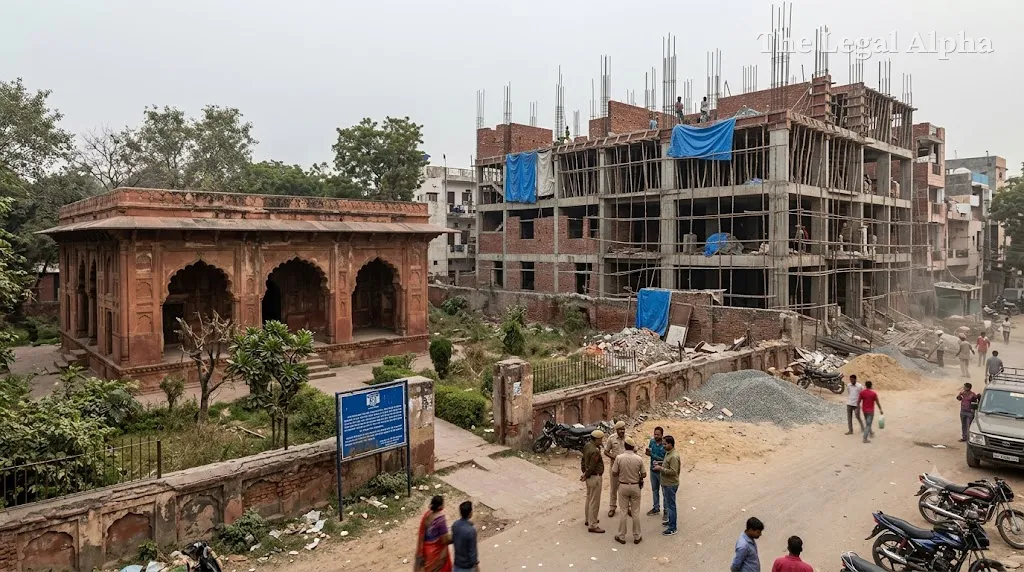
A Division Bench of the Madras High Court has overturned a single judge's directive that instructed the Tamil Nadu Housing Board (TNHB) to repossess 7.44 acres of prime land in Chennai from Sri Ramachandra Education & Health Trust. The parcel, located in the Thiruvanmiyur area, had initially formed part of land acquired in the 1980s for the Besant Nagar Phase II development scheme. Under a 1998 Government Order, the property was conveyed to the trust for educational purposes.
The dispute resurfaced when an erstwhile landholder filed a writ petition seeking return of her alleged share in the property. While the single judge dismissed the petitioner's claim, the court exercised extraordinary writ jurisdiction to invalidate the 1998 Government Order and ordered TNHB to resume possession of the land after refunding the ₹33.46 crore consideration with interest. Setting this directive aside on appeal, the Division Bench held that alleged breaches of sale conditions involve disputed questions of fact that cannot be adjudicated summarily under writ jurisdiction, leaving any enforcement actions strictly to the competent statutory authorities in accordance with law.
Legal Topic
Area of Law: Real Estate and Public Land Law
Sub-topic: Writ Jurisdiction, Land Allotments, and Breach of Deed Covenants
Core Legal Issue
The primary legal question before the appellate bench was whether a writ court, under Article 226 of the Constitution of India, can sua sponte quash a decades-old land conveyance order and mandate the reclamation of transferred public land on grounds of alleged non-compliance with covenants—specifically, commercial exploitation versus charitable use—without a full evidentiary trial.
A secondary question addressed whether the Housing Board and the State Government, rather than the writ court, retain the exclusive prerogative to initiate remedial action under contract and relevant statutory frameworks if conditions in a conveyance deed are breached.
What Did the Court Decide?
The Division Bench allowed the appeal preferred by the educational trust and quashed the directions issued by the single judge.
The court ruled that determining whether facilities on the campus—such as an auditorium or convention hall—are rented out for commercial gain or whether their operational proceeds are channeled into charitable and educational mandates is a question of fact that requires formal evidence.
Crucially, the bench clarified that if the trust has violated any negative covenants or user conditions stipulated in the original transfer documents, the power and discretion to initiate action rest with the State Government and the Housing Board under the terms of the deed and governing statutory provisions. The court did not grant blanket immunity against administrative scrutiny, but held that the summary revocation ordered in the writ petition could not stand.
Key Legal Points
-
Disputed Questions of Fact Bar Summary Writ Remedies: Inquiries into how a grantee utilizes premises, and whether proceeds derived from ancillary facilities qualify as charitable revenue or commercial trade, require an evidentiary foundation and cannot be decided merely on affidavits.
-
Enforcement of Covenant Conditions Lies with Transferor: Where land is conveyed by an instrumentality of the State subject to restrictive covenants, it is the prerogative of the government authority or housing board to enforce forfeiture, re-entry, or statutory remedies in accordance with the deed and due process.
-
Limits on Collateral Relief under Article 226: Upon rejecting the substantive relief claimed by an original land claimant, the writ court should exercise caution before issuing sweeping collateral orders revoking long-settled conveyances without a trial of rights.
Relevant Law
-
Article 226 of the Constitution of India: Constitutional writ jurisdiction of High Courts and the self-imposed limits concerning complex factual and contractual disputes.
-
Tamil Nadu State Housing Board Act, 1961: Statutory framework governing the development, allotment, conveyance, and regulatory oversight of housing scheme land parcels.
-
Transfer of Property Act, 1882: Statutory provisions regulating restrictive covenants, conditional transfers, and remedies for breach of conditions annexed to ownership.
Arguments of the Parties
Appellant (Educational Trust)
The appellant trust contended that the property had been validly transferred pursuant to a lawful governmental policy and that the acquisition had attained finality decades prior. It argued that the single judge exceeded writ jurisdiction by quashing the 1998 Government Order and directing repossession of the entire 7.44-acre estate in a writ petition filed by a private individual whose own claim of title was found unmerited. The trust further maintained that any ancillary use of institutional infrastructure for public functions supported its overarching non-profit and educational mission and did not warrant summary cancellation of its title deeds.
Opposing Land Claimant and Authorities
The original writ petitioner had argued that the land acquisition and subsequent conveyance were legally defective because she was a minor when earlier family transactions took place, claiming an entitlement to an unalienated fractional share in the parcel. In the earlier proceedings before the single bench, it had also been highlighted that the trust was permitting the land to be deployed for commercial conventions and marriage gatherings, in contravention of the initial allotment purpose restricted to educational and community welfare projects.
Why Does It Matter?
This ruling reinforces clear procedural boundaries between judicial review under public law and the contractual administration of state-allotted lands. Across India, governments frequently allot land at concessional or predetermined rates to private trusts, universities, and hospitals for non-profit and community purposes. When disputes arise over whether an institution has strayed into commercial enterprise, regulatory bodies often face pressure to bypass standard evidentiary processes.
The decision clarifies that writ courts cannot convert summary proceedings into civil inquiries regarding deed violations. By reiterating that the Housing Board and State authorities must independently examine alleged covenant breaches under the relevant contract and statutory mechanisms, the High Court protects long-standing allotments from arbitrary, sua sponte invalidation while preserving the administration's right to pursue enforcement through lawful procedures.
Legal Takeaway
Allegations that an institutional allottee has breached land-use covenants cannot be summarily determined by a writ court without full evidentiary proceedings. The authority to take action for any deviation from the terms of a conveyance deed rests strictly with the transferring authority through due statutory process.
Sources
Primary Source:
-
Division Bench Judgment, High Court of Judicature at Madras (arising from Mrs. Parameswari v. The State of Tamil Nadu & Others, W.P. No. 18367 of 2022).
Additional Sources:
-
High Court Proceedings & Reporting, The New Indian Express (Report dated October 16, 2026).
-
Order in Mrs. Parameswari v. The State of Tamil Nadu & Others, High Court of Madras.