Twenty-One Media Outlets Move the Supreme Court Against India's Data Privacy Law, Citing Threats to Press Freedom
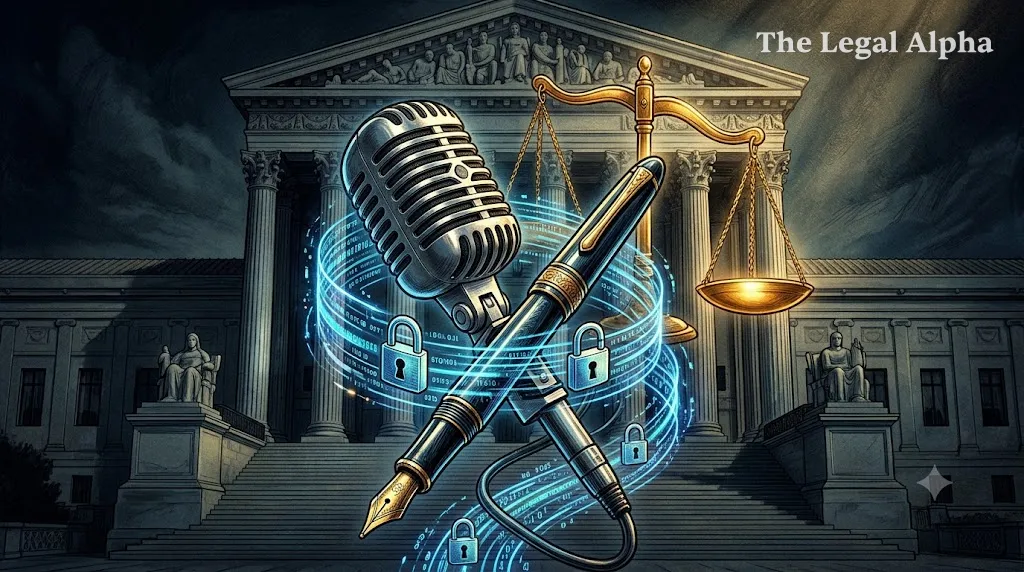
A coalition of 21 prominent media organizations and journalist bodies in India—including major networks such as NDTV and CNN-News18—has approached the Supreme Court. The petitioners filed a legal challenge against the Central Government’s Digital Personal Data Protection (DPDP) Act, raising grave concerns that the statutory framework could stifle investigative journalism and compromise the confidentiality of journalistic sources before state agencies.
Legal Topic
-
Area of Law: Media and Constitutional Law / Data Protection
-
Sub-topic: Freedom of the Press vs. Digital Privacy Regulations
Core Legal Issue
Does the absence of explicit journalistic exemptions under the Digital Personal Data Protection Act infringe upon the fundamental right to freedom of speech and expression guaranteed under the Indian Constitution?
The central question concerns whether requiring journalists to obtain prior consent before collecting or publishing personal data—coupled with wide executive powers to demand disclosure of data—threatens the confidentiality of sources and impairs public-interest investigative reporting.
What Did the Court / Authority Decide?
The petition has been placed before the Supreme Court and remains in the preliminary stages of hearing against the Union of India. The Court has not issued a final determination on the merits; it is hearing the initial submissions and monitoring related challenges seeking constitutional review of the provisions.
Key Legal Points
-
Absence of a Press Exemption: The statute lacks clear provisions exempting bona fide journalistic work from prior consent mandates when gathering or publishing personal data.
-
Source Protection: Broad statutory powers allowing authorities to seek data disclosure risk encroaching upon the confidentiality of journalistic sources.
-
Constitutional Balance: The dispute turns on balancing the right to privacy (Article 21) against the right to free expression and press freedom (Article 19(1)(a)).
Relevant Law
-
Constitution of India:
-
Article 19(1)(a) (Freedom of speech and expression)
-
Article 21 (Protection of life and personal liberty; right to privacy)
-
Article 14 (Equality before the law)
-
-
Legislation:
-
Digital Personal Data Protection Act, 2023 (DPDP Act)
-
-
Judicial Precedent:
-
Justice K.S. Puttaswamy (Retd.) v. Union of India (2017) (Affirming privacy as a fundamental right)
-
Arguments of the Parties
-
The Petitioners (Media Organizations):
-
The petitioners argued that the framework makes investigative journalism virtually impossible, as journalists investigating corruption cannot be expected to seek prior written consent from subjects of their investigations.
-
They submitted that granting sweeping statutory powers to state bodies to requisition data directly endangers the anonymity and safety of confidential sources.
-
-
The Respondent (Union of India / The State):
-
The State contended that the law aims primarily to protect citizens' personal digital data against misuse, breaches, and unauthorized exploitation.
-
The government maintained that the statutory framework creates a balanced regulatory mechanism for responsible data handling without causing systemic disruption.
-
Why Does It Matter?
This dispute highlights the direct friction between data privacy laws and freedom of the press within a constitutional democracy. Without clear statutory exemptions for journalistic processing, investigative reporting faces significant legal exposure, compelling news organizations to alter editorial practices or risk severe non-compliance penalties.
Legal Takeaway
The constitutional challenge before the Supreme Court will delineate the boundaries between digital privacy mandates and the right to report freely. The defining question is whether the judiciary will mandate a carve-out for journalism to preserve investigative scrutiny and safeguard confidential sources.
Sources
-
Primary Source: Constitutional writ petition filed before the Supreme Court of India challenging the Digital Personal Data Protection Act, 2023.
-
Additional Sources: News agency reports and legal proceedings documentation concerning media organizations' petitions against the DPDP Act.