Supreme Court Seeks Response on Application Alleging Assault on Pregnant Journalist During Court March
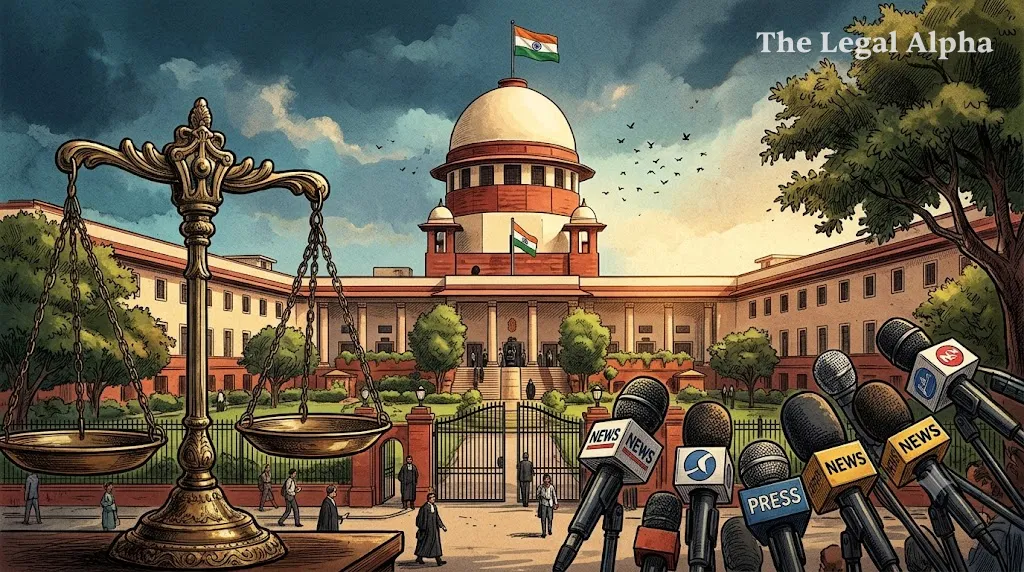
The Supreme Court of India issued formal notice on an application seeking criminal registration and contempt proceedings against Lok Sabha Leader of the Opposition Rahul Gandhi. The plea stems from an alleged confrontation inside the court complex during an Opposition march led by political leaders on October 12, 2026.
The applicant, a journalist named Richa Parashar who stated she was three months pregnant at the time, alleged that she was shoved and manhandled while attempting to report on the gathering near the court gates, which subsequently required her to seek medical care. Following an earlier refusal by the bench to entertain oral mentions without formal pleadings, the applicant filed a formal interlocutory petition seeking directions for an FIR and contempt of court proceedings. The court has now called for responses from the concerned parties.
Legal Topic
-
Area of Law: Constitutional Law / Criminal Procedure
-
Sub-topic: Contempt of Court / Security and Decorum of Judicial Precincts
Core Legal Issue
The legal question before the Supreme Court centres on the maintainability of invoking the court’s constitutional and contempt jurisdictions under Articles 32 and 129 to direct registration of a criminal case and initiate contempt action for alleged physical assault and disruption within court precincts.
Specifically, the court is addressing whether conduct during political gatherings or processions inside or adjoining court grounds amounts to interference with the administration of justice and a violation of court decorum, and whether judicial intervention under extraordinary writ powers is warranted while statutory remedies under criminal procedural law remain available.
What Did the Court Decide?
-
The bench formally issued notice on the application to the named respondents, seeking their legal replies.
-
The court declined to express any prima facie opinion or make adverse factual findings against any party at this preliminary stage.
-
The bench adhered to procedure by requiring formal documentation, reiterating that serious allegations raised via oral mentions cannot be acted upon without verified pleadings on record.
-
The application has been clubbed with connected writ proceedings examining the regulation of demonstrations and processions in and around court complexes.
Key Legal Points
-
Jurisdictional Boundary Between Ordinary Criminal Law and Writ Remedies: The court reiterated that complaints alleging assault typically require statutory investigation under ordinary criminal procedure rather than immediate evidentiary findings by an appellate constitutional bench.
-
Regulation of Court Precincts: The proceedings raise pivotal questions regarding the permissible limits of public and political assemblies within judicial corridors and the duty to maintain institutional decorum.
-
Standard for Summary Contempt Cognizance: The bench underscored that summary contempt jurisdiction under Article 129 cannot be activated solely on oral arguments or unsubstantiated mentions in open court without structured affidavits and proof.
Relevant Law
-
Article 32 of the Constitution of India: Right to move the Supreme Court for the enforcement of fundamental rights.
-
Article 129 of the Constitution of India: Power of the Supreme Court as a court of record to punish for contempt of itself.
-
Section 173 of the Bharatiya Nagarik Suraksha Sanhita (BNSS), 2023 / Section 154 CrPC: Statutory procedure governing the registration of First Information Reports for cognizable offences.
-
Contempt of Courts Act, 1971: Statutory framework governing actions that scandalise courts or prejudice judicial administration.
Arguments of the Parties
Applicant / Petitioner
-
The applicant submitted that she was on official journalistic duty inside the court premises when she was physically jostled and pushed by the respondent and his entourage.
-
Counsel highlighted her vulnerable physical condition, stating she was three months pregnant and had to undergo medical evaluation following the incident.
-
It was argued that aggressive political gatherings inside court precincts threaten the safety of stakeholders and undermine the dignified functioning of the judiciary, justifying both direct registration of an FIR and contempt of court action.
Respondents / Political Party Position
-
The allegations have been categorically denied as factually baseless, politically motivated, and part of an orchestrated smear effort.
-
Representatives asserted that review of publicly available footage does not substantiate the claims of deliberate pushing or assault by the leader.
-
They contended that extraordinary writ mechanisms and contempt motions should not be permitted as political instruments to bypass routine criminal procedure and investigative standards.
Why Does It Matter?
This development highlights the growing friction between political mobilization and the institutional neutrality of courthouse grounds. Court campuses have historically maintained strict access controls and behavioral norms to safeguard judges, litigating parties, and officers of the court.
By entertaining the application within broader proceedings on courtroom security and protest guidelines, the Supreme Court could establish binding guidelines regarding assembly, political campaigning, and media access within judicial precincts across the country. Furthermore, the outcome will reaffirm the procedural threshold required before the apex court exercises extraordinary writ jurisdiction to mandate police investigations against political figures.
Legal Takeaway
The issuance of notice demonstrates that while the Supreme Court is vigilant about maintaining security and decorum within its premises, it maintains strict procedural discipline by insisting on verified pleadings over oral mentions before examining allegations of contempt or criminal conduct.
Sources
-
Primary Source: Supreme Court of India Daily Cause List and Proceedings in Digant Mishra and Others v. Union of India and Others (W.P.(C) No. 1360/2026).
-
Additional Sources: Supreme Court hearing records, LiveLaw, and Deccan Chronicle reporting on the October 2026 proceedings before the Chief Justice of India's bench.