Supreme Court Rules That Fear of MLA Disqualification Cannot Alone Justify Stay of Conviction
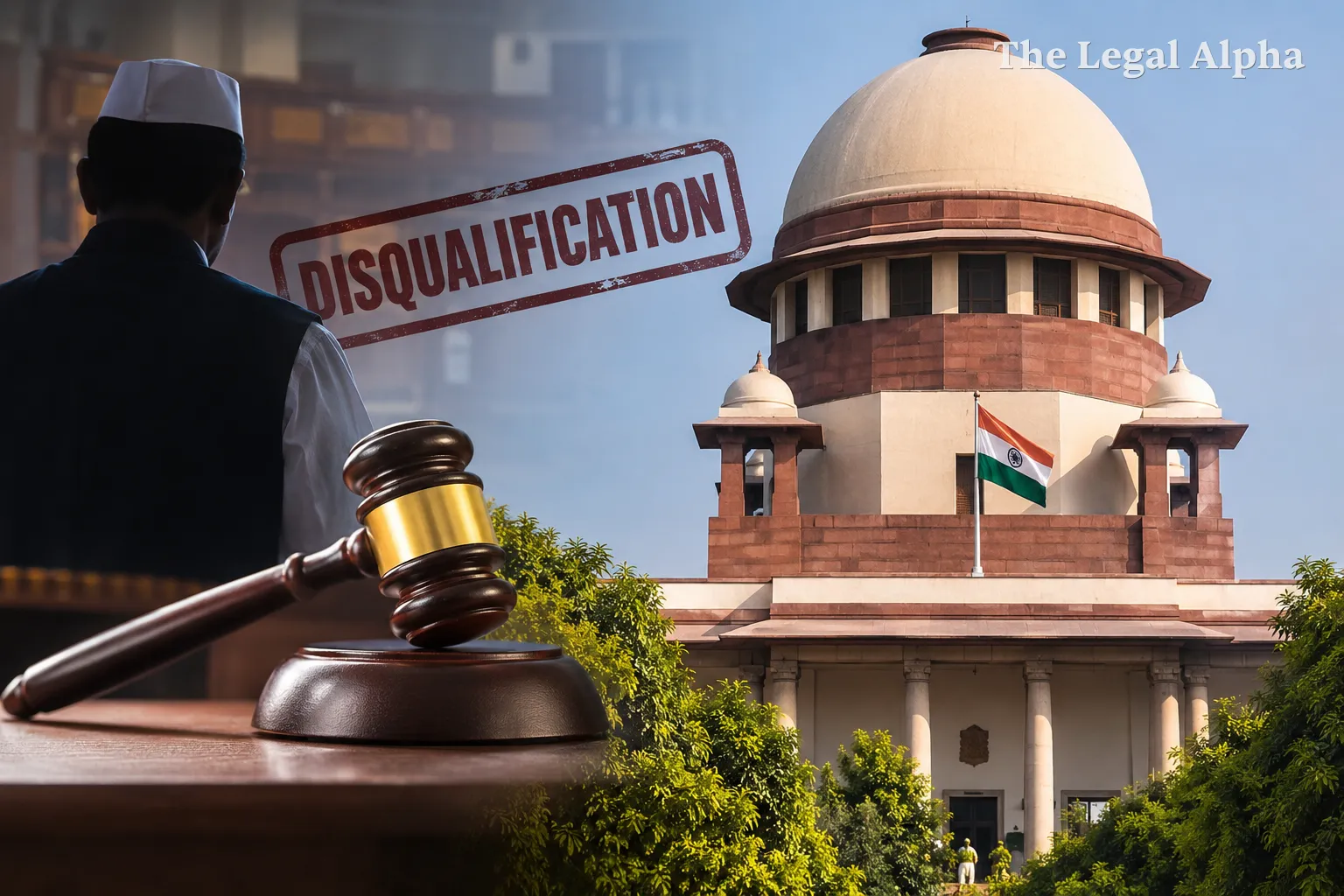
The Supreme Court of India has clarified that the possibility of losing a legislative seat cannot, by itself, justify staying a criminal conviction. An elected representative seeking a stay of conviction must satisfy a much higher legal threshold and demonstrate a clear, apparent error in the judgment.
The ruling came in the case concerning Karnataka MLA Vinay Rajashekharappa Kulkarni, who was convicted in the 2016 murder of Yogesh Goudar. The judgment reinforces the principle that statutory consequences of criminal conviction cannot be avoided merely because they may affect an elected representative's political position.
What Happened in the Case?
The case arose from the murder of Yogesh Goudar, a BJP Zilla Panchayat member who was killed in Dharwad, Karnataka, in June 2016.
A Special Court convicted Vinay Rajashekharappa Kulkarni, a sitting Congress MLA and former Karnataka minister, along with other accused persons, for offences relating to murder and criminal conspiracy. The trial court imposed life imprisonment.
On July 31, 2026, the Karnataka High Court stayed Kulkarni's conviction and suspended the sentences of several other convicts, granting them bail.
The High Court considered the possibility that Kulkarni would face disqualification as an MLA under Section 8(3) of the Representation of the People Act, 1951, if his conviction remained in force.
The State of Karnataka, the Central Bureau of Investigation (CBI) and the deceased's brother challenged the High Court's orders before the Supreme Court.
Area of Law and Sub-topic
Area of Law: Criminal Law and Constitutional Law
Sub-topic: Stay of Conviction, Legislative Disqualification and Electoral Law
What Was the Core Legal Issue?
The principal question before the Supreme Court was whether the possibility of disqualification from the Legislative Assembly could independently justify staying the conviction of a legislator.
The Court also examined the legal standard that appellate courts must apply before staying a criminal conviction and whether the High Court had adequately considered the prosecution's objections before granting relief.
What Did the Supreme Court Decide?
The Supreme Court set aside the Karnataka High Court's orders staying Kulkarni's conviction and suspending the sentences of the other convicts.
It held that staying a conviction requires a higher threshold than merely establishing a prima facie case. The applicant must demonstrate a palpable mistake in the conviction judgment, meaning an obvious and serious error apparent on the face of the record.
The Court rejected the reasoning that possible disqualification under Section 8(3) of the Representation of the People Act could serve as the primary ground for staying a conviction.
It also directed the convicted respondents to surrender within two weeks to undergo their sentences.
The Court made clear that the statutory consequences of conviction cannot be avoided simply by raising the possibility of losing legislative membership.
Key Legal Principles Emerging from the Judgment
-
Stay of conviction is exceptional: Courts cannot routinely suspend convictions while criminal appeals are pending.
-
A higher threshold applies: The applicant must demonstrate a palpable error in the conviction judgment, not merely raise arguable grounds.
-
Disqualification is not sufficient: The possibility of losing legislative membership cannot be the primary justification for staying a conviction.
-
Sentence suspension is different: Suspension of sentence requires a good prima facie case indicating a fair chance of acquittal, whereas staying conviction requires a substantially higher standard.
-
Serious offences require careful scrutiny: The pendency of an appeal or the possibility of delayed hearings does not automatically justify suspension of a life sentence.
Relevant Legal Provisions and Judicial Precedents
Section 8(3), Representation of the People Act, 1951
This provision provides for disqualification of a person convicted of an offence and sentenced to imprisonment for not less than two years. The disqualification ordinarily continues for the prescribed period after release.
Article 191(1)(e), Constitution of India
Empowers Parliament to prescribe disqualifications for membership of State Legislatures.
Section 389, Code of Criminal Procedure, 1973
Deals with suspension of sentence pending appeal and release of a convicted person on bail. The distinction between suspension of sentence and stay of conviction is central to the present ruling.
Important precedents considered:
-
K.C. Sareen v. CBI (2001) 6 SCC 584.
-
Ravikant S. Patil v. Sarvabhouma S. Bagali (2007) 1 SCC 673.
-
Afjal Ansari v. State of Uttar Pradesh (2024) 2 SCC 187.
-
Omprakash Sahni v. Jai Shankar Choudhary (2023) 6 SCC 123.
Arguments Presented by the Parties
State of Karnataka, CBI and the Deceased's Brother
The appellants challenged the High Court's decision, arguing that staying a conviction is an exceptional remedy requiring a higher legal standard. They contended that the High Court had failed to address the prosecution's objections and had relied on the potential disqualification of Kulkarni rather than identifying a serious error in the conviction judgment.
They also questioned the High Court's treatment of the evidence, including the testimony of the approver and the material collected during the earlier investigation.
Vinay Kulkarni and Other Convicts
The respondents argued that the High Court's orders were justified when read alongside its assessment of the pending appeals.
Their counsel questioned the reliability of the approver's testimony, highlighted witnesses turning hostile and alleged that the investigation was politically motivated. They also argued that relevant evidence from the earlier Dharwad trial had not been properly considered.
These were rival submissions and should not be treated as findings establishing innocence or guilt beyond the existing trial judgment.
Why Does This Judgment Matter?
The ruling clarifies the limits of judicial discretion when convicted legislators seek relief from the consequences of criminal convictions.
Section 8(3) of the Representation of the People Act, 1951, creates statutory consequences for qualifying criminal convictions. The Supreme Court has made clear that these consequences cannot be routinely avoided through applications for a stay of conviction.
The judgment also draws an important distinction between staying a conviction and suspending a sentence. Although both remedies may be sought during an appeal, they operate under different legal standards.
For elected representatives, the ruling reinforces that holding public office does not create an automatic entitlement to protection from statutory disqualification. For appellate courts, it highlights the need to examine the merits of the conviction and provide clear reasons before granting exceptional relief.
Importantly, the Supreme Court's decision does not finally determine the pending criminal appeals against the convictions. It addresses the legality of the interim relief granted by the Karnataka High Court.
Legal Takeaway
The possibility of disqualification from the Legislative Assembly cannot, by itself, justify staying a criminal conviction. An applicant must demonstrate a palpable and fundamental error in the conviction judgment to satisfy the exceptional threshold for such relief. The statutory consequences of conviction remain enforceable unless the conviction itself is lawfully stayed or overturned.
Sources
Primary Source:
Additional Sources: