Delhi High Court Upholds Criminal Charges Against Lalu Prasad Yadav, Rabri Devi and Tejashwi Yadav in IRCTC Case
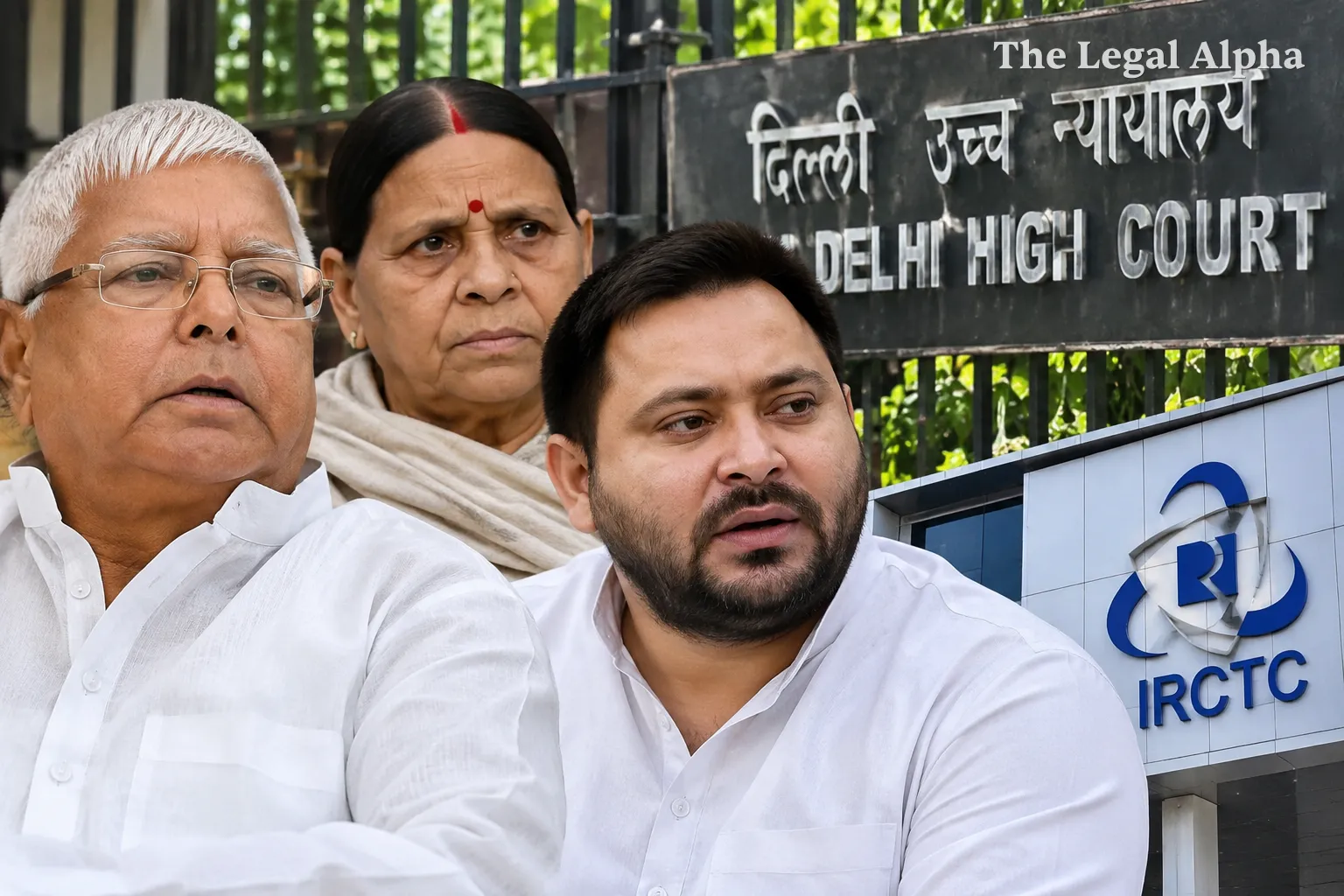
The Delhi High Court has dismissed the petitions filed by former Bihar Chief Minister Lalu Prasad Yadav, Rabri Devi and Tejashwi Prasad Yadav challenging the framing of criminal charges against them in the alleged IRCTC hotel corruption case.
A Bench of Justice Swarana Kanta Sharma refused to interfere with the October 13, 2025 order passed by the Rouse Avenue Court, which had directed that charges be framed against the accused in the Central Bureau of Investigation (CBI) case.
The High Court also rejected petitions filed by several other accused persons and entities connected with the case.
The proceedings concern alleged irregularities in the leasing of two railway hotels in Ranchi and Puri during Lalu Prasad Yadav's tenure as Union Railway Minister between 2004 and 2009.
Area of Law: Criminal Law
Sub-topic: Criminal Conspiracy, Corruption, Cheating and Prevention of Corruption Act
The central legal question was whether the trial court had sufficient material to justify framing criminal charges against Lalu Prasad Yadav, Rabri Devi, Tejashwi Yadav and the other accused in connection with the alleged manipulation of the IRCTC hotel leasing process.
The petitions challenged the legality and correctness of the trial court's order, including whether the material collected during the investigation established a prima facie case warranting a criminal trial.
The High Court dismissed the petitions and upheld the trial court's order framing charges.
Justice Swarana Kanta Sharma stated that all the petitions stood dismissed and that the order on charge would remain in force.
The trial court had directed the framing of charges under the following provisions:
-
Section 120B of the Indian Penal Code (IPC): Criminal conspiracy.
-
Section 420 IPC: Cheating and dishonestly inducing delivery of property.
-
Section 13(1)(d)(ii) and (iii) read with Section 13(2) of the Prevention of Corruption Act, 1988: Criminal misconduct involving abuse of official position to obtain an undue advantage and the corresponding punishment.
The High Court's decision means that the accused will have to face trial on the charges already framed.
A detailed judgment explaining the High Court's reasoning is awaited. The dismissal of the petitions does not amount to a finding of guilt.
-
The Delhi High Court declined to interfere with the trial court's decision to frame criminal charges.
-
The case involves allegations of manipulation of the tender process for leasing railway hotels in Ranchi and Puri.
-
The CBI alleges that the hotel contracts were awarded to Sujata Hotels Private Limited through a manipulated tender process.
-
The prosecution has alleged that land and share transactions involving entities connected with the Yadav family formed part of the alleged arrangement.
-
The charges remain allegations to be established through evidence during the criminal trial.
Indian Penal Code, 1860
-
Section 120B – Punishment for criminal conspiracy.
-
Section 420 – Cheating and dishonestly inducing delivery of property.
Prevention of Corruption Act, 1988
-
Section 13(1)(d)(ii) and (iii) – Criminal misconduct involving abuse of official position to obtain an undue advantage.
-
Section 13(2) – Punishment for criminal misconduct.
Petitioners – Lalu Prasad Yadav, Rabri Devi and Tejashwi Yadav
The accused challenged the trial court's decision, contending that the material collected during the investigation did not justify framing criminal charges against them.
Rabri Devi argued that the trial court had relied on presumptions concerning the alleged undervaluation of land and share transactions rather than sufficient material establishing her involvement.
Tejashwi Yadav also questioned the existence of adequate evidence to proceed against him.
During earlier proceedings, Lalu Prasad Yadav's counsel, Senior Advocate Kapil Sibal, had questioned the timing of the prosecution sanction and argued that the transactions were undertaken in accordance with government policy.
The accused have also disputed the allegations and questioned the investigation.
Respondent – Central Bureau of Investigation (CBI)
The CBI's case is that irregularities were deliberately introduced into the tendering process for the operation and maintenance of the railway hotels at Ranchi and Puri.
According to the investigating agency, the alleged manipulation benefited Sujata Hotels Private Limited, while land and share transactions involving entities connected with the accused formed part of the alleged quid pro quo arrangement.
The prosecution maintains that the material collected during the investigation provides grounds for proceeding against the accused.
The Delhi High Court's decision is significant because it allows the criminal proceedings in the CBI's IRCTC hotel case to continue without interference at the charge-framing stage.
The case concerns allegations involving the award of public-sector hotel contracts, the conduct of public officials and the alleged transfer of valuable property through connected business entities.
The proceedings also underline the importance of accountability in public procurement and the legal consequences that may arise when public authorities are allegedly influenced to favour private entities.
However, the framing of charges and the dismissal of challenges to those charges do not establish criminal liability. The prosecution will still have to prove its allegations through evidence during the trial.
The Delhi High Court has upheld the trial court's decision to proceed against Lalu Prasad Yadav, Rabri Devi, Tejashwi Yadav and other accused in the alleged IRCTC hotel corruption case. The decision keeps the criminal charges in place, but the question of guilt remains to be determined through the trial.
Primary Source:
- Delhi High Court – Decision dated November 26, 2026, in Lalu Prasad Yadav v. CBI & Other Connected Matters. Detailed judgment awaited.
Additional Sources: