Supreme Court Rebukes Counsel Seeking Urgent Listing in Rahul Gandhi Assets Matter, Warns Against Weaponising Court Proceedings for Publicity
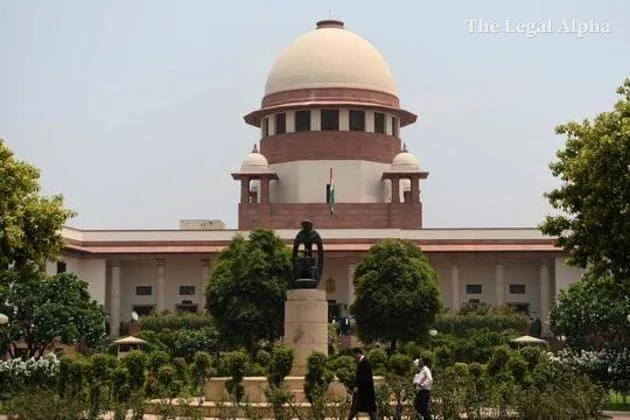
The Supreme Court of India strongly reprimanded an advocate who sought an urgent listing of a plea related to alleged disproportionate assets against Congress leader and Lok Sabha Leader of Opposition Rahul Gandhi. Chief Justice of India Surya Kant remarked during oral mentionings that the effort lacked substantive legal merit and appeared motivated by a desire to generate media attention.
To curb the misuse of court appearances for theatrical headlines, the Chief Justice also directed registry staff to halt the live-streaming broadcast during the mentioning hour. The exchange arose in connection with ongoing proceedings where the apex court had previously stayed an Allahabad High Court directive that ordered preliminary inquiries by the Central Bureau of Investigation (CBI) and the Enforcement Directorate (ED).
Legal Topic
Area of Law: Criminal Jurisprudence and Constitutional Law
Sub-topic: Abuse of Judicial Process / Regulation of Oral Mentionings and Live-Streaming
Core Legal Issue
The controversy centres on the threshold required to order preliminary investigative inquiries against public representatives and whether private litigants can use procedural mechanisms—specifically urgent mentioning before the roster bench—to circumvent existing interim stay orders and court scheduling rules.
Substantively, the dispute questions whether a High Court can direct premier investigative bodies like the CBI and ED to conduct an inquiry into a citizen's asset declarations without first affording the accused party an opportunity to be heard, and whether subsequent litigation in the same subject matter constitutes an abuse of process aimed at parallel media trials.
What Did the Court / Authority Decide?
The Supreme Court firmly declined the request for unscheduled or accelerated listing, sternly reminding counsel that courtrooms cannot be treated as platforms for political point-scoring or press coverage. Chief Justice Surya Kant maintained the status quo established by the bench's earlier orders, leaving the operative stay over the High Court’s directives intact.
The bench reiterated that substantive proceedings would be taken up only in due course according to established listing procedures, while temporarily suspending live transmission of oral mentions to prevent counsel from leveraging real-time broadcasts for external publicity.
Key Legal Points
-
Restraint on Public-Interest Theatrics: The apex court reiterated that mentioning matters before the Chief Justice’s court must involve genuine, demonstrable urgency rather than political expediency or media visibility.
-
Regulation of Live-Streamed Proceedings: The bench exercised administrative discretion over courtroom broadcasting, establishing that live-streaming can be curbed during mentioning hours if it incentivises counsel to grandstand for cameras.
-
Preservation of Interim Stay: The Supreme Court’s subsisting order staying the Allahabad High Court’s inquiry mandate against Rahul Gandhi remains operative, barring investigative agencies from filing reports without leave.
-
Adherence to Natural Justice in Preliminary Probes: The proceedings reaffirm that judicial orders initiating anti-corruption or asset verifications cannot bypass the fundamental rule of audi alteram partem.
Relevant Law
-
Constitution of India — Article 32 and Article 136: Pertaining to the Supreme Court's jurisdiction to entertain Special Leave Petitions against interlocutory high court orders and protect fundamental rights against arbitrary investigations.
-
Constitution of India — Article 226: High Court writ jurisdiction, invoked in the initial challenge before the Lucknow Bench of the Allahabad High Court.
-
Supreme Court Rules, 2013 (Practice and Procedure for Mentioning): Governing the protocol for urgent out-of-turn listings before the Chief Justice of India.
-
Model Guidelines for Live-Streaming and Recording of Court Proceedings: Framework governing judicial discretion in regulating public broadcasts to preserve court decorum.
Arguments of the Parties
Petitioner / Moving Counsel
Counsel seeking urgent listing urged the apex court to schedule an early hearing, contending that the allegations concerning disclosures of financial assets and income required expeditious judicial examination. The underlying complainant argued that investigative authorities must verify whether declared assets align with known, lawful sources of earnings.
Respondent / Opposing Position
In the overarching challenge, Rahul Gandhi's legal representation has consistently maintained that the complaint is politically motivated, legally untenable, and constitutes an impermissible "fishing and roving" inquiry. They argued that the High Court erred in directing federal agencies to conduct preliminary investigations without issuing prior notice or granting him an opportunity to rebut the allegations, violating natural justice.
Why Does It Matter?
This development signals a clear institutional message from the apex court regarding courtroom discipline in high-profile political disputes. By explicitly calling out attempts to elicit headlines and restricting live broadcast during mentions, the Supreme Court has drawn a sharp line between legitimate legal redress and publicity-driven advocacy.
For the legal fraternity, the ruling underscores that procedural avenues like urgent mentioning will face heightened judicial scrutiny if perceived as public-relations exercises. For public figures facing roving asset complaints, it reaffirms that constitutional courts will safeguard due process and resist parallel public trials where established legal grounds are absent.
Legal Takeaway
Urgent mentions before the Supreme Court must satisfy bona fide legal urgency rather than an appetite for media attention. The court will not permit procedural mechanics or live broadcasts to be leveraged for political grandstanding while valid interim stays remain in force.
Sources
Primary Source:
-
Proceedings and Oral Observations before the Supreme Court Bench presided over by Chief Justice of India Surya Kant (Listing / Mentioning Board).
Additional Sources:
-
Records of Criminal Writ Petition proceedings before the High Court of Judicature at Allahabad (Lucknow Bench).
-
Supreme Court Case Status and Order records regarding Special Leave Petitions challenging the Allahabad High Court directives in the asset verification matter.