Supreme Court Reallocates CAPF Contempt Pleas to Special Bench Amid Scrutiny Over Last-Minute Delisting
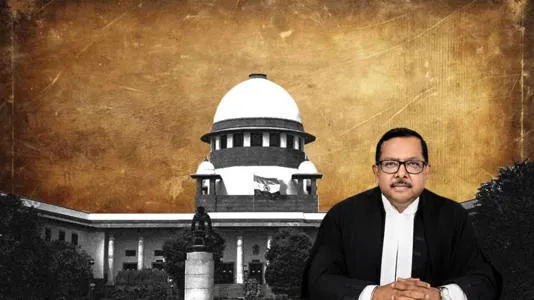
A sharp courtroom dispute over judicial transparency and administrative procedure unfolded in the Supreme Court on September 30, 2026, after contempt petitions concerning the deputation of Indian Police Service (IPS) officers to the Central Armed Police Forces (CAPFs) were abruptly pulled from a regular bench and reassigned to a newly constituted Special Bench.
The matter was originally listed before a Division Bench comprising Justice Ujjal Bhuyan and Justice Atul S. Chandurkar on September 29. However, the case was deleted from the cause list during the lunch recess without notice to the judges or the petitioners. Later that evening, Chief Justice of India Surya Kant exercised his administrative prerogative as "Master of the Roster" to reassign the petitions to a Special Bench of Justice Manoj Misra and Justice Ujjal Bhuyan.
When the Special Bench assembled, counsel representing the CAPF officers protested the unannounced reallocation, pointing out that government law officers had mentioned the matter before the Chief Justice without informing the opposing side. The incident brought the administrative mechanics of Supreme Court case allocation into the spotlight once again.
Legal Topic
Area of Law: Constitutional Law, Service Jurisprudence & Judicial Administration
Sub-topic: Master of the Roster Discretion, Listing Procedures, and Contempt of Court Enforcement
Core Legal Issue
The immediate dispute centres on whether the registry or administrative authorities can remove a case scheduled under a judicial order and reassign it through an ex-parte mention, without notifying the presiding bench or the parties involved.
Underlying that procedural friction is a substantive conflict: whether contempt proceedings against the Union government for alleged non-compliance with a binding Supreme Court ruling on cadre posts can proceed independently, or whether they must be clubbed with new constitutional challenges brought against legislation enacted to alter those very service conditions.
What Did the Court / Authority Decide?
The Special Bench directed that the registry’s written explanation detailing why the case was abruptly deleted from the September 29 cause list be kept in a sealed cover.
On the merits of the listing dispute, the bench declined to split the proceedings. While the court noted that the original bench should have been apprised of the administrative file being before the Chief Justice, it accepted the oral apologies tendered by the law officers for not serving advance notice of the mentioning.
The bench directed both sides to exchange pleadings and ordered that the contempt petitions and the writ petitions challenging the new enactment be listed together for hearing on October 15, 2026. The court did not deliver a final ruling on the contempt allegations or on the constitutional validity of the legislation, keeping all substantive questions open.
Key Legal Points
-
Master of the Roster Prerogative: The Chief Justice of India retains exclusive administrative control over bench constitution and case allocation, though the sudden exercise of this power without notice to an assigned bench tests established judicial conventions.
-
Integrity of Judicial Orders: An order passed by a judicial bench fixing a date and time for a hearing cannot be overridden administratively by the registry without explicit judicial intimation.
-
Fair Notice in Mentioning: Making ex-parte administrative mentions to shift matters or alter rosters without serving advance notice to opposing counsel breaches procedural fairness and institutional decorum.
-
Interdependence of Contempt and Validating Acts: When Parliament enacts a statutory regime that addresses the basis of an earlier judicial decree, courts must determine whether substantive contempt can be examined independently or must be decided alongside the constitutional challenge to the new statute.
Relevant Law
-
Article 145 of the Constitution of India: Confers rule-making powers on the Supreme Court to regulate its own practice and procedure, establishing the Chief Justice as the sole Master of the Roster.
-
Article 129 of the Constitution of India & The Contempt of Courts Act, 1971: Empowers the Supreme Court to punish for contempt of itself for willful disobedience of its directions and mandates.
-
Supreme Court Rules, 2013: Regulates the preparation of cause lists, mentioning protocols, and case listings by the administrative registry.
-
Central Armed Police Force (General Administration) Act, 2026: The newly enacted statutory framework governing appointments, promotions, and deputation rules within the CAPF cadres.
Arguments of the Parties
Petitioner / Applicant
Senior Advocate Shyam Divan, appearing for the retired CAPF officers, argued that removing an actively listed case through an unannounced mention behind the backs of the litigants strikes at institutional credibility. The petitioners submitted that their contempt plea was strictly based on non-compliance with definitive, time-bound directions issued by the Supreme Court in May 2025 regarding IPS deputation quotas. They insisted that the contempt action was distinct from subsequent challenges to the 2026 legislation and should be adjudicated without delays or statutory diversions.
Respondent / State
Solicitor General Tushar Mehta and Additional Solicitor General Aishwarya Bhati tendered an unconditional apology for the inadvertent procedural lapse in failing to inform the petitioners' counsel about mentioning the file before the Chief Justice. On substance, the Centre contended that the contempt petition could not be treated in isolation from the writ petitions challenging the Central Armed Police Force (General Administration) Act, 2026. The Union argued that because the new statute forms the core legal basis for its administrative actions, judicial propriety and comprehensive resolution required both batches to be examined together by a single bench.
Why Does It Matter?
The controversy touches upon the internal governance and listing transparency of the Supreme Court. While previous rulings have reaffirmed that the Chief Justice holds unquestioned authority as the Master of the Roster, sudden procedural movements—particularly involving government mentions without notice to private litigants—foster concerns regarding listing predictability and institutional consistency.
Substantively, the outcome of the combined hearing will directly affect thousands of cadre officers across the Border Security Force (BSF), Central Reserve Police Force (CRPF), Central Industrial Security Force (CISF), Indo-Tibetan Border Police (ITBP), and Sashastra Seema Bal (SSB). The dispute determines whether cadre officers will secure timely promotional opportunities to senior command posts or continue to face career stagnation due to incoming IPS deputation.
Legal Takeaway
The Chief Justice’s administrative authority as Master of the Roster remains paramount in assigning benches, but procedural transparency and advance notice to opposing counsel remain vital to preserving institutional credibility. Where subsequent legislation fundamentally alters the rights adjudicated under an earlier decree, courts will typically hear contempt allegations and constitutional challenges concurrently.
Sources
Primary Source:
-
Supreme Court of India, Record of Proceedings in Mahendra Singh Deo v. Govind Mohan & Ors. [CONMT.PET.(C) No. 37/2026 in C.A. No. 13106/2024], Orders dated September 29, 2026, and September 30, 2026.
Additional Sources:
-
Bar & Bench, "CAPF case listing fiasco: Supreme Court asks why original bench wasn't informed before matter was shifted" (September 30, 2026).
-
LiveLaw, "Supreme Court Special Bench Criticises Manner Of CAPF Contempt Case Listing; Centre Says Request Was Made Before CJI" (September 30, 2026).
-
The Hindu, "CJI sets up special bench to hear CAPF officers' plea after case was struck off cause list" (September 29–30, 2026).
-
ThePrint, "Who gets to hear a case? Last-minute formation of SC special bench for CAPF contempt pleas revives row" (September 30, 2026).