Gujarat High Court Orders DIG-Supervised CID Probe and FIR into DGFT Official's Death During CBI Raid, Ruling Inquest Inquiries Cannot Replace Criminal Investigation
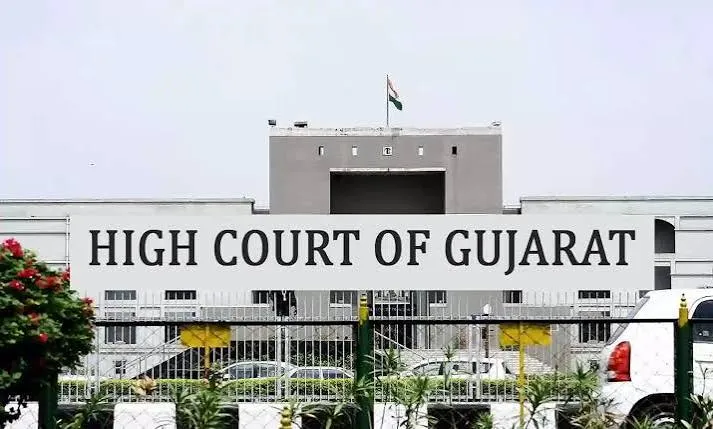
The Gujarat High Court has ordered the registration of a First Information Report (FIR) against unknown persons in connection with the custodial death of Jawri Mal Bishnoi, a senior official of the Indian Trade Service who died during a Central Bureau of Investigation (CBI) operation in Rajkot. Bishnoi, then serving as the Joint Director General of Foreign Trade (DGFT), fell to his death from the fourth floor of his office building in March 2023 shortly after federal investigators apprehended him in an alleged bribery trap.
While local police initially treated the case as an accidental fall and subsequent inquiries cleared the raiding team of criminal wrongdoing, Bishnoi's family petitioned the High Court alleging custodial harassment, torture, and foul play. Transferring the probe to Gujarat's Crime Investigation Department (CID Crime), the High Court held that preliminary accidental death inquiries and magisterial inquests cannot substitute a full-fledged statutory criminal investigation when allegations disclose the commission of a cognizable offence involving the loss of life under detention.
Legal Topic
Area of Law: Criminal Procedure and Constitutional Law
Sub-topic: Custodial Death, Section 154 CrPC Mandate, and Right to Life under Article 21
Core Legal Issue
The central question before the High Court was whether a preliminary accidental death inquiry and a magisterial inquiry conducted under Section 176 of the Code of Criminal Procedure (CrPC) can bar the registration of an FIR under Section 154 of the CrPC when the family of a deceased suspect alleges custodial torture and foul play.
Specifically, the court examined whether institutional inquiry findings can bypass substantive police investigations in cases where enforcement officers are accused of violating the fundamental right to life during search and custody operations.
What Did the Court / Authority Decide?
Justice M.K. Thakker allowed the criminal petition filed by Bishnoi’s wife and issued specific directions to initiate an independent criminal investigation:
-
Registration of FIR: Directed the police authorities to register an FIR against unknown persons to investigate the circumstances surrounding Bishnoi's death.
-
Transfer to CID (Crime): Entrusted the investigation to the State CID (Crime), setting aside the finality of earlier local inquiries.
-
Supervision by DIG: Ordered that the investigation be supervised directly by an officer not below the rank of Deputy Inspector General of Police (DIG), CID Crime, ensuring that the process is carried out promptly and in accordance with law.
-
Time-Bound Progress Report: Mandated the investigating agency to submit an appropriate report within three months to the registry of the Gujarat High Court for judicial perusal.
-
Status of Findings: Clarified that the order does not fix individual liability or make final determinations regarding how Bishnoi died; those questions remain subject to the forthcoming statutory investigation.
Key Legal Points
-
Inquests Cannot Supplant Criminal Investigations: Inquiries into accidental deaths under Section 174 or magisterial inquiries under Section 176 of the CrPC are summary and inquisitorial; they cannot replace a regular investigation under Section 154 when cognizable offences are alleged.
-
Heightened Judicial Scrutiny in Custodial Deaths: When allegations of custodial violence or constitutional violations arise against state or central authorities, courts have an affirmative duty to intervene and ensure formal investigative machinery is set in motion.
-
Independent Oversight Mechanisms: Constitutional courts retain the supervisory power to transfer investigations to specialized state bodies (such as the CID) under senior officer supervision to address gaps and ensure transparency in sensitive custodial matters.
Relevant Law
-
Constitution of India — Article 21: Guarantees protection of life and personal liberty, obligating the State to ensure prompt and impartial accountability whenever a death occurs in official custody.
-
Code of Criminal Procedure, 1973 (CrPC) — Section 154: Mandates the registration of an FIR whenever information reveals the commission of a cognizable offence (Lalita Kumari v. Government of U.P.).
-
Code of Criminal Procedure, 1973 (CrPC) — Section 174 & Section 176: Governs police inquiries into unnatural deaths and magisterial inquests into deaths occurring in custody.
-
Indian Penal Code, 1860 (IPC): Substantive penal provisions concerning culpable homicide, causing death by negligence, or abetment of suicide.
-
Supreme Court Guidelines in D.K. Basu v. State of West Bengal: Established mandatory safeguards and protocols for arrests, detentions, and custodial safety.
Arguments of the Parties
Petitioner
The petitioner—Bishnoi's widow—argued that her husband was subjected to severe mental harassment, coercion, and physical torture during the overnight raid conducted by the CBI team, resulting in his fatal fall. She highlighted discrepancies in the earlier inquiries conducted by the local police and an Assistant Commissioner of Police-led Special Investigation Team. To substantiate allegations of intimidation during the search, the petitioner also relied on audio recordings preserved on her son's mobile phone, arguing that these materials disclosed a cognizable offence requiring a formal homicide investigation under Section 154 CrPC.
Respondent (CBI and State Authorities)
The CBI and the State government opposed the petition, submitting that Bishnoi jumped from the fourth floor of the office building in an act of suicide after being apprehended while accepting a bribe. They contended that the incident had already been examined comprehensively through an accidental death inquiry and a magisterial inquiry under Section 176 CrPC, neither of which found evidence of physical assault, torture, or abetment by the federal officers. The respondents maintained that reopening the matter through an FIR was unnecessary and unsupported by the inquiry findings.
Why Does It Matter?
Cases involving deaths during raids or custody by premier central agencies frequently present sensitive jurisdictional issues between federal bodies and local police forces. This ruling reinforces the constitutional baseline that no investigative agency is beyond the reach of statutory criminal procedure.
By establishing that magisterial and police inquests cannot be used to close files where cognizable allegations exist, the Gujarat High Court reaffirms the strict mandate of Lalita Kumari in custodial death cases. The order ensures that claims of institutional excesses must face the rigorous testing of a regular criminal investigation rather than concluding prematurely at the stage of administrative inquiry.
Legal Takeaway
A magisterial inquest or accidental death report under the CrPC cannot substitute the mandatory registration of an FIR when allegations disclose a cognizable offence involving custodial death. When fundamental rights under Article 21 are implicated, constitutional courts will mandate independent, high-level police investigations to ensure institutional accountability.
Sources
Primary Source:
Gujarat High Court, Criminal Order, Single Bench of Justice M.K. Thakker (October 2026), regarding the custodial death of Jawri Mal Bishnoi.
Additional Sources:
-
The Times of India, "Guj HC orders FIR into DGFT officer’s custodial death during CBI raid" (October 3, 2026).
-
Vibes of India, "Questions Over 2023 CBI Raid Death Of DGFT Officer Return As Gujarat HC Orders Fresh Probe" (October 3, 2026).
-
Rajkot City Police and CBI Inquiry Records (March 2023).