Rajasthan High Court Directs LIC to Grant Full Pay for Suspension Period, Holds No Legal Difference Between 'Honourable' and Other Acquittals
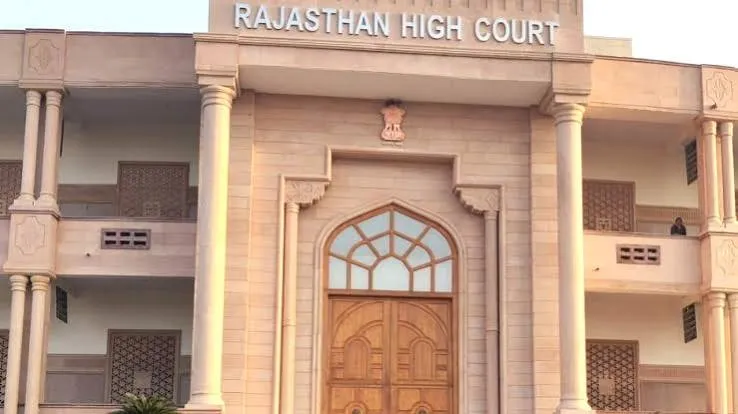
The Rajasthan High Court quashed an order of the Life Insurance Corporation of India (LIC) that denied full salary and allowances to an employee for his four-year suspension period following his acquittal in a criminal case. LIC had refused the service benefits on the ground that the criminal court acquitted the employee by extending the "benefit of doubt" rather than recording an "honourable acquittal."
The petitioner, Ram Pal Meena, was working as a Record Clerk at LIC's Jhotwara branch in Jaipur. In August 2009, LIC placed him under suspension following the registration of a criminal case against him. The Corporation never initiated an independent departmental enquiry against him. After a full trial in which 20 prosecution witnesses were examined alongside defence witnesses, the Additional Sessions Judge acquitted Meena of all charges.
Following the acquittal, LIC revoked Meena's suspension in January 2014. Initially, the disciplinary authority passed an order treating his entire suspension period as time spent on duty with full pay and allowances. However, weeks later and without giving him any notice, the Senior Divisional Manager cancelled that order and issued a fresh directive under Rule 38(b) of the LIC Staff Rules, classifying the suspension period as "not spent on duty" and restricting his remuneration strictly to the subsistence allowance already paid. A departmental appeal against this decision was rejected in November 2014, prompting Meena to approach the High Court.
Legal Topic
Area of Law: Service and Employment Law
Sub-topic: Suspension Benefits, Back Pay, and Effect of Criminal Acquittal
Core Legal Issue
The primary question before the High Court was whether an employer can deny an acquitted employee full pay and allowances for their suspension period by drawing an artificial distinction between an "honourable acquittal" and an acquittal based on the "benefit of doubt," particularly when the employer never conducted an independent domestic enquiry.
The court also had to determine whether an authority can unilaterally revoke an earlier administrative order granting service benefits without affording the employee a hearing or issuing a show-cause notice.
What Did the Court Decide?
Justice Anand Sharma allowed the writ petition, setting aside the Senior Divisional Manager's order dated February 12, 2014, as well as the appellate order dated November 22, 2014.
The High Court restored LIC's initial order dated January 29, 2014, and held that Meena's suspension period from August 24, 2009, to January 9, 2014, must be treated as period spent on duty for all practical purposes. The court directed LIC to release his full pay, allowances, and consequential benefits within 60 days from receiving a certified copy of the judgment.
The bench observed that the terms "honourable acquittal" or "clean acquittal" do not exist within statutory criminal procedure. When an employee is subjected to trial, defends the charges, and is acquitted, an employer who never held a departmental enquiry cannot selectively interpret the trial court's phraseology to withhold statutory service dues.
Key Legal Points
-
No Statutory Distinction in Acquittals: Neither the Code of Criminal Procedure nor the Bharatiya Nagarik Suraksha Sanhita (BNSS) defines or categorises acquittals into "honourable" or "technical." Consequently, creating an artificial divide to deny service benefits has no legally sustainable basis.
-
Absence of Departmental Enquiry: Where suspension was solely prompted by a criminal prosecution and no departmental inquiry was initiated by the employer, an acquittal at trial leaves no surviving foundation for punitive service deprivation.
-
Trial Court Phraseology Not Decisive: Criminal courts routinely use phrases such as "benefit of doubt" as standard judicial terminology; the absence of the explicit phrase "honourably acquitted" in a trial judgment cannot prejudice an employee's service rights.
-
Violation of Natural Justice: Withdrawing a previously conferred administrative benefit without issuing a show-cause notice or providing an opportunity of hearing renders the subsequent adverse order legally invalid.
Relevant Law
-
Life Insurance Corporation of India (Staff) Rules, 1960: Rule 36 (governing suspension) and Rule 38 (governing treatment of suspension period, specifically sub-clauses (a) and (b)).
-
Life Insurance Corporation Act, 1956: Section 49(2)(b) and (bb), under which the staff regulations are framed.
-
Criminal Jurisprudence Precedents: Judicial interpretations governing the concept of acquittal and Fundamental Rule (FR) 54 principles governing pay upon exoneration.
Arguments of the Parties
Petitioner
-
Counsel for the petitioner argued that LIC suspended Meena exclusively due to the criminal case without framing any departmental charges or conducting an internal enquiry.
-
It was submitted that after a complete trial on merits, the competent criminal court fully acquitted the petitioner, thereby clearing him of all accusations.
-
The petitioner contended that the initial order of January 29, 2014, granting full pay under Rule 38(a) was passed lawfully, and LIC could not arbitrarily recall it without complying with the principles of natural justice.
-
Counsel stressed that the phrase "honourable acquittal" cannot be stretched to deprive an employee who has been cleared by a competent court of his legitimate salary and allowances.
Respondents
-
LIC submitted that Rule 38(a) of the Staff Rules explicitly restricts the grant of full pay and allowances to cases where an employee is "honourably acquitted."
-
The Corporation contended that because the trial court used the words "by extending benefit of doubt," Meena's acquittal was not honourable, thereby justifying the application of Rule 38(b), which gives the disciplinary authority discretion to treat the period as not spent on duty.
-
Counsel for LIC argued that so long as Rule 38 contains the specific requirement of an "honourable acquittal" and its constitutional validity remains unchallenged, the Corporation was fully within its rights to withhold back pay beyond subsistence allowance.
Why Does It Matter?
Public sector corporations and government departments frequently rely on clauses requiring an "honourable acquittal" to deny back wages, seniority, and increments to employees who spent years under suspension during criminal trials. Because trial judges in India regularly conclude judgments using boilerplate language such as "benefit of doubt," administrative authorities often exploit this phrasing to treat acquittals as substandard.
This ruling reinforces a vital safeguard in service jurisprudence: an employer cannot rely on subjective linguistic labels in a criminal judgment to penalise an employee, especially when the employer chose not to conduct an internal inquiry to establish misconduct. It also underscores administrative accountability by establishing that benefits once formally recognized cannot be unilaterally stripped away behind closed doors.
Legal Takeaway
An acquittal by a competent criminal court clears an employee, and employers cannot withhold suspension salary by claiming the acquittal was merely on the "benefit of doubt." In the absence of a separate departmental enquiry, an employee cleared at trial is legally entitled to have the suspension period treated as duty with full pay and allowances.
Sources
Primary Source:
-
High Court of Judicature for Rajasthan at Jaipur, Ram Pal Meena v. Life Insurance Corporation of India & Ors., S.B. Civil Writ Petition No. 5/2015 (Neutral Citation: 2026:RJ-JP:39143), judgment dated September 25, 2026.
Additional Sources:
-
High Court certified record repository and law reports documenting the interpretation of the Life Insurance Corporation of India (Staff) Rules, 1960.