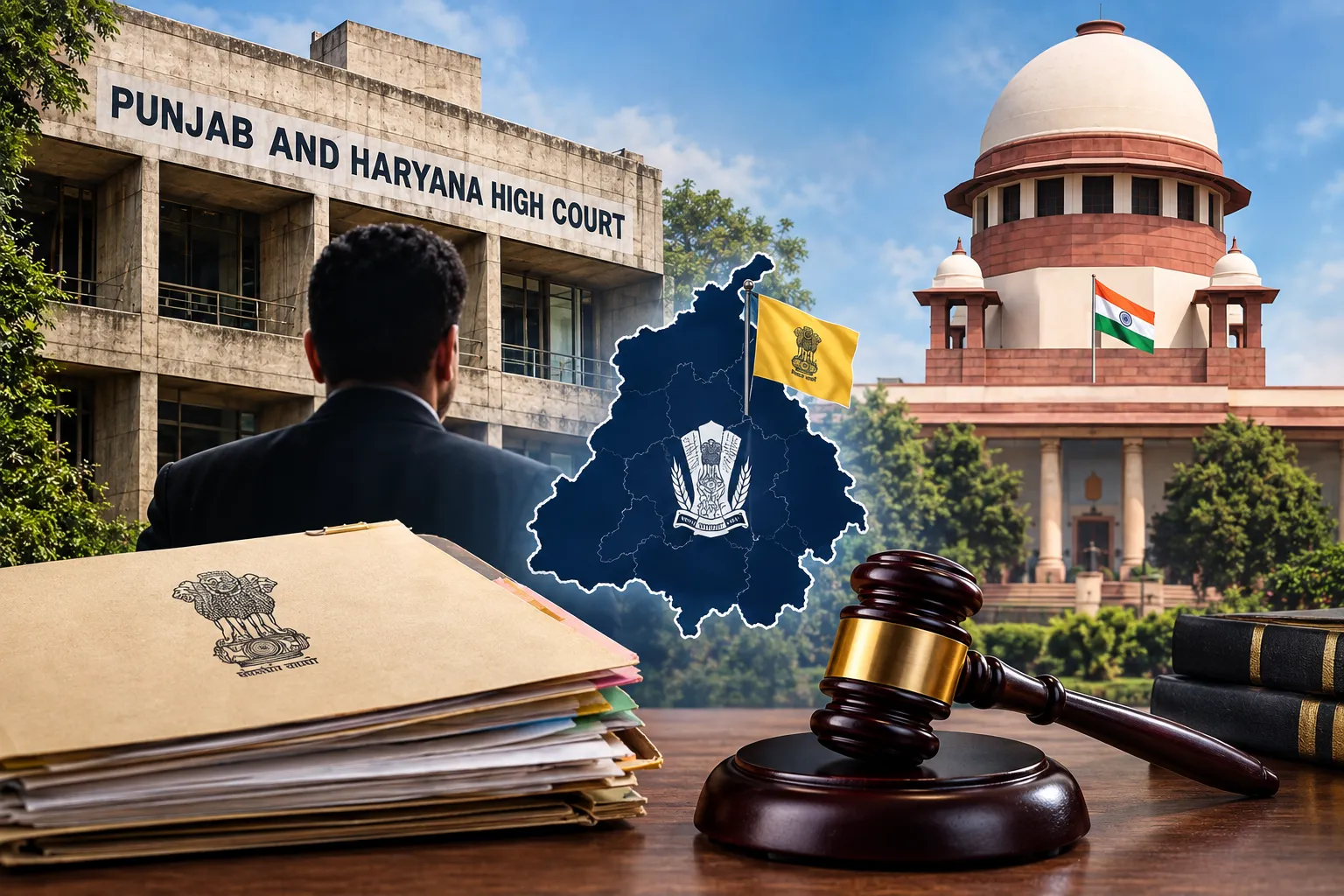
Supreme Court Questions Sweeping Legal Immunity for Election Commissioners, Disowns Unilateral Changes to Voter Registration Form 6
A three-judge bench of the Supreme Court of India, headed by Chief Justice of India Surya Kant and comprising Justice Joymalya Bagchi and Justice Vipul Pancholi, has issued notice to the Union Government and the Election Commission of India on petitions challenging the decisions and statutory immunity granted to the poll panel leadership.
During the hearing, the Supreme Court unequivocally distanced itself from administrative modifications made to Form 6—the statutory application for inclusion of names in electoral rolls under the Registration of Electors Rules, 1960. The Chief Justice clarified that the apex court had never mandated supplementary declarations or ancestral linkage verifications for voter registration, emphasizing that statutory forms cannot be amended through unilateral executive instructions.
Concurrently, the bench scrutinized Section 16 of the Chief Election Commissioner and other Election Commissioners (Appointment, Conditions of Service and Term of Office) Act, 2023, orally observing that the statutory immunity granted to Election Commissioners appears broader than the legal protections afforded to judges of the superior judiciary. The Court declined urgent interim pleas to suspend Chief Election Commissioner Gyanesh Kumar, directing that the matter be listed next week for a detailed response from the Commission.
Legal Topic
-
Area of Law: Constitutional Law / Election Law
-
Sub-topic: Statutory Immunity of Election Commissioners / Electoral Roll Revision & Form 6
Core Legal Issue
The controversy raises two critical constitutional questions. First, whether Section 16 of the 2023 CEC Act unconstitutionally confers sweeping civil and criminal immunity upon Election Commissioners without the essential accountability caveats found in comparable judicial statutes, such as the Judges (Protection) Act, 1985.
Second, whether the Election Commission of India, exercising administrative powers under Article 324, can introduce mandatory prerequisites, ancestral mapping, and supplementary verification hurdles into Form 6 of the Registration of Electors Rules, 1960 without formal statutory amendment by the central government.
What Did the Court Decide?
The Supreme Court issued formal notice to the Union Government and the Election Commission of India, tagging related petitions filed by Shailendra Mani Tripathi and Rakesh Kumar Singh.
The bench explicitly clarified that the Supreme Court had not sanctioned any alterations to Form 6, noting that any modification of statutory schedules must strictly adhere to the legislative rule-making process rather than executive circulars.
Regarding interim prayers seeking the immediate suspension of Chief Election Commissioner Gyanesh Kumar or a mandate requiring unanimous commission decisions, the bench declined to grant ex-parte interim relief. The Court observed that petitions must be framed with due regard to the practical working of the Constitution and the institutional continuity required to conduct national elections. The proceedings have been listed for substantive hearing next week upon receipt of authenticated records from the poll panel.
Key Legal Points
-
The Supreme Court observed that Section 16 of the 2023 CEC Act provides Election Commissioners with wider legal immunity than judges, lacking the express saving clauses that permit state or disciplinary action under Section 3(2) of the Judges (Protection) Act, 1985.
-
Chief Justice Surya Kant expressly clarified that the Supreme Court never directed modifications to Form 6 under the Registration of Electors Rules, 1960, reiterating that statutory formats cannot be revised by administrative overreach.
-
The Court refused to grant interim relief suspending Chief Election Commissioner Gyanesh Kumar, emphasizing that constitutional functionaries cannot be sidelined in a manner that paralyzes the electoral machinery.
-
Petitioners submitted that procedural revisions during the Special Intensive Revision (SIR) had led to extensive deletions of registered voters, disproportionately affecting electorates in Delhi and West Bengal.
-
The bench called for authenticated records and formal responses from the Union Government and the Election Commission of India, scheduling arguments for next week.
Relevant Law
|
Provision |
Scope & Key Application |
|---|---|
|
Section 16, CEC Act, 2023 |
Grants broad legal protection and immunity for actions taken by the Chief Election Commissioner and Election Commissioners. |
|
Section 3, Judges (Protection) Act, 1985 |
Defines the scope of judicial immunity while maintaining statutory reservation of powers to prosecute misconduct under Section 3(2). |
|
Article 324, Constitution of India |
Vests the superintendence, direction, and control of elections in the Election Commission of India. |
|
Rule 13 & Form 6, Registration of Electors Rules, 1960 |
Establishes the statutory procedure and specific application format for inclusion of a name in electoral rolls. |
Arguments of the Parties
Petitioner / Applicant / Appellant
Senior Advocates Menaka Guruswamy and Vikas Singh contended that the 2023 statute improperly elevated the Chief Election Commissioner to an unaccountable pedestal, granting immunity that exceeds that of constitutional judges. Counsel argued that unilateral additions to Form 6—mandating declarations regarding parental and grandparental presence on historic electoral rolls—led to widespread, unjustified voter roll purges of up to 25% to 30% in key urban constituencies. They argued that the CEC is an individual subject to ordinary legal accountability and urged the Court to issue interim directions requiring unanimous decision-making within the multi-member commission.
Respondent / State / Opposing Party
While formal counter-affidavits are awaited, the Union of India and Election Commission representatives have previously maintained that statutory protections under Section 16 are necessary to insulate election administrators from vexatious litigation and political intimidation. The Commission maintained that electoral roll revisions under the SIR framework are bona fide administrative exercises intended to purge duplicate and non-resident entries.
Why Does It Matter?
This development directly impacts institutional accountability and the universal adult franchise in the world's largest democracy. The 2023 appointment and tenure legislation had already sparked constitutional debates over executive predominance; the scrutiny of Section 16 now highlights potential gaps where election chiefs might enjoy greater legal insulation than judges sworn to uphold the rule of law.
Furthermore, by publicly repudiating claims that judicial orders authorized onerous additions to Form 6, the Supreme Court has re-anchored statutory limits on executive rule-making. For citizens and civil society, this intervention ensures that the fundamental right to vote cannot be obstructed by arbitrary administrative conditions imposed outside the statutory framework.
Legal Takeaway
The Supreme Court has made it clear that statutory voter registration forms cannot be altered through administrative fiat, while placing the sweeping immunity granted to Election Commissioners under Section 16 of the 2023 CEC Act under rigorous judicial review. While preserving the operational continuity of the election commission by declining interim suspensions, the Court has signaled that constitutional accountability must apply equally to poll overseers.
Sources
-
Primary Source: Judicial Proceedings and Oral Observations of the Supreme Court of India in the petitions challenging the Election Commission's Special Intensive Revision and statutory protections under the 2023 CEC Act (Hearing dated October 5–6, 2026).
-
Additional Sources: LiveLaw Court Report; The Hindu Judicial News.