Supreme Court Closes 23-Year-Old Legislative Privileges Reference After Tamil Nadu Assembly Withdraws Action Against Journalists
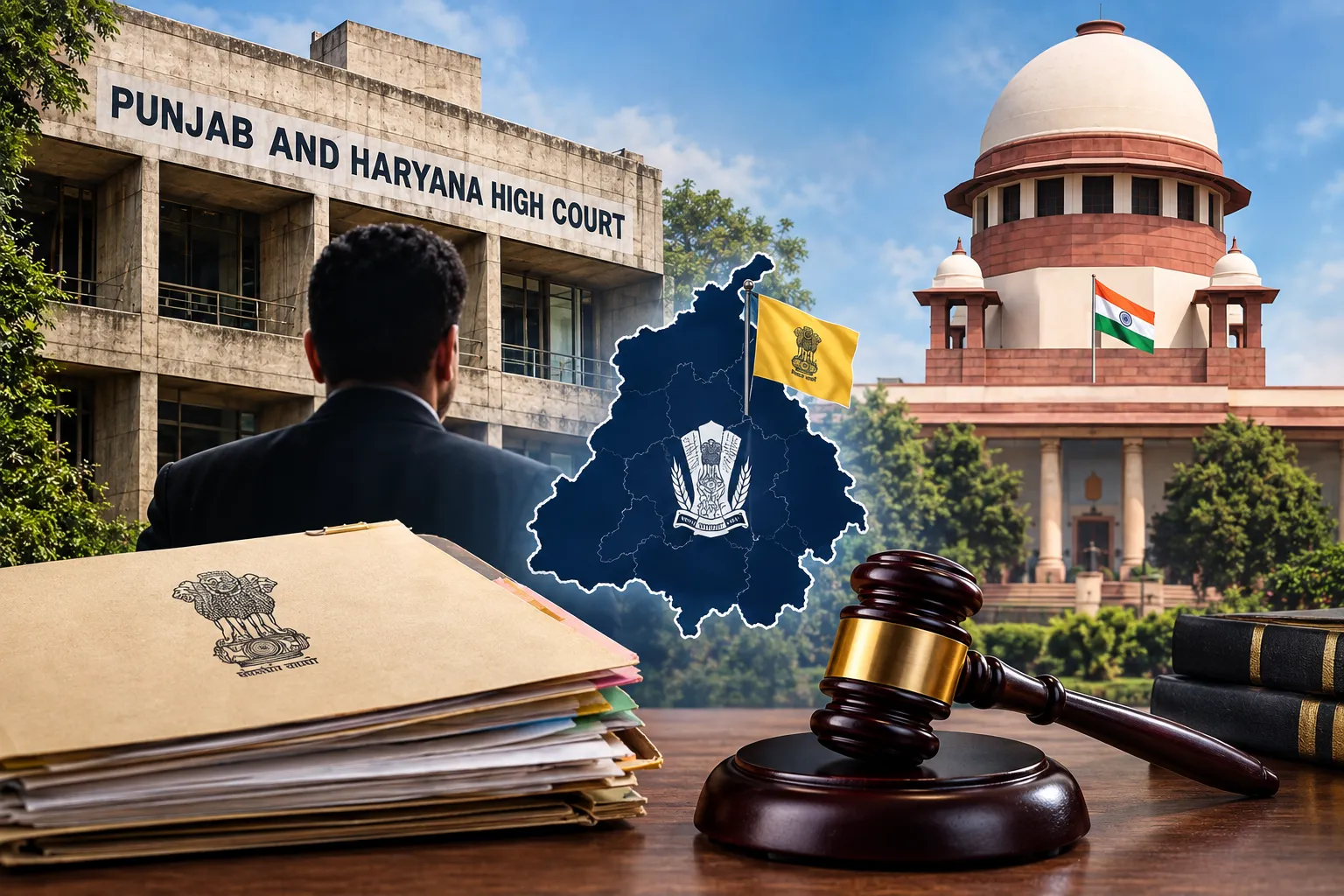
A seven-judge Constitution Bench of the Supreme Court of India, presided over by Chief Justice of India Surya Kant, has formally closed and disposed of a 23-year-old constitutional reference examining whether legislative assemblies can invoke parliamentary privileges to penalize the press and stifle free expression.
The reference originated from a November 2003 resolution passed by the Tamil Nadu Legislative Assembly ordering the arrest and 15-day imprisonment of senior editors of The Hindu and the editor of Tamil daily Murasoli for publishing editorial articles critical of the state government.
When the matter was taken up for hearing on October 6, 2026, Senior Advocate Raju Ramachandran, representing the Tamil Nadu Legislative Assembly, informed the bench that the assembly had already rescinded the punitive resolution in 2004. Observing that the factual controversy had ceased to exist, the Chief Justice noted that the Court would not expend the time of a seven-judge Constitution Bench on a purely academic exercise when urgent part-heard matters require judicial attention. The bench formally disposed of the reference as infructuous while leaving the larger legal question open for future determination.
Legal Topic
Area of Law: Constitutional Law / Media Law
Sub-topic: Legislative Privileges vs Freedom of Speech / Article 194(3)
Core Legal Issue
The core legal question before the Court was whether the powers, privileges, and immunities of state legislatures under Article 194(3) of the Constitution of India are subject to the fundamental rights guaranteed under Part III, specifically the Freedom of Speech and Expression under Article 19(1)(a) and the Right to Life and Personal Liberty under Article 21.
A related question was whether legislative bodies possess the constitutional authority to initiate summary breach-of-privilege proceedings and order the arrest of journalists or external citizens who publish criticism of legislative or executive conduct outside the floor of the House.
What Did the Court Decide?
The seven-judge Constitution Bench formally disposed of the reference as infructuous, declining to enter into the merits of the constitutional questions in the absence of a live, surviving controversy.
Chief Justice Surya Kant observed that the Court will not indulge in an academic exercise. The bench held that when an issue does not survive on the facts, the Court can wait for an appropriate opportunity in a live case rather than tie up judicial resources.
The Court made no substantive determination on whether legislative privileges override fundamental rights, nor did it disturb existing case law. The reference was closed and the Constitution Bench was discharged, leaving the substantive constitutional questions open to be decided if and when an occasion arises in the future.
Key Legal Points
-
The Supreme Court reiterated that Constitution Benches will not decide abstract or academic questions of constitutional law when the underlying dispute has ceased to exist.
-
The 2003 reference arising from the Tamil Nadu Assembly's action against The Hindu journalists was rendered infructuous because the assembly revoked the resolution in 2004.
-
The historic jurisprudential friction between the five-judge bench ruling in Pandit M.S.M. Sharma (holding privileges are not subject to Article 19(1)(a)) and the Presidential Reference In Re: Under Article 143 (affirming the primacy of Article 21) remains unresolved by a larger bench.
-
Counsel and intervenors emphasized that legislative privileges were designed as a protective shield for legislative proceedings, not as a punitive sword against public criticism.
-
The Supreme Court preserved the right of citizens and media organizations to challenge any future misuse of legislative privileges, noting that the legal questions remain open.
Relevant Law
-
Article 194(3) of the Constitution of India: Powers, privileges, and immunities of State Legislatures and their members.
-
Article 19(1)(a) of the Constitution of India: Fundamental right to freedom of speech and expression.
-
Article 21 of the Constitution of India: Protection of life and personal liberty.
-
Pandit M.S.M. Sharma v. Shri Krishna Sinha (1959 SCR Supl. (1) 806): The Searchlight decision on legislative privilege and free speech.
-
Special Reference No. 1 of 1964: The Keshav Singh presidential reference under Article 143 on judicial review of legislative contempt.
Arguments of the Parties
Petitioner / Applicant / Appellant
Senior Advocates Kapil Sibal and Amit Anand Tiwari, representing the journalists, submitted that while the specific 2003 Tamil Nadu resolution had been rescinded, the broader constitutional conflict regarding the misuse of legislative privileges against journalists remains pressing. They urged the Court to lay down authoritative boundaries to prevent legislative bodies from using uncodified privileges to silence critical reportage. Intervenors, including the Editors Guild of India and prominent media professionals, argued that legislative privileges must serve exclusively as an internal shield to protect lawmakers from interference, rather than as a weapon against external public debate.
Respondent / State / Opposing Party
Senior Advocate Raju Ramachandran, representing the Tamil Nadu Legislative Assembly, submitted that because the legislative assembly had withdrawn the punitive resolution in 2004, no surviving grievance or cause of action remained between the parties. He argued that proceeding with the hearing would amount to a purely academic exercise. Solicitor General of India Tushar Mehta supported this submission, stating that judicial determination should be reserved for concrete disputes where relief is actively required.
Why Does It Matter?
The disposal of this reference leaves an important constitutional question unanswered. In India, state legislatures and Parliament continue to exercise uncodified privileges inherited from the British House of Commons under Articles 194(3) and 105(3). This lack of statutory codification often creates friction with freedom of the press.
Because the Supreme Court declined to reconcile the conflicting precedents of Pandit M.S.M. Sharma and the Keshav Singh reference, media professionals, journalists, and public commentators remain vulnerable to potential breach-of-privilege motions for reporting on or criticizing legislative proceedings. While the ruling respects judicial economy by avoiding advisory declarations in moot cases, it postpones the long-overdue constitutional demarcation between parliamentary authority and democratic press freedom.
Legal Takeaway
The Supreme Court has affirmed that constitutional benches will not decide theoretical legal questions once the underlying controversy has been resolved, leaving the conflict between legislative privileges under Article 194(3) and press freedom under Article 19(1)(a) formally open. Consequently, journalists and commentators must rely on future judicial challenges should legislative privileges be invoked against public scrutiny.
Sources
-
Primary Source: Judicial Proceedings and Order of the 7-Judge Constitution Bench of the Supreme Court of India in N. Ravi and Others v. Speaker, Legislative Assembly, Chennai and Others (Writ Petition (Crl.) Nos. 206–210 of 2003, disposed of on October 6, 2026).
-
Additional Sources: LiveLaw News Network Report (October 6, 2026); The Hindu Judicial Coverage (October 5–6, 2026).