Supreme Court Directs Sanjay Raut to Explain Public Remarks Against CJI While Entertaining Opposition's Electoral Plea
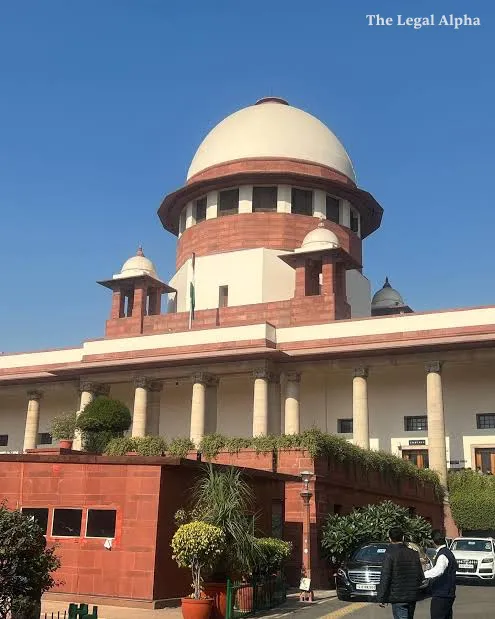
The Supreme Court of India has called upon Shiv Sena (UBT) leader and Rajya Sabha Member of Parliament Sanjay Raut to explain his controversial statements targeting Chief Justice of India Surya Kant and other judges of the apex court. The directive came while a bench presided over by the Chief Justice was considering a joint petition filed by leaders of the INDIA opposition alliance challenging actions of the Election Commission of India.
The controversy erupted after the Chief Justice declined an administrative meeting requested by Leader of Opposition Rahul Gandhi and an opposition delegation regarding alleged electoral roll irregularities and the Special Intensive Revision (SIR). Following the refusal, Raut made public remarks accusing apex court judges of engaging in social engagements and playing badminton in London with ruling party figures while denying an audience to opposition representatives. While taking up the substantive electoral matter, the bench made it clear that a litigant invoking the jurisdiction of the court cannot simultaneously attempt to demean judicial independence outside the courtroom.
Legal Topic
Area of Law: Constitutional Law & Judicial Administration
Sub-topic: Contempt of Court / Conduct of Litigants / Scandalising the Judiciary
Core Legal Issue
The matter addresses whether a litigant who actively invokes the extraordinary jurisdiction of the Supreme Court under Article 32 of the Constitution can publicly level unverified and scandalous accusations against the sitting judges hearing the cause without facing judicial reprimand or contempt proceedings.
At a broader institutional level, the court is addressing the threshold between permissible criticism of administrative judicial actions and unverified, defamatory statements that undermine institutional dignity and scandalise the judicial process.
What Did the Court / Authority Decide?
While agreeing to entertain the underlying writ petition filed by INDIA bloc leaders on electoral issues, the Supreme Court specifically directed Sanjay Raut—who is also a petitioner—to explain his public conduct and statements concerning the judiciary.
During the proceedings, the Chief Justice observed that judges do not operate in "ivory towers" and remain fully cognisant of public commentaries and utterances aimed at the bench outside judicial halls. The court made no final determination on contempt sanctions during this preliminary stage, deferring further assessment until the explanation is placed on record. The substantive petition challenging the Election Commission's procedures remains pending before the court.
Key Legal Points
-
Clean Hands and Conduct of Litigants: A petitioner invoking extraordinary writ remedies is required to approach the court in good faith and refrain from sub judice attacks or extrajudicial disparagement aimed at intimidating or influencing the bench.
-
Separation of Judicial Functions: The administrative decision of the Chief Justice to decline an informal meeting with a political delegation does not justify extra-curial imputations against judicial integrity, as institutional remedies must be pursued strictly through judicial filings.
-
Judicial Awareness and Contempt Threshold: Utterances falsely alleging bias or improper proximity between sitting judges and executive functionaries meet the prima facie threshold of scandalising the court under contempt jurisprudence.
-
Severability of Merits from Litigant Misconduct: The court demonstrated that while a litigant's improper public conduct must be answered, it will not automatically derail the preliminary judicial examination of a broader public-interest constitutional petition.
Relevant Law
-
Article 32 of the Constitution of India: Confers the right to move the Supreme Court by appropriate proceedings for the enforcement of fundamental rights.
-
Article 129 of the Constitution of India: Declares the Supreme Court to be a court of record endowed with inherent powers to punish for contempt of itself.
-
Section 2(c) of the Contempt of Courts Act, 1971: Defines criminal contempt as the publication of any matter or doing of an act that scandalises, lowers the authority of a court, prejudices proceedings, or obstructs judicial administration.
-
Section 15 of the Contempt of Courts Act, 1971: Regulates procedure for cognisance of criminal contempt upon motion or with the consent of the Attorney General.
Arguments of the Parties
The Bench / Moving Concerns
The bench, headed by Chief Justice Surya Kant, noted that while the court's doors are open to every citizen and political representative seeking legal redress, a litigant before the court cannot carry out an extra-curial smear campaign against judges. Furthermore, consent had separately been accorded by Attorney General R. Venkataramani to initiate criminal contempt proceedings on the grounds that the allegations regarding judges playing badminton with ministers were factually unfounded and scandalous.
Sanjay Raut and Petitioners
Counsel appearing on behalf of the petitioners sought to press the substantive grounds of the petition, which related to alleged large-scale deletions from electoral rolls, procedural infirmities in the Special Intensive Revision, and accountability within the Election Commission of India. Regarding public statements, the defense maintained that comments made outside court represented political expression stemming from concerns over the preservation of democratic processes, which would be clarified through formal explanations before the bench.
Why Does It Matter?
This development reinforces a crucial boundary in public-interest litigation and politically sensitive constitutional cases: political rhetoric cannot be deployed against the judiciary to compromise adjudicatory neutrality. By entertaining the substantive petition while concurrently demanding an explanation from the outspoken leader, the Supreme Court struck a balance between safeguarding access to constitutional justice and protecting institutional authority from deliberate vilification.
The case serves as a direct precedent for political leaders and public commentators, reaffirming that invoking the jurisdiction of constitutional courts imposes a duty of decorum, and that public attacks on judges cannot be excused as ordinary political posturing once a party enters the courtroom as a petitioner.
Legal Takeaway
Litigants cannot simultaneously seek equitable relief before constitutional courts while publicly imputing bias or unverified impropriety to the presiding judges. When moving a writ petition, institutional remedies must be pursued within the four corners of court pleadings, as public attempts to scandalise the bench carry clear liabilities under contempt jurisprudence.
Sources
Primary Source: Supreme Court of India, Record of Proceedings / Order dated October 15, 2026, in Writ Petition challenging the Election Commission's Special Intensive Revision of Electoral Rolls (Bench of CJI Surya Kant and companion judges).
Additional Sources:
-
High Court and Supreme Court Contempt Records; Attorney General Consent granted under Section 15 of the Contempt of Courts Act, 1971.
-
LiveLaw News Network reporting on Supreme Court proceedings concerning the INDIA bloc petition and SCBA contempt filings.