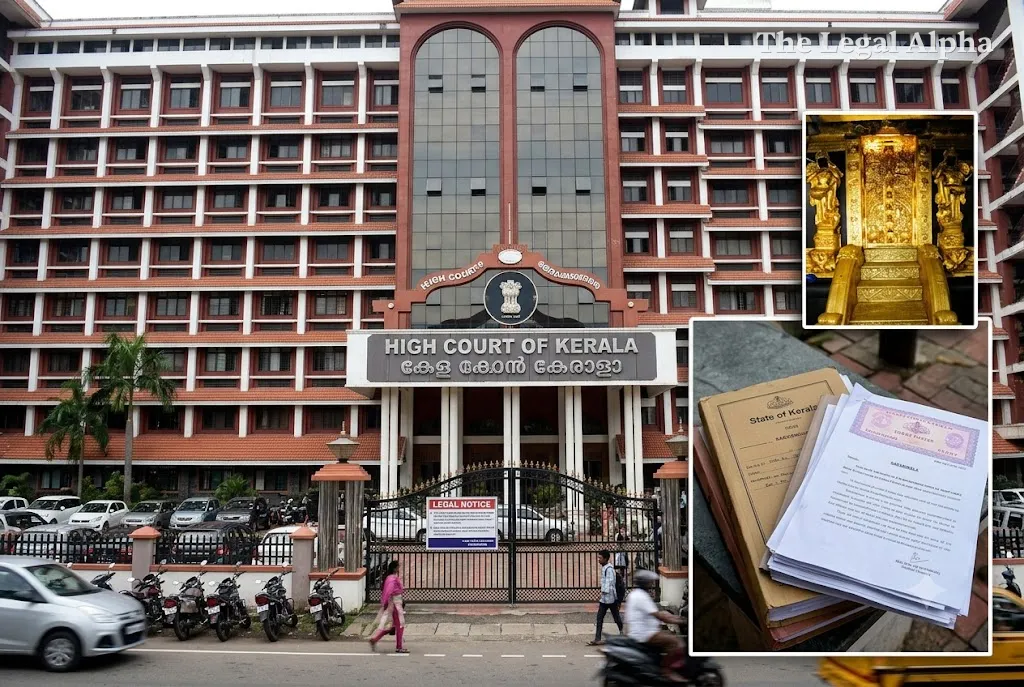
Supreme Court Collegium Proposes New Chief Justices for High Courts of Delhi, Gujarat, Telangana, and Uttarakhand
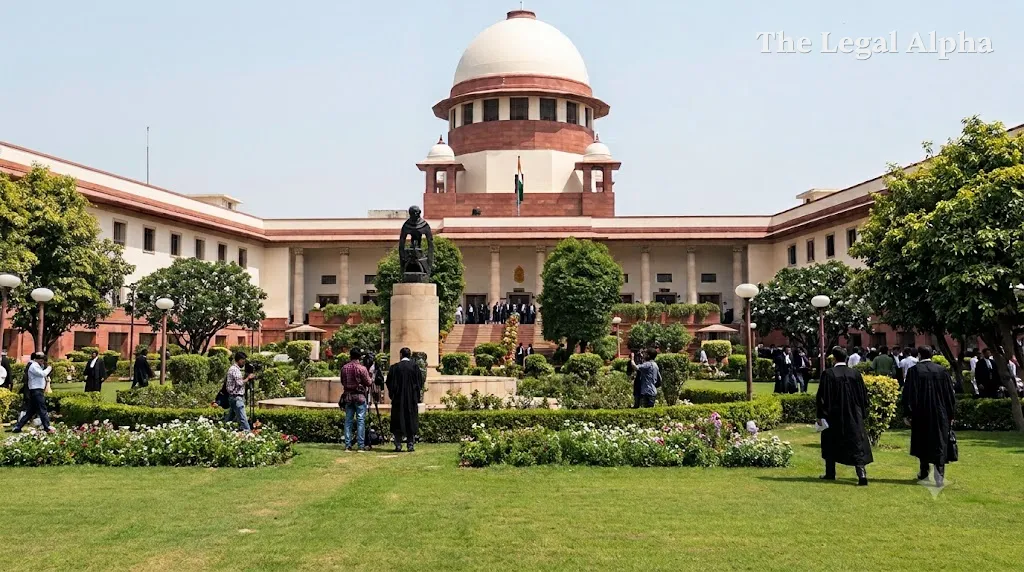
The Supreme Court Collegium, headed by Chief Justice of India Surya Kant, has recommended the elevation and appointment of four senior High Court judges to head the High Courts of Delhi, Gujarat, Telangana, and Uttarakhand.
The recommendations follow vacancies created after the elevation of sitting Chief Justices—Justice Devendra Kumar Upadhyaya (Delhi), Justice Sunita Agarwal (Gujarat), and Justice Aparesh Kumar Singh (Telangana)—to the Supreme Court of India. To ensure institutional continuity, the Collegium met on October 26, 2026, and resolved to recommend full-time judicial leadership across these constitutional courts.
Legal Topic
Area of Law: Constitutional Law
Sub-topic: Judicial Appointments / High Court Administration
Core Legal Issue
The core issue concerns the constitutional procedure and institutional conventions governing the appointment and transfer of High Court Chief Justices under the Indian Constitution.
Specifically, the process involves balancing regional representation, inter-High Court seniority, and the established convention that Chief Justices of High Courts are generally appointed from outside their parent High Court to foster judicial independence and national integration.
What Did the Court / Authority Decide?
In its resolutions dated October 26, 2026, the Collegium recommended:
-
Justice P. Sam Koshy (parent High Court: Chhattisgarh; presently serving in the Telangana High Court) to be appointed as the Chief Justice of the Delhi High Court.
-
Justice Manash Ranjan Pathak (parent High Court: Gauhati; presently serving in the Gujarat High Court) to be appointed as the Chief Justice of the Gujarat High Court.
-
Justice Tapabrata Chakraborty (presently serving in the Calcutta High Court) to be appointed as the Chief Justice of the Telangana High Court.
-
Justice Sudhir Singh (presently serving in the Patna High Court) to be appointed as the Chief Justice of the Uttarakhand High Court.
These names now stand forwarded to the Union Ministry of Law and Justice. Under the established appointment framework, the central government will process the files and advise the President of India to issue formal warrants of appointment.
Key Legal Points
-
Constitutional Leadership Mandate: High Courts cannot function under interim or acting heads indefinitely; the Collegium moved swiftly to propose permanent Chief Justices following the elevation of prior incumbents to the apex court.
-
Parent Court Principle: The recommendations adhere to the established convention requiring High Court Chief Justices to be drawn from outside their parent High Courts, reinforcing impartiality and broad judicial perspective.
-
Collegium Composition: The decision was taken by the High Court Chief Justice selection body within the Collegium, comprising Chief Justice of India Surya Kant and senior companion judges Justice Vikram Nath and Justice B.V. Nagarathna.
-
Executive Processing Stage: The Collegium’s resolutions represent the definitive judicial determination; however, formal appointment requires the issuance of presidential notifications under the seal of the President of India.
Relevant Law
-
Article 217 of the Constitution of India: Governs the appointment and conditions of the office of a Judge (including the Chief Justice) of a High Court by the President, after consultation with the Chief Justice of India and the Governor of the State.
-
Article 222 of the Constitution of India: Governs the transfer of a Judge from one High Court to any other High Court.
-
Article 223 of the Constitution of India: Provides for the appointment of an Acting Chief Justice when the office falls vacant or the Chief Justice is unable to perform duties.
-
The Second Judges Case (Supreme Court Advocates-on-Record Association v. Union of India, 1993) & Third Judges Case (Special Reference No. 1 of 1998): Established the primacy of the Collegium in judicial appointments and laid down the consultative norms for High Court leadership.
Arguments of the Parties
Not applicable. This development arises out of the administrative-constitutional exercise of collegium deliberations rather than an adversarial courtroom dispute.
Why Does It Matter?
A High Court Chief Justice plays a dual role: serving as the administrative head of the state’s judicial machinery and presiding over critical roster allocations, division benches, and public interest litigations. Having substantive Chief Justices rather than interim arrangements under Article 223 ensures stability in judicial administration, timely constitution of special benches, and effective oversight of the subordinate judiciary.
Furthermore, filling these leadership posts in prominent commercial and constitutional hubs—such as Delhi, Gujarat, and Telangana—ensures uninterrupted institutional governance and accelerates case management.
Legal Takeaway
The Collegium’s recommendations restore regular judicial leadership to four major High Courts in accordance with constitutional conventions under Article 217. For these appointments to take effect, the Union Executive must now process the files and advise the President of India to issue the official warrants of appointment.
Sources
Primary Source:
-
Supreme Court of India Collegium Resolutions, dated October 26, 2026.
Additional Sources:
-
High Court Chief Justice Appointment Notifications under Articles 217 & 223 of the Constitution of India.
-
Official statements published by the Supreme Court of India Registry.