Supreme Court Allows Azam Khan to Remain on Interim Bail, Refuses ED's Request for Immediate Stay
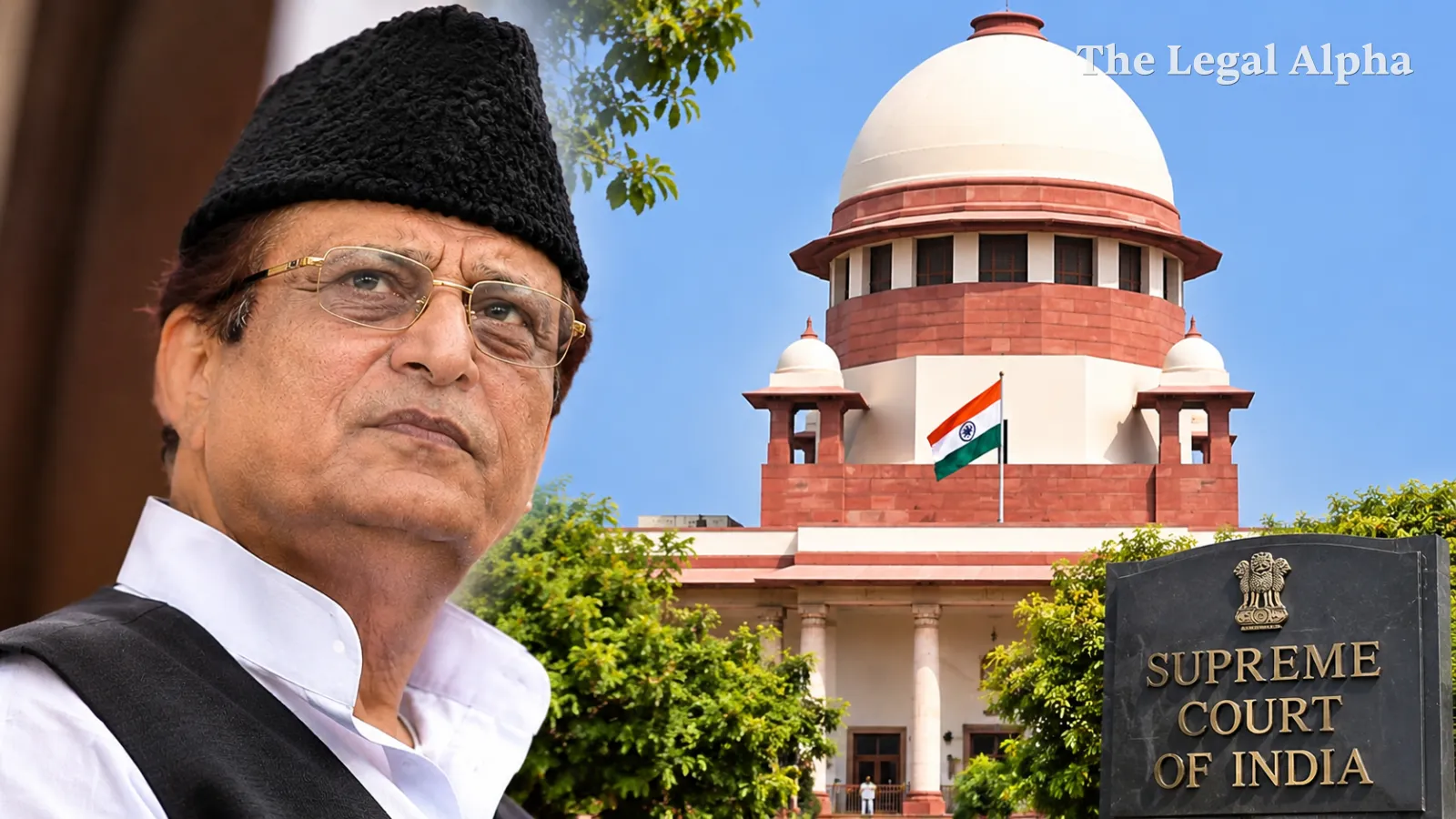
The Supreme Court on November 18 declined to prevent Samajwadi Party leader Azam Khan's release on interim bail in a money laundering case, after the Enforcement Directorate (ED) sought urgent intervention against an Allahabad High Court order. The Supreme Court indicated that the agency could present its objections during the hearing scheduled for November 19 rather than obtaining an immediate stay.
The exchange took place when the ED sought urgent listing of its challenge and requested that the status quo be maintained until the plea was heard. The Court declined to grant that request, allowing the interim bail order to remain operative in the meantime.
Area of Law
-
Area of Law: Criminal Law
-
Sub-topic: Money Laundering, Arrest Procedure and Interim Bail under the Prevention of Money Laundering Act (PMLA)
Core Legal Issue
The central legal issue concerns whether the arrest of Azam Khan by the Enforcement Directorate complied with the statutory safeguards under Section 19 of the Prevention of Money Laundering Act and the constitutional protections under Article 22(1) of the Constitution of India.
The proceedings also raise a procedural question about whether the Supreme Court should immediately suspend interim bail granted by the High Court while the ED's challenge to that order remains pending.
What Did the Supreme Court Decide?
The Supreme Court declined to grant the Enforcement Directorate's request for an immediate stay on Azam Khan's interim bail. The bench directed the ED to advance its objections at the hearing scheduled for November 19.
When the ED sought a direction to maintain status quo until the matter was heard, the Court declined to intervene at that stage. The interim bail order therefore remained in operation pending further consideration of the agency's challenge.
This is an interim procedural development, not a final ruling on the merits of the ED's appeal.
Key Legal Points
-
The Supreme Court declined to suspend the High Court's interim bail order immediately.
-
The ED's challenge to the grant of interim bail remains pending.
-
The dispute involves compliance with arrest safeguards under the PMLA.
-
Article 22(1) of the Constitution protects an arrested person against procedural violations concerning the grounds of arrest.
-
The Supreme Court's refusal to grant an immediate stay does not decide the final merits of the ED's challenge.
Relevant Law
Section 19, Prevention of Money Laundering Act, 2002 (PMLA) – Governs the power of authorised officers to arrest persons suspected of money laundering and imposes procedural requirements, including recording reasons and communicating grounds of arrest.
Article 22(1), Constitution of India – Provides constitutional safeguards to arrested persons, including the right to be informed of the grounds of arrest and the right to consult and be defended by a legal practitioner.
Article 21, Constitution of India – Protects life and personal liberty and is relevant to judicial scrutiny of arrest and detention procedures.
Arguments of the Parties
Enforcement Directorate
The ED challenged the Allahabad High Court's interim bail order and sought urgent consideration of its Special Leave Petition before the Supreme Court. The agency objected to the High Court's findings and sought to prevent Khan's release until the challenge could be heard.
The ED also sought a direction to maintain status quo, but the Supreme Court declined to grant that immediate relief.
Azam Khan
Azam Khan had secured interim bail from the Allahabad High Court, which had prima facie questioned compliance with the procedural safeguards governing his arrest. The High Court's reasoning centred on whether the grounds of arrest had been furnished in writing in accordance with the applicable legal requirements.
Why Does It Matter?
The proceedings highlight the importance of procedural compliance when investigative agencies exercise statutory powers of arrest under the PMLA. Arrest powers under special legislation remain subject to statutory safeguards and constitutional protections, and procedural lapses can become central to judicial scrutiny of custody.
The Supreme Court's refusal to grant an immediate stay also illustrates that challenging a bail order does not automatically suspend its operation. Unless a court grants a stay or modifies the relief, the existing order continues to operate according to its terms.
Legal Takeaway
Procedural safeguards governing arrest under the PMLA remain an important part of judicial review of detention. The Supreme Court's refusal to immediately halt Azam Khan's interim bail does not resolve the ED's challenge, which remains pending for further consideration.
Sources
Primary Source: Supreme Court proceedings and order in the ED's challenge — the primary order was not independently located for verification at the time of drafting.
Additional Sources: