Stalled Dues: Supreme Court Renews Request for Dedicated Orissa High Court Bench on Illegal Mining Recovery
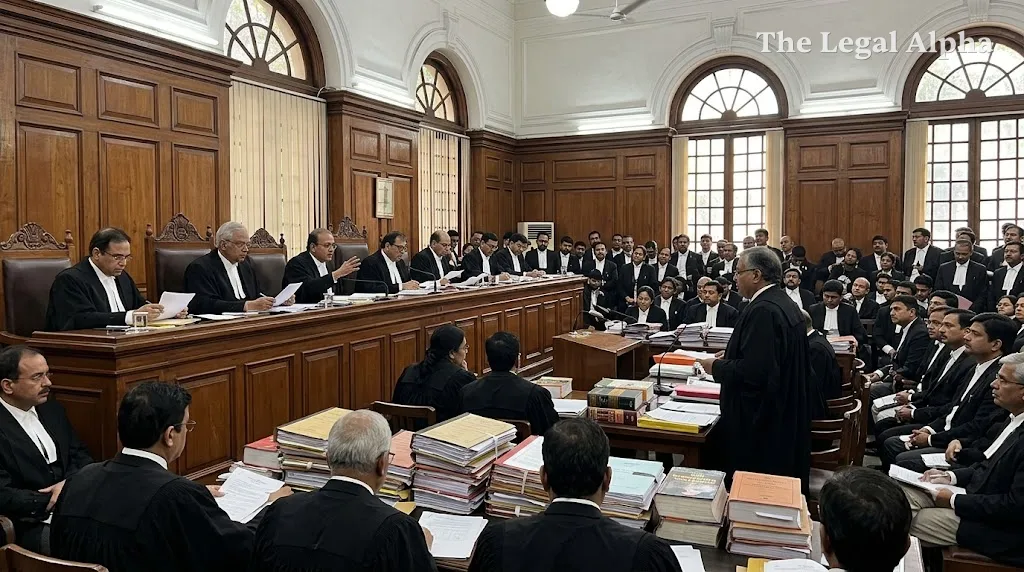
The Supreme Court of India has reiterated its request to the Orissa High Court Chief Justice to establish a dedicated bench aimed at resolving long-pending cases surrounding illegal mining. The core bottleneck involves interim stay orders issued by the High Court that have effectively blocked the Odisha state government from recovering thousands of crores in statutory penalties and environmental compensation from defaulting leaseholders.
Although the apex court had previously sought expedited adjudication and urged the formation of a special bench, the matters remained unaddressed beyond the anticipated timeframes. Re-engaging with the issue during recent proceedings, the Supreme Court asked the High Court to revisit the proposal so that public revenue recovery and environmental remediation are not kept in indefinite suspension.
Legal Topic
Area of Law: Mining and Environmental Law
Sub-topic: Recovery of Unlawful Extraction Dues / Judicial Administration and Special Benches
Core Legal Issue
The legal conflict stems from the friction between substantive enforcement of statutory mining liabilities and judicial delay caused by interlocutory orders.
The primary question before the court is how higher constitutional courts can manage systemic delays when widespread interim stays obstruct the state's statutory power to recover public revenue for unlawful mineral extraction, without overriding the jurisdictional autonomy of a High Court Chief Justice in assigning rosters and benches.
What Did the Court Decide?
The Supreme Court urged the High Court leadership to reconsider the plea to assign these specific recovery litigations to a dedicated roster.
The bench emphasized that these recovery proceedings involve substantial public money and ecological restitution mandates that cannot linger indefinitely behind interim stays. While respecting the administrative prerogative of the High Court Chief Justice as the 'Master of the Roster', the top court underlined the need for a focused judicial mechanism to bring finality to the challenges filed by private mining companies.
Key Legal Points
-
Expediting Environmental Restitution: Statutory compensation and penalties levied under mining laws cannot serve their remedial purpose if judicial stay orders are sustained indefinitely without regular hearings on the merits.
-
Balancing Judicial Discretion: While the Supreme Court possesses extraordinary supervisory powers under the Constitution, it exercises judicial comity by "requesting" rather than "mandating" the Chief Justice of a High Court to organize specialized benches.
-
Public Exchequer Interest: The non-realization of assessed statutory penalties impairs state budgets as well as welfare projects earmarked under District Mineral Foundations and special remediation funds.
-
Procedural Bottlenecks in Commercial Writs: Granting ex-parte or routine interim relief against statutory demand notices creates widespread operational hurdles unless tested quickly through expedited substantive hearings.
Relevant Law
-
Mines and Minerals (Development and Regulation) Act, 1957 (MMDR Act): Section 21(5), which empowers the state government to recover either the minerals raised unlawfully without lawful authority or the full price/value thereof.
-
Constitution of India:
-
Article 32 & Article 142: Powers of the Supreme Court to issue directions and ensure complete justice.
-
Article 226: High Court writ jurisdiction under which mining operators obtain interim stays against demand notices.
-
Arguments of the Parties
Applicants / Public Interest Litigants
Counsel appearing for the applicants submitted that private leaseholders have systematically used interim High Court orders as an operational shield to defer paying thousands of crores in evaluated dues. They argued that the state machinery is incapacitated from enforcing established environmental liabilities and that without a dedicated bench, these matters will remain trapped in standard cause lists for years.
Mining Leaseholders / Opposing Parties
The affected mining companies contended that demand notices issued by the state administration were disproportionate, procedurally flawed, or calculated on arbitrary parameters, warranting constitutional protection under Article 226 until the underlying assessments are fully scrutinized.
Why Does It Matter?
This development highlights the ongoing struggle to close the loop on India’s historic illegal mining litigations. Even when the Supreme Court establishes clear legal frameworks for recovering the full value of unpermitted mineral extraction, actual realization often hits procedural roadblocks in regional courts.
If the Orissa High Court accedes to setting up a dedicated bench, it could unlock thousands of crores in public funds meant for tribal welfare and environmental reclamation in major iron ore hubs. Furthermore, it reinforces the principle that interim relief in revenue and regulatory matters should be transitory rather than indefinite.
Legal Takeaway
Interim stays obtained against statutory demand notices must not be treated as de facto dismissals of the state's claims. Where massive public revenue and environmental liabilities are stalled, higher courts favor dedicated case-management benches to ensure that challenges under Article 226 are decided swiftly on their actual merits.
Sources
Primary Source:
-
Proceedings and Orders of the Supreme Court of India in the Odisha Mining Matters (Common Cause / T.N. Godavarman Thirumulpad batch).
Additional Sources:
-
High Court and Supreme Court reporting, Hindustan Times (October 2026).
-
Litigation tracking reports, The New Indian Express & LawChakra.