Special CBI Court Denies Second Bail Plea to Advocate Jatin Salwan in Alleged Judicial Influence Bribery Case
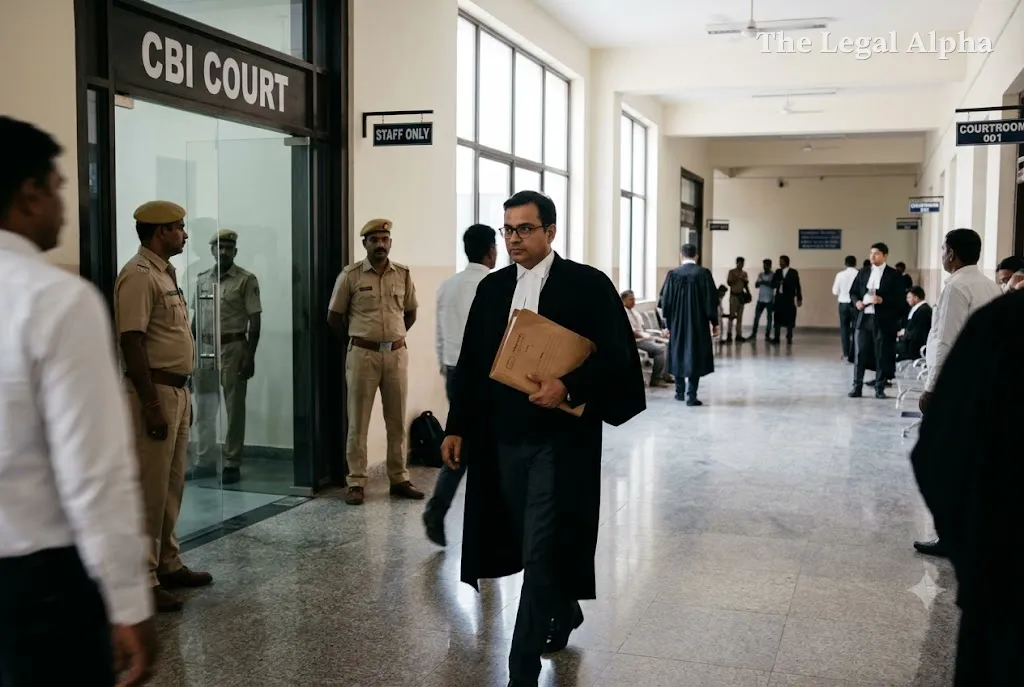
A Special Central Bureau of Investigation (CBI) Court in Chandigarh has rejected the second regular bail plea of advocate Jatin Salwan. The senior practitioner is facing trial over accusations of demanding a ₹30 lakh illegal gratification to secure a favorable verdict from a judicial officer in a matrimonial dispute.
The CBI arrested Salwan following an undercover verification and trap operation conducted on the complaint of a litigant's relative. While the defense sought regular bail citing progress in the trial and personal circumstances, the trial court found no material shift in the facts of the case to warrant his release.
Legal Topic
-
Area of Law: Criminal Law / Anti-Corruption Law
-
Sub-topic: Bail Jurisprudence / Influence Peddling / Prevention of Corruption Act
Core Legal Issue
The core question before the court was whether a successive regular bail application is maintainable when earlier petitions have been dismissed and whether custody period or the partial recording of witness testimony constitutes a substantial change in circumstances.
Additionally, the court examined whether the nature of the allegations—involving an officer of the court accused of attempting to compromise the administration of justice—outweighs personal liberties at this stage of the trial.
What Did the Court Decide?
The Special CBI Court dismissed the regular bail application on the grounds that there has been no substantial change in circumstances since the applicant's earlier bail applications were rejected.
The court noted that the charges remain subject to full judicial adjudication and that only a fraction of the prosecution's material witnesses have completed their examination so far. The applicant remains in judicial custody while trial proceedings continue before the special trial court.
Key Legal Points
-
Need for Material Change: Successive bail applications cannot serve as a forum to re-argue points previously decided unless significant, fresh grounds or changed circumstances have arisen since the prior dismissal.
-
Witness Vulnerability During Ongoing Trial: In corruption trials where material witnesses are actively deposing, releasing an influential accused raises concerns regarding the integrity of remaining witness testimonies.
-
Gravity of Institutional Allegations: Accusations that strike at the heart of public confidence in the judicial process demand heightened judicial caution during bail considerations, as integrity of the administration of justice holds paramount importance.
Relevant Law
-
Section 7A, Prevention of Corruption Act, 1988: Deals with obtaining undue advantage to influence a public servant by corrupt or illegal means or through personal influence.
-
Section 61(2), Bharatiya Nyaya Sanhita, 2023 (BNS): Pertains to criminal conspiracy.
-
Section 483 / Section 439, Bharatiya Nagarik Suraksha Sanhita, 2023 (BNSS) / Code of Criminal Procedure (CrPC): Governs special powers of the High Court and Court of Session regarding bail.
Arguments of the Parties
Applicant Counsel for the applicant contended that the investigation in the case had already concluded and formal charges had been framed. The defense argued that the petitioner, an elderly advocate, had spent considerable time in judicial custody and maintained that the financial discussions involved legitimate professional legal fees rather than any illicit gratification. It was further urged that the applicant posed no flight risk and was entitled to bail as the trial would take time to conclude.
Respondent (Central Bureau of Investigation) The CBI opposed the concession of bail, arguing that the allegations involve an attempt by a practicing advocate to monetize influence over the judicial system. The agency highlighted that electronic and trap evidence prima facie supported the demand and recovery of tainted funds, and stressed that out of the listed prosecution witnesses, only a small number had testified, leaving the ongoing trial vulnerable if bail were granted.
Why Does It Matter?
The decision underscores the rigorous standard applied by trial and special courts when handling successive bail petitions in corruption cases involving officers of the legal system. It sends a clear signal that the mere passage of time or the framing of charges does not automatically amount to a change of circumstances, particularly when allegations strike directly at public confidence in the judicial hierarchy. For legal practitioners, the matter illustrates that courts treat influence-peddling allegations with stringent scrutiny to preserve the institutional sanctity of the justice delivery system.
Legal Takeaway
A successive bail plea requires proof of a substantial and qualitative change in circumstances rather than merely re-arguing previously rejected grounds. In cases alleging corruption aimed at subverting the judicial process, courts will prioritize institutional integrity and witness protection over conventional mitigating claims.
Sources
-
Primary Source: Orders and Proceedings in CBI v. Jatin Salwan & Anr. (Special CBI Court, Chandigarh); Jatin Salwan v. Central Bureau of Investigation, CRM-M-51882-2025 (Punjab & Haryana High Court).
-
Additional Sources: CBI FIR Records / Special Crime Branch Verification Reports; Proceedings under the Prevention of Corruption Act, 1988.