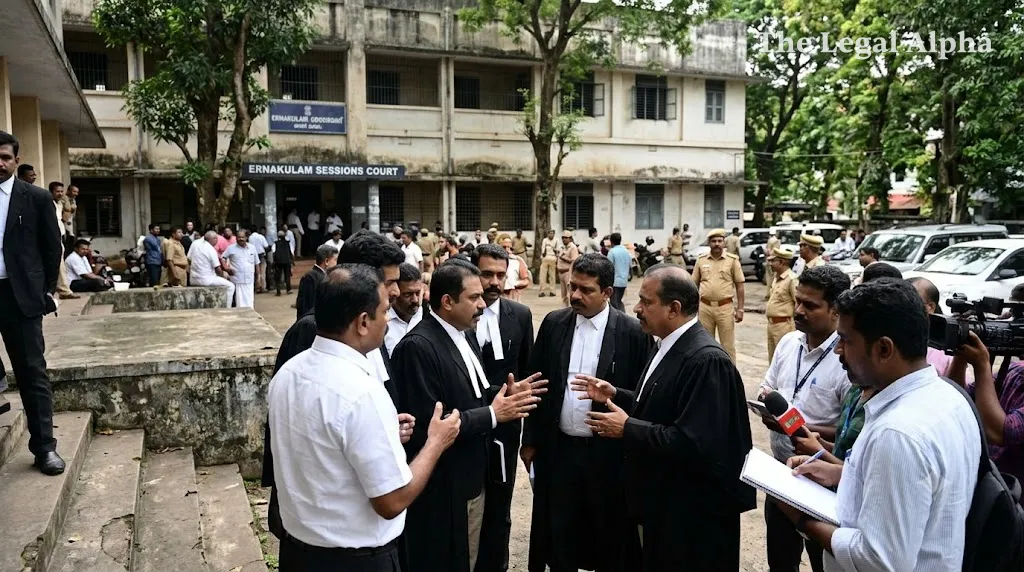
Siddhartha Vihar Trust Land Row: Bengaluru Special Court Puts Inquiry on Hold After High Court Recalls Earlier Directive

A designated special court for lawmakers in Bengaluru halted proceedings concerning a private complaint against Siddhartha Vihar Trust, an entity associated with the family of Congress President Mallikarjun Kharge. The deferral follows an order by the Karnataka High Court that recalled its previous instruction requiring the trial court to reconsider directing a police investigation into land allotments made to the trust. During the proceedings, the Special Public Prosecutor informed the court that the High Court had recalled the directive and stayed further progress in the case. Consequently, the special court adjourned the hearing to November 18, pending the High Court’s fresh consideration of the matter.
Legal Topic
Area of Law: Criminal Procedure and Anti-Corruption Law
Sub-topic: Judicial Recall of Orders, Natural Justice, and Inquiries under Section 156(3) CrPC / Section 175 BNSS
Core Legal Issue
The principal legal issue centers on whether a High Court can recall an order that revived a private complaint when affected parties were not notified or afforded an opportunity to be heard.
Under Section 362 of the Code of Criminal Procedure, 1973 (mirrored under corresponding provisions of the Bharatiya Nagarik Suraksha Sanhita), criminal courts are generally barred from reviewing or altering final orders except to rectify clerical or arithmetical errors. The core question before the bench is whether the violation of fundamental natural justice rules (audi alteram partem) operates as an exception to this statutory bar, permitting a court to restore a petition to its original file for a de novo hearing.
What Did the Court / Authority Decide?
The Karnataka High Court, presided over by Justice M. Nagaprasanna, allowed a recall application moved by trustee Rahul Kharge and recalled its order directing the special court to re-examine the demand for an investigation by the Lokayukta police. The High Court observed that statutory bars against altering orders do not prevent recalling an order passed without putting the affected party on notice.
Acting on this recall, the Special Court for People’s Representatives stalled further steps in the private complaint and listed the matter for its next hearing on November 18. The underlying complaints and their substantive allegations have not been adjudicated on merits.
Key Legal Points
-
Pre-eminence of Audi Alteram Partem: The Karnataka High Court affirmed that an order passed to the prejudice of an interested party without issuing notice or affording a hearing suffers from an inherent jurisdictional defect and may be recalled.
-
Contour of Section 362 CrPC: While criminal courts cannot substantively review or alter their judgments, established apex court jurisprudence allows recalling an order rendered in breach of basic principles of natural justice.
-
Procedural Gatekeeping in Private Complaints: Special courts examining private complaints against public figures must observe procedural compliance—including verified affidavits—prior to directing statutory investigative bodies under the Prevention of Corruption Act.
-
Interim Deferral without Merits Adjudication: The lower court's suspension of proceedings is strictly procedural, maintaining status quo while the High Court re-evaluates the original challenge afresh.
Relevant Law
-
Section 362, Code of Criminal Procedure, 1973: Statutory bar preventing courts from altering or reviewing criminal judgments or final orders, subject to exceptions rooted in fundamental natural justice.
-
Section 156(3), Code of Criminal Procedure, 1973: Judicial power of a Magistrate to order a police investigation into a cognizable offense upon receipt of a complaint.
-
Sections 7, 11, and 13, Prevention of Corruption Act, 1988: Provisions governing public servant misconduct and gratification invoked in the private complaint.
-
Constitutional Precedents on Procedural Justice: Supreme Court rulings emphasizing that procedural fairness is non-negotiable before orders causing adverse civil or criminal consequences are issued.
Arguments of the Parties
For the Trust / Trustee: Counsel for the trustee submitted that the earlier order had been passed entirely behind their back without serving notice or granting them an opportunity to address the court on questions of law and procedure. It was contended that an order affecting the rights and reputation of the trust could not stand if delivered without affording them the fundamental right to enter an appearance.
For the Complainant: The private complainant contended that the initial referral to the police had been prematurely declined on narrow procedural defects. It was argued that the allegations involved significant public interest and alleged irregularities in government land allotments under the Prevention of Corruption Act, justifying an immediate investigative directive under the supervision of the Lokayukta police.
Why Does It Matter?
This development reinforces procedural safeguards in private criminal complaints targeting prominent public figures and institutions. When complainants seek investigative directions under anti-corruption statutes, higher courts must avoid issuing directives without hearing the counter-parties, even at early procedural stages. The ruling highlights that natural justice operates as a foundational prerequisite, limiting unilateral directions and preventing subordinate courts from proceeding under tainted or incomplete procedural orders.
Legal Takeaway
Statutory bars preventing criminal courts from reviewing their decisions do not bar them from recalling orders passed in breach of natural justice. Where an order prejudicial to a party is rendered without issuance of notice or an opportunity of hearing, the court maintains inherent authority to recall the order and restore the matter for fresh argument.
Sources
-
Primary Source: High Court of Karnataka Order in Vijayaraghava Marathe v. State of Karnataka & Others (Bench of Justice M. Nagaprasanna, October 16); Proceedings of the Special Court for MP/MLAs, Bengaluru.
-
Additional Sources: Filings and verified records concerning Siddhartha Vihar Trust land allotments (Bengaluru Development Authority and Karnataka Industrial Area Development Board proceedings).