Kerala High Court Questions Disproportionate Assets Convict’s Foreign Travel Plea, Demands Prison Medical Records

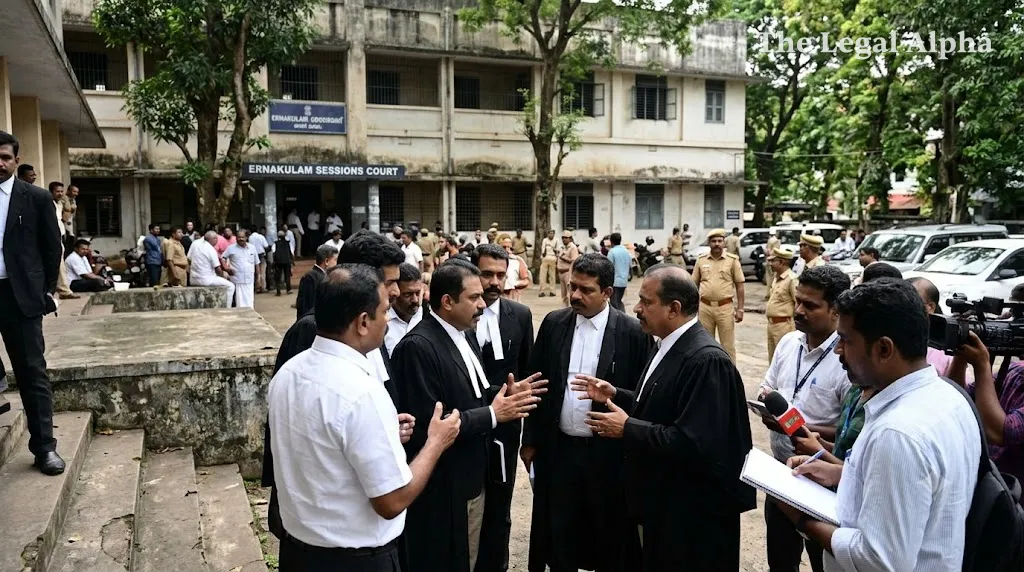
The Kerala High Court scrutinized an application filed by former Director General of Police (DGP) Tomin J. Thachankary seeking permission to travel overseas for employment while out on bail.
Thachankary was convicted in a disproportionate assets case by a Special Vigilance Court, which handed him a four-year rigorous imprisonment term along with a fine of ₹30.84 lakh. While his four-year sentence was subsequently suspended by the High Court pending his criminal appeal, the court had imposed standard bail conditions, including curbs on foreign travel. Upon moving an application to relax these conditions so he could pursue employment abroad, Justice A. Badharudeen sharply questioned the stark contrast between the applicant's claims of severe medical distress while incarcerated and his current fitness to undertake professional work overseas, officially calling for his prison hospital records.
Legal Topic
Area of Law: Criminal Procedure / Anti-Corruption Law
Sub-topic: Modification of Bail Conditions / Suspension of Sentence Pending Appeal
Core Legal Issue
The core question before the High Court is whether an appellate court exercising powers to suspend a sentence should relax bail conditions—specifically lifting travel restrictions to permit employment abroad—when the convict had previously cited debilitating health conditions while serving time in prison.
The court is addressing the evidentiary credibility and bona fides of a convict's representations: whether medical claims relied upon during custody can be reconciled with subsequent assertions of physical fitness for international employment, and whether granting foreign travel permissions undermines the court's supervisory jurisdiction over a convicted appellant.
What Did the Court Decide?
Justice A. Badharudeen directed the concerned authorities to submit the complete medical and hospitalisation records of the former DGP from his time in prison.
The court made strong oral observations regarding the conflicting stances, noting that while an accused often claims severe illness requiring admission to the jail hospital upon entering prison, those medical constraints seem to vanish once bail is secured, replaced by applications to work overseas. The court did not grant the travel relaxation and scheduled the matter for further consideration on November 6 to evaluate the medical reports.
Key Legal Points
-
Scrutiny of Bona Fides: Courts possess wide discretion when imposing or modifying bail conditions, and they will critically evaluate whether an applicant’s assertions of illness during incarceration conflict with subsequent requests requiring substantial physical fitness.
-
Integrity of Sentence Suspension: Granting suspension of sentence does not erase a conviction; the appellate court retains strict supervisory control to ensure the appellant remains amenable to justice.
-
Discretion Over Overseas Travel for Convicts: Permission to leave the jurisdiction while an appeal against conviction is pending is not an absolute entitlement and depends heavily on verified conduct, genuine necessity, and flight risk.
Relevant Law
-
Section 389 of the Code of Criminal Procedure, 1973 (CrPC) / Section 430 of the Bharatiya Nagarik Suraksha Sanhita, 2023 (BNSS): Governs the suspension of sentence and grant of bail pending criminal appeals.
-
Section 13(1)(e) read with Section 13(2) of the Prevention of Corruption Act, 1988: Pertains to criminal misconduct by a public servant possessing pecuniary resources or property disproportionate to known sources of income.
Arguments of the Parties
Applicant (Tomin J. Thachankary)
Counsel for the former DGP submitted that the applicant has an opportunity to work abroad and requires a relaxation or modification of his existing bail conditions to travel overseas for employment purposes.
The State / Vigilance Prosecution
The State maintained that the applicant stands convicted in a serious anti-corruption matter and that the restrictions attached to the suspension of sentence are essential to ensure compliance with court directives and prevent evasion of process.
Why Does It Matter?
This development reinforces judicial intolerance toward strategic medical excuses often leveraged by influential convicts. It underscores that appellate courts will verify the authenticity of hospitalisation records rather than treating post-conviction bail or condition modifications as automatic administrative formalities.
For the legal system, this order sets a firm precedent on maintaining consistency in litigant conduct: applicants cannot conveniently invoke incapacitating health issues to avoid regular prison conditions and subsequently claim robust health to secure overseas work permits.
Legal Takeaway
A suspension of sentence granted pending appeal does not entitle a convicted individual to unrestricted liberty or unmonitored overseas travel. Courts will actively cross-examine an applicant's prior medical claims in prison against subsequent requests to ensure judicial processes are not misused.
Sources
-
Primary Source: Kerala High Court, Tomin J. Thachankary v. State of Kerala (Crl.A. No. 1239 of 2026), Bench of Justice A. Badharudeen, Proceedings dated November 2, 2026.
-
Additional Sources: Special Court (Vigilance), Kottayam Trial Records; High Court of Kerala Sentence Suspension Order dated October 15, 2026.