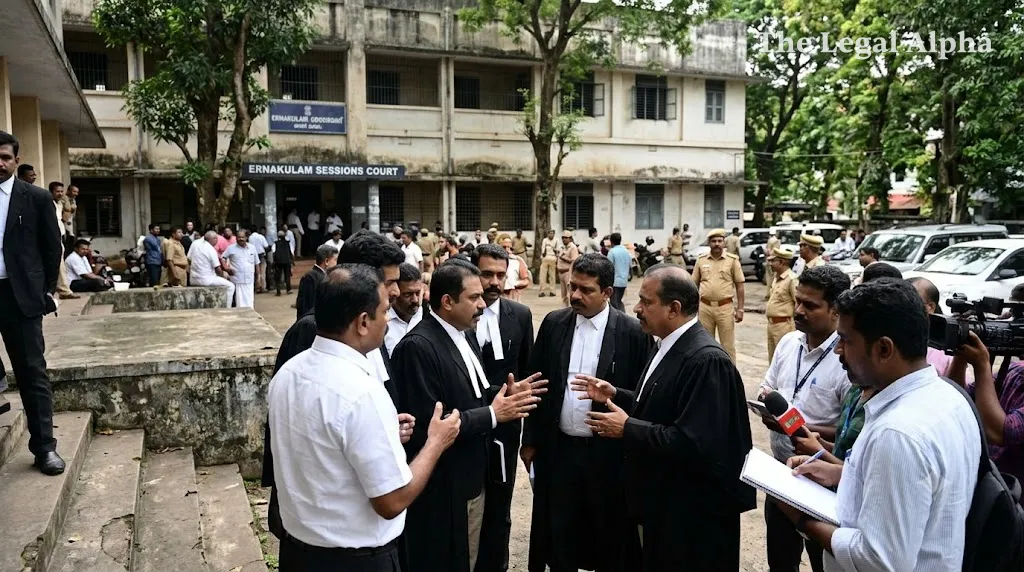
Delhi Court Reprimands Actor Nora Fatehi for Skipping Witness Deposition in ₹200-Crore Extortion Case
A designated special court in New Delhi expressed strong displeasure over the non-appearance of Bollywood actor and dancer Nora Fatehi, who had been summoned to depose as a formal prosecution witness in the high-profile ₹200-crore extortion trial involving alleged conman Sukesh Chandrashekhar. Fatehi was scheduled to appear in person on November 2, 2026, to record her evidence.
Instead of appearing, her counsel submitted an application seeking exemption from personal attendance. The court rebuked the defense counsel for treating the judicial process lightly, observing that the actor’s conduct was "not up to the mark" and warning against taking court summons for granted. Consequently, the bench issued fresh summons directing her personal appearance on November 6, 2026.
Legal Topic
-
Area of Law: Criminal Law and Procedural Law
-
Sub-topic: Witness Examination, Judicial Summons, and Trial Procedure under the Code of Criminal Procedure / Bharatiya Nagarik Suraksha Sanhita
Core Legal Issue
The primary procedural question before the court was whether a listed prosecution witness who has been formally served a judicial summons can seek routine exemption without presenting compelling, demonstrable exigencies, and whether such continuous non-compliance impedes the statutory mandate of conducting an expeditious criminal trial.
The court had to balance the witness's procedural obligation to testify under court summons against the defense counsel's request for exemption, evaluating whether the plea was justifiable or an unwarranted delay in recording crucial prosecution evidence.
What Did the Court Decide?
Special Judge Gagandeep Singh of the Rouse Avenue Court declined to entertain the casual absence of the witness and recorded sharp oral remarks regarding her overall conduct:
-
Reprimand on Record: The court observed: "Her conduct is not up to the mark. Don't take the court for granted."
-
Verification of Service: The judge inquired when the summons had been served; the counsel conceded that notice had been received on October 29, 2026, establishing adequate advance knowledge.
-
Fresh Summons Issued: The court issued a peremptory fresh summons requiring Nora Fatehi to appear physically in the witness box on November 6, 2026, to tender her testimony.
Key Legal Points
-
Obligation of Prosecution Witnesses: Unlike an accused who is shielded against self-incrimination, a listed prosecution witness is bound by law to assist the court and cannot treat an appearance in a criminal trial as optional.
-
Judicial Displeasure over Casual Exemptions: Trial courts possess broad inherent and statutory powers to reject witness exemption applications where adequate prior intimation was provided and no emergency is demonstrated.
-
Distinction Between Accused and Witness: The court reinforced that status as a witness (Listed Witness No. 3 in the third supplementary chargesheet) does not confer immunity from attendance requirements or allow preferential scheduling.
-
Trial Timelines and Decorum: The administration of criminal justice expects non-hostile witnesses to facilitate speedy trials, especially in long-pending financial crimes and multi-agency investigations.
Relevant Law
-
Section 61 and Section 62 of the Code of Criminal Procedure, 1973 (CrPC) / Sections 63–64 of Bharatiya Nagarik Suraksha Sanhita, 2023 (BNSS): Governs the form and service of judicial summons on witnesses.
-
Section 164 of the CrPC / Section 183 of the BNSS: Applicable to statements recorded before a magistrate during investigation, which the prosecution seeks to substantiate during formal witness examination.
-
Section 193 of the Indian Penal Code (IPC) / Contempt Provisions: Legal penalties applicable for intentional disobedience of lawful court summons or stalling trial proceedings.
Arguments of the Parties
Witness / Counsel for Nora Fatehi
Counsel representing Nora Fatehi moved an application seeking exemption from personal attendance for the day, submitting that the actor could not be present despite having received the summons on October 29. The counsel pleaded for an adjustment of the trial date.
Prosecution / Investigating Agency (Delhi Police)
The prosecution and police officials informed the court that the summons had been formally served on the witness. However, the authorities submitted that they had received no prior confirmation or communication indicating whether she intended to appear in court on the designated date, leaving the prosecution in procedural limbo.
Why Does It Matter?
This development highlights a critical friction point in high-profile criminal trials: the tension between celebrity schedules and rigid judicial timetables.
Courts in financial fraud and extortion trials are increasingly intolerant of procedural delay tactics, emphasizing that witness cooperation is an essential civic and legal duty. The order sends a clear signal across trial courts that high visibility or celebrity standing offers no leeway to circumvent summons, nor does it dilute the requirement to prioritize scheduled testimony over private commitments.
Legal Takeaway
A witness summons issued by a competent criminal court is a mandatory judicial directive, not a flexible invitation. Failure to attend or submitting eleventh-hour exemption pleas without ironclad justifications invites judicial strictures and coercive legal remedies.
Sources
-
Primary Source: Proceedings before Special Judge Gagandeep Singh, Rouse Avenue District Courts, New Delhi (Extortion case arising from FIR No. 208/2021, Special Cell, Delhi Police).
-
Additional Sources: Court filings and supplementary chargesheets filed by the Economic Offences Wing (EOW) and Special Cell, Delhi Police.