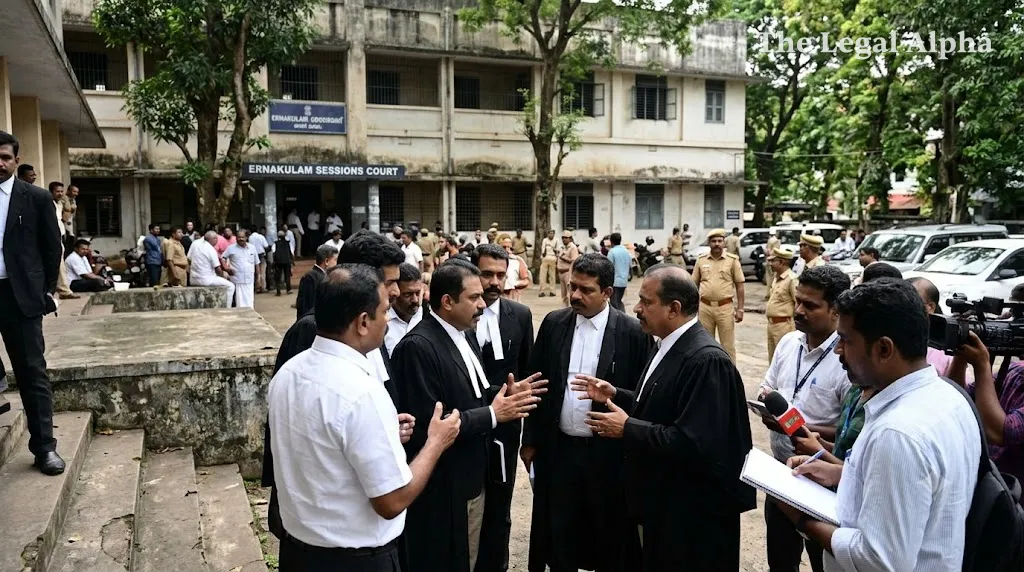
Sabarimala Pilgrimage: Kerala High Court Directs Police Probe Into Fraudulent Health Card Network, Restricts Certification to Government Doctors
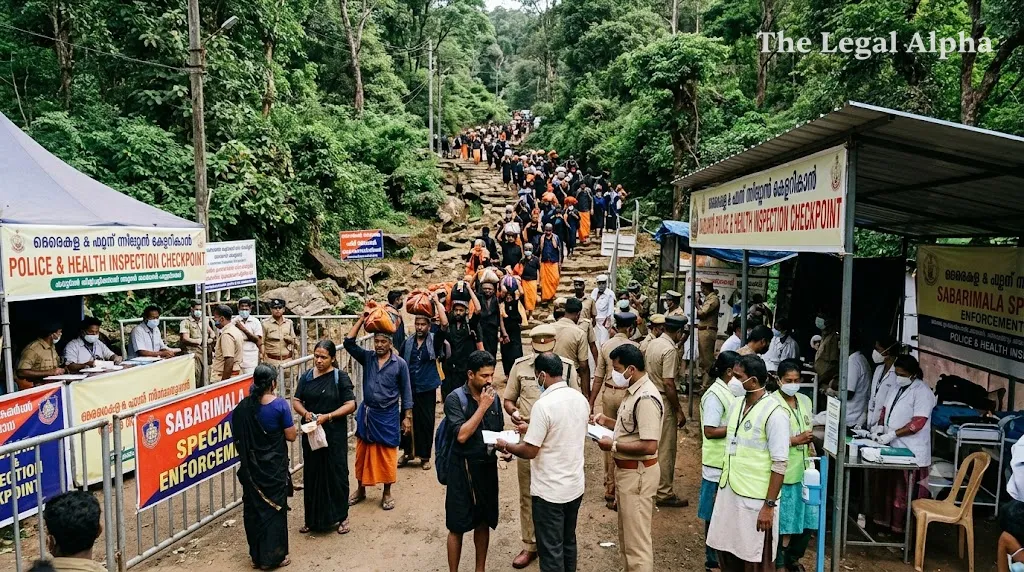
The Kerala High Court stepped in to curb the circulation of forged health cards among food handlers and commercial workers at the Sabarimala pilgrimage shrine. Acting on a report submitted by the Sabarimala Special Commissioner following a formal complaint by the Sannidhanam Health Inspector, the Court took judicial notice of medical certificates allegedly issued without mandatory physical check-ups or diagnostic blood tests. According to records placed before the bench, the questionable documents were circulated through instant messaging platforms. In response, the Court ordered the Pathanamthitta District Police Chief to lead a thorough criminal investigation, mandated that only Kerala government medical officers can issue valid fitness cards for temple-zone workers, and directed health enforcement squads to conduct strict on-ground verifications.
Legal Topic
Area of Law: Public Health and Food Safety Law
Sub-topic: Food Safety Compliance, Administrative Oversight, and Criminal Impersonation / Fraud
Core Legal Issue
The matter addresses the legal liability arising from the issuance of fraudulent fitness certificates to food handlers operating in large public assemblies, where strict statutory food safety protocols are non-negotiable.
The primary question before the Court was whether the Travancore Devaswom Board and municipal health authorities can permit commercial establishments to function based on unverified private certifications, and what affirmative administrative safeguards must be instituted under public health laws to prevent the transmission of communicable diseases during massive religious gatherings.
What Did the Court Decide?
The Division Bench directed the District Police Chief of Pathanamthitta to conduct a comprehensive inquiry into the network distributing forged health certificates and initiate criminal prosecution against all identified offenders.
The Court barred the Travancore Devaswom Board from accepting health fitness cards signed by unauthorized or private practitioners, ruling that all staff engaged in commercial shops, catering units, and temple establishments must possess certificates issued exclusively by Kerala Government Medical Officers. Furthermore, Health Department inspection teams were ordered to conduct continuous compliance inspections across Pamba, Sannidhanam, and transit paths to ensure full adherence to Director of Health Services circulars. The proceedings were subsequently closed with these operational mandates.
Key Legal Points
The High Court underscored that mandatory health certification for commercial food workers is an active statutory measure intended to halt the outbreak of infectious diseases, rather than a nominal clerical formality.
Issuing medical clearance without administering mandatory physical evaluations and serological tests constitutes fraud, actionable under statutory penal provisions as well as special enactments governing food security.
Statutory bodies administering places of worship owe a strict duty of care toward pilgrims to ensure that commercial vendors conform strictly to state sanitation rules.
Administrative authorities and law enforcement agencies hold concurrent jurisdiction to initiate criminal investigations when public health safeguards are compromised by organized fraudulent syndicates.
Relevant Law
Food Safety and Standards Act, 2006, read with Food Safety and Standards (Licensing and Registration of Food Businesses) Regulations, 2011, establishing mandatory health checkups for food handlers.
Kerala Shops and Commercial Establishments Act, 1960, governing the terms, conditions, and regulatory compliance of commercial retail staff.
Sections 316, 318, and 336 of the Bharatiya Nyaya Sanhita, 2023 (or Sections 420, 465, and 468 of the Indian Penal Code), addressing cheating, forgery, and the circulation of forged documentation.
Article 21 of the Constitution of India, extending the right to life and personal liberty to encompass the right to public health and clean sanitary surroundings.
Arguments of the Parties
The Health Inspector and the Special Commissioner submitted that fake health certificates were being issued without clinical testing, noting specific evidence of cards distributed via messaging platforms without physical patient interactions. The authorities emphasized that such lapses presented serious epidemiological risks to millions of visiting pilgrims.
The Travancore Devaswom Board indicated its commitment to enforcing the law and submitted to the directions of the Court to implement stricter credential verifications for all vendor allocations and contract personnel across the shrine grounds.
Why Does It Matter?
Sabarimala hosts tens of millions of pilgrims over an intense annual festive period, making community dining, tea stalls, and prasad distribution points critical public health zones. A single outbreak of waterborne or foodborne infection can trigger widespread health crises across multiple states.
By restricting valid health certification to official state government medical officers, the High Court eliminates reliance on dubious private certifications and unaccredited clinics. The decision signals a zero-tolerance policy against fraudulent documentation within institutional hospitality and festival administration, setting a benchmark for mass-gathering event regulators across the country.
Legal Takeaway
Statutory health compliance for food handlers cannot be treated as a procedural paper exercise. The issuance of medical fitness cards without bona fide medical testing constitutes a criminal offense that invalidates vendor eligibility, placing an affirmative legal obligation on temple administrators and enforcement squads to rely solely on authenticated government medical certifications.
Sources
Primary Source: Kerala High Court Order, Devaswom Bench, In re: Sabarimala Special Commissioner Report on Illegal Health Cards (November 2026).
Additional Sources: Directorate of Health Services (Kerala) Circular on Medical Certification for Food Handlers; Reports from the Office of the District Police Chief, Pathanamthitta.