Pykara Lake Purged of Fuel Reserves as State Enforces Madras High Court Eco-Protection Mandate
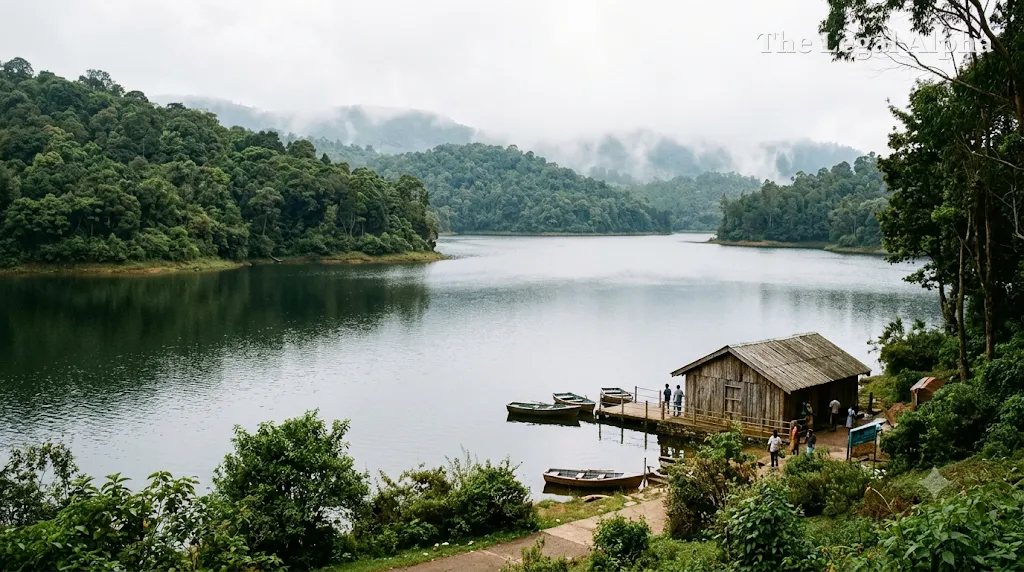
The Tamil Nadu Tourism Development Corporation (TTDC) has removed over 400 litres of stored petrol, lubricating oil, and mechanical boat engines from the Pykara Lake boat house in the Nilgiris district. The clearance complies with a strict two-week deadline issued by a Division Bench of the Madras High Court, comprising Justices N. Sathish Kumar and G.K. Muthukumaar, in an ongoing public interest litigation (S. Muralidharan v. Principal Chief Conservator of Forests and Others).
In addition to clearing the fuel depot, authorities have shortened visitor hours, closing the lake to tourists at 4:00 p.m. instead of 5:00 p.m. While TTDC has replaced fuel-driven speed boats with five low-powered electric outboard boats, it is now preparing to transition toward non-motorised rowboats and pedal boats. The intervention follows scientific water testing that detected unsafe levels of petroleum hydrocarbons along tourist boating routes in the reservoir, which supplies drinking water to downstream communities and borders the Mukurthi National Park.
Legal Topic
Area of Law: Environmental Law
Sub-topic: Conservation of Ecologically Sensitive Zones / Public Trust Doctrine
Core Legal Issue
The central legal question before the Madras High Court was whether commercial recreational boating and unregulated tourism activities can be permitted to continue in an ecologically fragile hydroelectric reservoir that serves as a vital drinking water source and wildlife habitat. Specifically, the Court examined how the State’s duty as a trustee of natural resources requires restricting tourism infrastructure when scientific evidence indicates water contamination, even in the absence of proven immediate harm to human consumers.
What Did the Court / Authority Decide?
In its order dated October 30, 2026, the Madras High Court made absolute its earlier interim ban (dated August 28, 2026) prohibiting all mechanised, petrol, diesel, and jet-ski boats on Pykara Lake. The Bench ruled that Pykara Lake is primarily a water storage reservoir for the Pykara Hydro Electric Project and an ecological habitat, not a commercial tourist spot.
To protect the ecosystem, the Court issued a series of binding directives:
-
Fuel Removal: Directed TTDC to clear all mechanised boats, fuel stocks, and fuel-handling equipment from the site within two weeks and submit a compliance report.
-
Restricted Boating: Permitted only a capped fleet of non-motorised boats (row or pedal boats) or low-powered electric boats operating at no-wake speed within a demarcated zone near the boat house, away from wildlife corridors. New boats cannot be acquired without prior judicial approval.
-
Carrying Capacity and Access: Ordered the Forest Department to evaluate the lake's ecological carrying capacity, establish a daily visitor cap with advance booking, and restrict visiting hours strictly to daylight between 10:00 a.m. and 4:00 p.m.
-
Environmental Controls: Imposed an immediate ban on amplified music, artificial lighting, picnics, new food stalls, and further construction along the banks, alongside strict plastic checks at the entrance and daily waste removal.
-
Agency Impleadment: Suo motu impleaded the Tamil Nadu Green Energy Corporation Limited (TNGECL), which currently manages the Pykara power house, as a respondent.
The Court has scheduled the matter for December 4, 2026, to review compliance reports from TTDC and the carrying-capacity assessment from the Forest Department.
Key Legal Points
-
Application of the Public Trust Doctrine: The Court reiterated that lakes and waterbodies are held by the State in public trust, prohibiting authorities from allowing commercial or recreational uses that degrade natural resources.
-
Primacy of the Precautionary Principle: Even if pollutant concentrations remain close to statutory thresholds, the presence of petroleum hydrocarbons in water consumed untreated or lightly treated by downstream villagers justifies preemptive restrictions without waiting for proof of actual public health harm.
-
Hierarchy of Resource Use: Judicial scrutiny established a clear priority for multi-use reservoirs: water storage for downstream communities and power generation comes first, wildlife habitat preservation second, and quiet, regulated public enjoyment last.
-
Accountability for Unauthorised Operations: The Bench noted that TTDC had been operating boating services on the reservoir without ever obtaining formal statutory permissions, underscoring the need for strict inter-departmental oversight.
Relevant Law
-
Public Trust Doctrine & Precautionary Principle: Recognised environmental law principles under Article 21 of the Constitution of India, mandating preventive state action against environmental degradation and requiring polluters to bear restoration costs.
-
Bureau of Indian Standards (IS 10500:2012): The national drinking water specification standard used by scientific agencies to evaluate petroleum hydrocarbon contamination in Pykara Lake.
-
Wildlife (Protection) Act, 1972 & Environment (Protection) Act, 1986: Statutory frameworks governing buffer zones, eco-sensitive areas bordering the Mukurthi National Park, and the Nilgiri Biosphere Reserve.
Arguments of the Parties
-
Petitioner and Amici Curiae: The petitioner and the court-appointed Amici Curiae relied on water analysis reports from the Indian Council of Agricultural Research (ICAR-IISWC) and the CSIR-National Environmental Engineering Research Institute (NEERI). They highlighted that water samples along the boating lanes contained petroleum hydrocarbons significantly exceeding IS 10500:2012 drinking water limits, whereas water near the undisturbed banks remained clean, proving that tourist motorboats were the direct source of pollution.
-
Respondent (State of Tamil Nadu / TTDC): Appearing for the State and TTDC, the Additional Advocate General submitted an undertaking confirming that mechanised and fuel-powered speed boats had already been withdrawn from service on the lake. Following the order, TTDC officials stated that fuel barrels and spare engine parts have been cleared and that the corporation plans to procure eco-friendly rowboats and pedal boats subject to the Court's permission.
Why Does It Matter?
This ruling sets a strict precedent for managing high-altitude reservoirs and eco-tourism hubs across India. State tourism corporations frequently run motorised boating operations on irrigation dams and forest lakes to generate revenue, often without environmental clearances or carrying-capacity limits. By elevating ecological integrity and downstream drinking water safety above tourist footfall, the Madras High Court has signalled that state-run enterprises are equally bound by environmental regulations. Tourism operators and forest departments managing sensitive ecosystems will likely face heightened judicial scrutiny regarding waste management, fuel storage, and daily visitor caps.
Legal Takeaway
Public waterbodies located within or adjacent to protected forest ecosystems cannot be treated primarily as commercial entertainment zones. Under the Public Trust Doctrine and the Precautionary Principle, courts will step in to halt polluting recreational activities—even those operated by state tourism agencies—whenever scientific evidence points to water contamination or ecological disruption.
Sources
-
Primary Source: Order of the High Court of Judicature at Madras in Mr. S. Muralidharan v. Principal Chief Conservator of Forests and Chief Wildlife Warden & Others, W.P. No. 27356 of 2019 (Coram: Justice N. Sathish Kumar and Justice G.K. Muthukumaar), dated October 30, 2026.
-
Additional Sources: Compliance updates and operational details from Tamil Nadu Tourism Development Corporation (TTDC) and Forest Department officials regarding Pykara Lake fuel clearance and visitor timings (November 2026).