Punjab and Haryana High Court Quashes Teacher’s Suspension Over Election Duty, Slaps ₹50,000 Costs on Haryana Officials
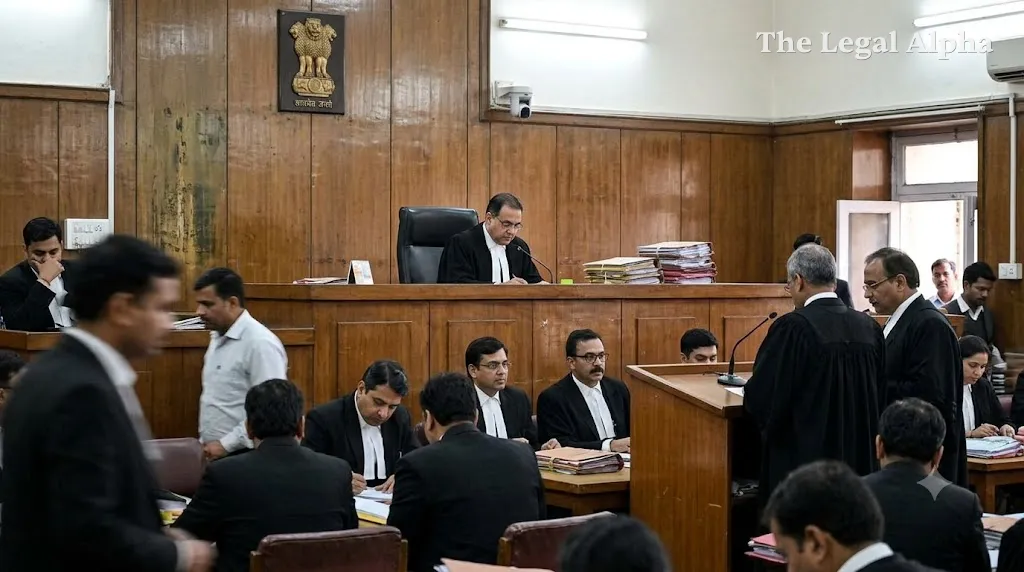
The Punjab and Haryana High Court came down heavily on education and election authorities in Haryana for arbitrarily suspending a government school teacher who requested to be excused from election-related Booth Level Officer (BLO) duties following his wife’s death.
The petitioner, Sunil Kumar, an elementary school teacher from Hisar, was left as the sole caregiver for his elderly mother and young children after his spouse passed away. He submitted formal applications through proper administrative channels seeking exemption from additional election duties. While the election machinery successively assigned three substitute teachers in his place, those replacements failed to assume charge. Instead of addressing the administrative lapse, authorities placed Kumar under suspension in July 2026, withheld his salary, and initiated disciplinary proceedings against him.
Justice Harpreet Singh Brar set aside the suspension order and disciplinary actions, describing the administration’s conduct as an indefensible attempt to "blow hot and cold in the same breath," and directed two responsible officers to personally pay ₹50,000 in costs.
Legal Topic
Area of Law: Service Law / Administrative Law
Sub-topic: Disciplinary Action, Wrongful Suspension, and Election Duty Exemptions
Core Legal Issue
The primary legal question before the High Court was whether an employer or public authority can initiate disciplinary action and suspend an employee for failing to perform non-teaching election tasks when the employee has formally applied for exemption on genuine, humanitarian grounds and the department has already acknowledged the situation by assigning replacements.
The case scrutinised whether an employee can be held liable for administrative inaction or the non-compliance of newly appointed substitutes, and whether penalising an employee in such circumstances amounts to arbitrary and colourable exercise of power under Article 14 of the Constitution.
What Did the Court / Authority Decide?
The High Court granted complete relief to the petitioner and passed the following directions:
-
Suspension Quashed: The suspension order dated July 7, 2026, and the proposal to initiate formal departmental inquiry/disciplinary proceedings were set aside.
-
Recovery of Costs: Imposed costs of ₹50,000, to be borne by the District Elementary Education Officer (DEEO), Hisar, and the Electoral Registration Officer (ERO) of the 51-Barwala Assembly Constituency.
-
Release of Salary: Directed the State to clear all arrears of withheld salary within four weeks, as the petitioner had remained unpaid since early June.
-
Future Deployment Safeguards: Directed the authorities that prior to assigning any future Booth Level Officer duties to Kumar, his personal circumstances must be taken into account. Furthermore, substitute duty mapping and onboarding on the portal must be completed by the administration within a reasonable time.
Key Legal Points
-
Doctrine Against Approbation and Reprobation: The State cannot simultaneously assert that an employee was never relieved from a post while actively assigning three successive replacements to take over the very same duties.
-
No Vicarious Liability for Administrative Delays: An employee cannot be penalised with suspension or salary withholding because administrative authorities failed to enforce orders against substitute officials who did not join.
-
Humanitarian Considerations in Statutory Deputations: While public servants are obliged to assist in election duties under the Representation of the People Act, statutory authorities must exercise administrative discretion humanely and reasonably, taking into account genuine personal bereavement and caregiving obligations.
-
Accountability for Arbitrary Suspension: Disciplinary powers cannot be weaponised arbitrarily to mask departmental inefficiency; unjustified suspension that harms an employee’s livelihood justifies the imposition of personal costs on erring officials.
Relevant Law
-
Constitution of India: Article 14 (Protection against arbitrariness in State action) and Article 226 (High Court's writ jurisdiction to correct administrative illegalities).
-
Representation of the People Act, 1950 & 1951: Provisions governing the requisition and appointment of public servants as Booth Level Officers (Section 13B / 13CC).
-
Haryana Civil Services (Punishment and Appeal) Rules: Rules regulating suspension, departmental proceedings, and grounds for initiating disciplinary action against State government servants.
Arguments of the Parties
Petitioner
Counsel for the teacher submitted that the petitioner had acted transparently by submitting timely representations through proper channels explaining his domestic tragedy. It was contended that the authorities effectively acknowledged his inability to perform the duty by appointing successive substitutes. The petitioner argued that placing him on suspension and withholding his salary without resolving his pending exemption requests or verifying why the replacements failed to join was completely arbitrary, punitive, and contrary to service rules.
Respondent / State
The State contended that election duties and Special Intensive Revision (SIR) exercises are mandatory public duties essential for conducting democratic processes. The authorities submitted that until a government employee is formally relieved on the official system and charge is formally handed over, the original appointee remains legally responsible for the booth's records and tasks.
Why Does It Matter?
This ruling serves as an important check against bureaucratic insensitivity and the routine misuse of suspension orders against junior civil servants and teachers. In India, primary and secondary educators are frequently deployed for non-educational responsibilities, including voter list revisions, census enumerations, and election monitoring.
The decision establishes that while election work is a vital public function, statutory bodies cannot ignore grave domestic crises or expect employees to bear the consequences of an inefficient handover process. By imposing ₹50,000 in costs directly on the officers involved rather than the State exchequer, the High Court reinforced individual administrative accountability for malicious or negligent service actions.
Legal Takeaway
Administrative authorities cannot penalise a public servant for an unresolved administrative handover when the employee has acted through official channels due to personal tragedy. Suspension cannot be utilized as a tool of convenience to conceal departmental coordination failures.
Sources
Primary Source:
Punjab and Haryana High Court, Sunil Kumar v. State of Haryana and Others (Decided by Justice Harpreet Singh Brar).
Additional Sources:
-
High Court Cause List and Order Records, Punjab and Haryana High Court, Chandigarh.
-
Service and Election Law Compendium, Representation of the People Act, 1950.