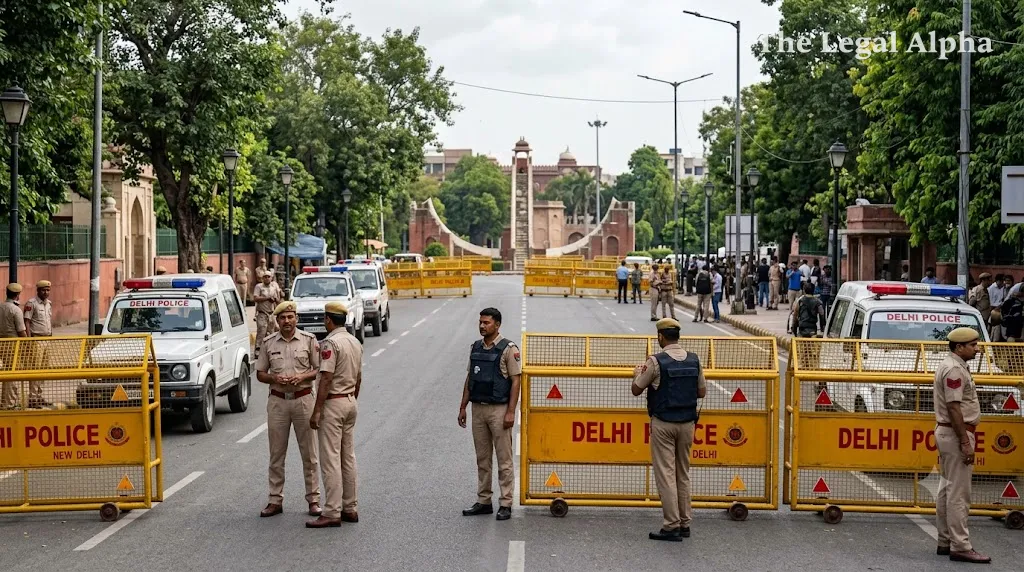
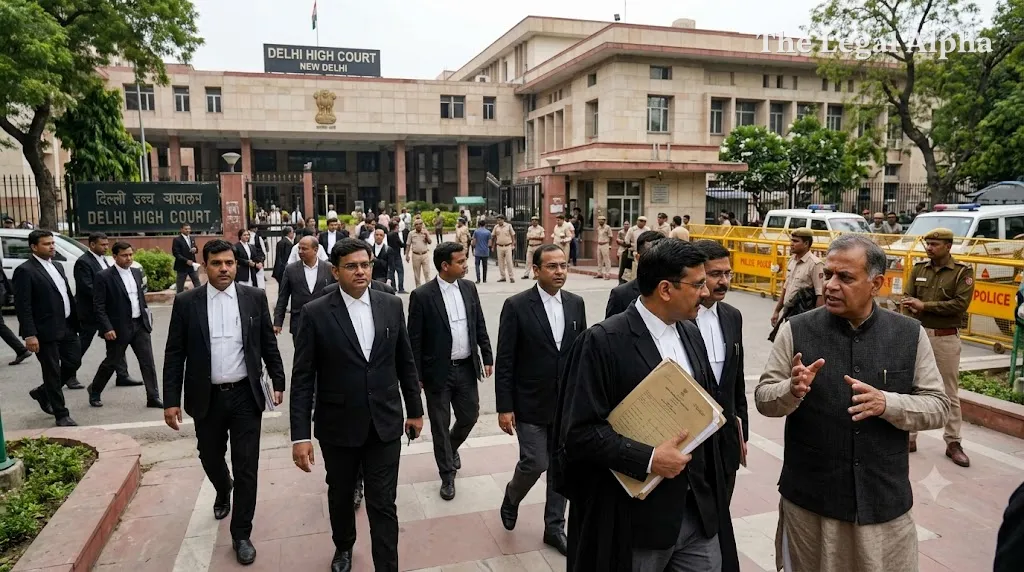
Preventive Restraints Under Scrutiny as Section 163 BNSS Replaces CrPC Curfew Regime
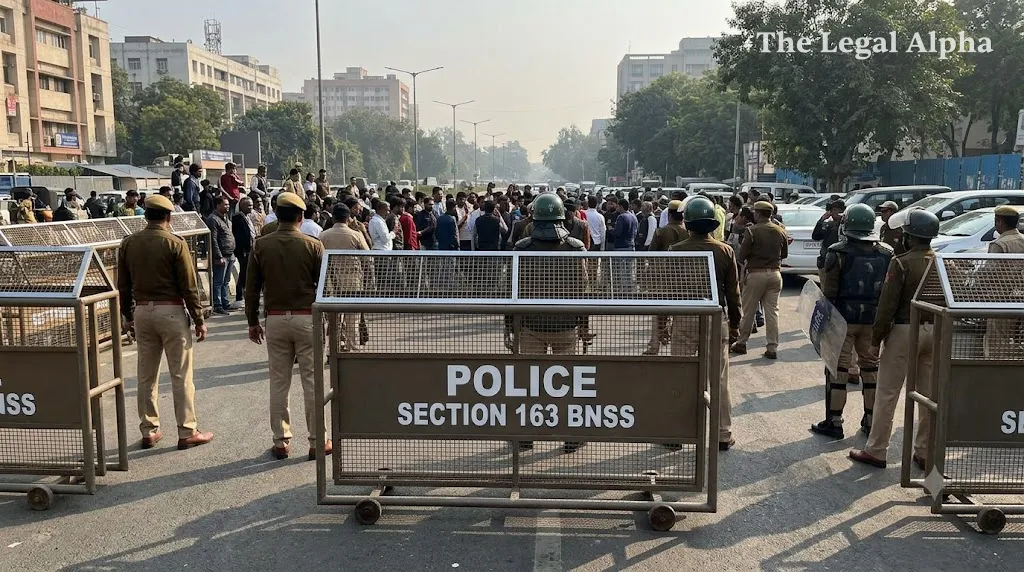
Executive authorities across Indian jurisdictions have begun actively invoking Section 163 of the Bharatiya Nagarik Suraksha Sanhita (BNSS), 2023, which succeeded the longstanding Section 144 of the Code of Criminal Procedure, 1973. The provision equips District Magistrates and specially designated Executive Magistrates with summary powers to restrict public movement, gatherings, and individual actions during emergencies.
Recent reliance on Section 163 by urban administrative and police headquarters to prohibit assemblies ahead of planned political and ecological protests has reignited legal debate. Civil liberty groups and legal practitioners argue that routine recourse to the provision risks turning exceptional preventive measures into standard administrative practice.
Legal Topic
Area of Law: Criminal Procedure and Constitutional Law Sub-topic: Preventive Justice and Executive Magistrate Powers
Core Legal Issue
The legal question focuses on whether an Executive Magistrate can deploy summary prohibitory orders under Section 163 BNSS as a prophylactic policing tool without establishing immediate, tangible material facts of an impending breach of peace.
At the center of this controversy is the threshold of administrative justification required by the statute. The core issue is whether executive authorities are applying the strict constitutional principles of proportionality and necessity—established by higher courts over decades—when issuing broad orders that restrict freedom of assembly and speech.
What Did the Court / Authority Decide?
Magisterial authorities issuing these directives have prohibited gatherings of five or more persons, carrying placards or weapons, and staging demonstrations in designated jurisdictions. Administrative notifications state that urgent curbs are necessary to forestall riots, prevent danger to human life, and ensure public tranquility amid impending rallies and sensitive regional developments.
Under the framework of Section 163 BNSS, orders generally remain valid for up to 60 days, though the State Government holds statutory discretion to extend their tenure for a further period not exceeding six months if broader public safety concerns persist. In contested matters before constitutional courts, the judiciary has continuously required the executive to demonstrate recorded material grounds rather than speculative intelligence reports to sustain such restrictions.
Key Legal Points
-
Preservation of Core Substantive Powers: Section 163 BNSS largely retains the substance of former Section 144 CrPC, empowering magistrates to direct parties to abstain from acts or manage property to avert danger.
-
Statutory Requirement of Written Material Facts: An order under this provision cannot rest on subjective apprehension alone; the magistrate must issue a written order explicitly stating the material facts necessitating the intervention.
-
Temporal Limitations: Ordinary magisterial orders are restricted to a maximum lifespan of 60 days, requiring explicit State Government notification to authorize extensions up to six months.
-
Proportionality and Ex Parte Curbs: While emergency ex parte directives are permissible under imminent threats, they remain subject to constitutional review under Article 19(2) and 19(3) regarding whether the least restrictive remedy was applied.
Relevant Law
-
Bharatiya Nagarik Suraksha Sanhita, 2023: Section 163 (Power to issue order in urgent cases of nuisance or apprehended danger).
-
Constitution of India: Article 19(1)(a) (Freedom of speech and expression), Article 19(1)(b) (Right to assemble peacefully without arms), and Article 21 (Right to life and personal liberty).
-
Judicial Precedents: Madhu Limaye v. Sub-Divisional Magistrate (1970) (establishing that urgency and tangible danger must justify executive restraint) and Anuradha Bhasin v. Union of India (2020) (holding that preventive prohibitory powers must be exercised reasonably and are subject to judicial review for proportionality).
Arguments of the Parties
Civil Liberties Advocates and Petitioners
Petitioners challenging recent blanket invocations argue that Section 163 BNSS is frequently deployed to curb lawful assembly and muzzle non-violent protest. They submit that authorities issue standardized notifications citing generalized threats instead of specifying concrete material evidence, effectively turning an extraordinary, temporary remedy into a preemptive curfew.
Administrative Authorities and the State
The State contends that Section 163 functions as a critical preventive mechanism designed to avert law-and-order crises, mob violence, and disruptions to public services before they occur. The administration maintains that magistrates must retain wide discretion to take swift, preemptive action in rapidly evolving urban emergencies where public safety and property are at risk.
Why Does It Matter?
The procedural application of Section 163 BNSS affects both administrative practice and democratic assembly across the country. As law enforcement transitions into the updated criminal code architecture, establishing whether magistrates adhere to constitutional precedents surrounding the former Section 144 CrPC will determine the boundary between preventive policing and public assembly rights.
For local businesses, community organizers, and individual citizens, repetitive or expansive Section 163 orders create immediate operational uncertainty, potential criminal liability for non-compliance, and restrictions on movement. How constitutional courts review early administrative deployments of Section 163 will establish the legal safeguards guiding magisterial discretion under the BNSS.
Legal Takeaway
Section 163 BNSS provides executive magistrates with emergency powers to prevent immediate public endangerment, but it does not permit unchecked administrative curbs. To withstand judicial scrutiny, any prohibitory order must be strictly temporary, supported by recorded material facts, and adhere to constitutional standards of necessity and proportionality.
Sources
Primary Source:
-
The Bharatiya Nagarik Suraksha Sanhita, 2023 (Act No. 46 of 2023), Section 163.
Additional Sources:
-
Supreme Court of India: Anuradha Bhasin v. Union of India (2020) 3 SCC 637; Madhu Limaye v. Sub-Divisional Magistrate (1970 AIR 1102).
-
Vajiram & Ravi Current Affairs: Legal Framework of Section 163 of Bharatiya Nagarik Suraksha Sanhita (BNSS).