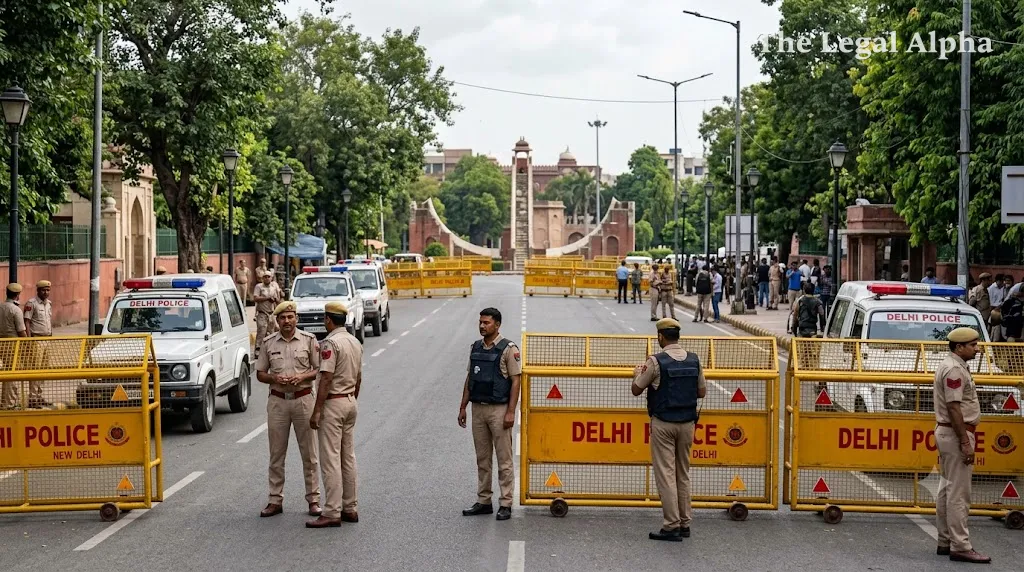
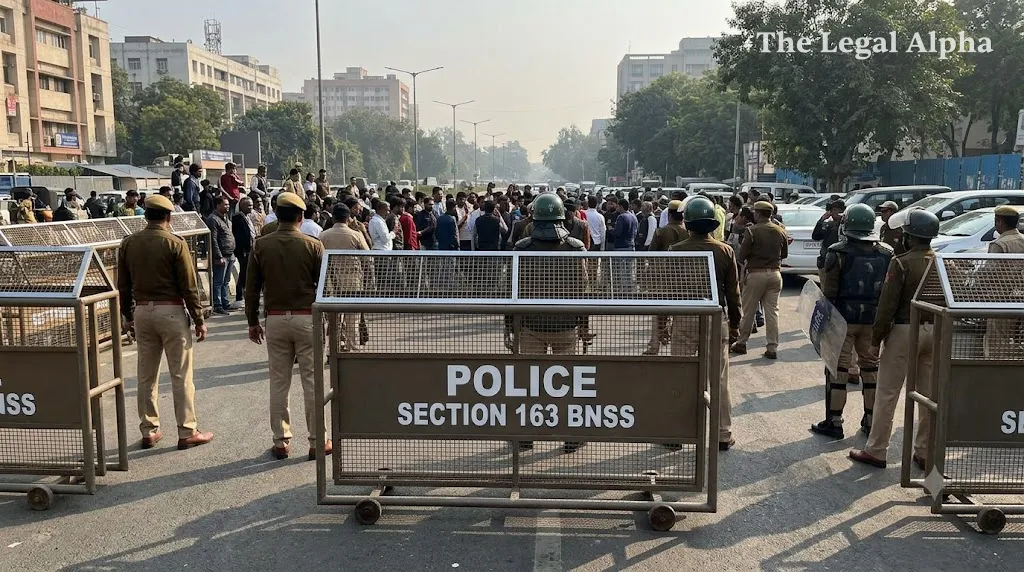
Delhi High Court Declines Same-Day Listing on Activist Nadeem Khan’s Plea Against Feared Preventive House Arrest
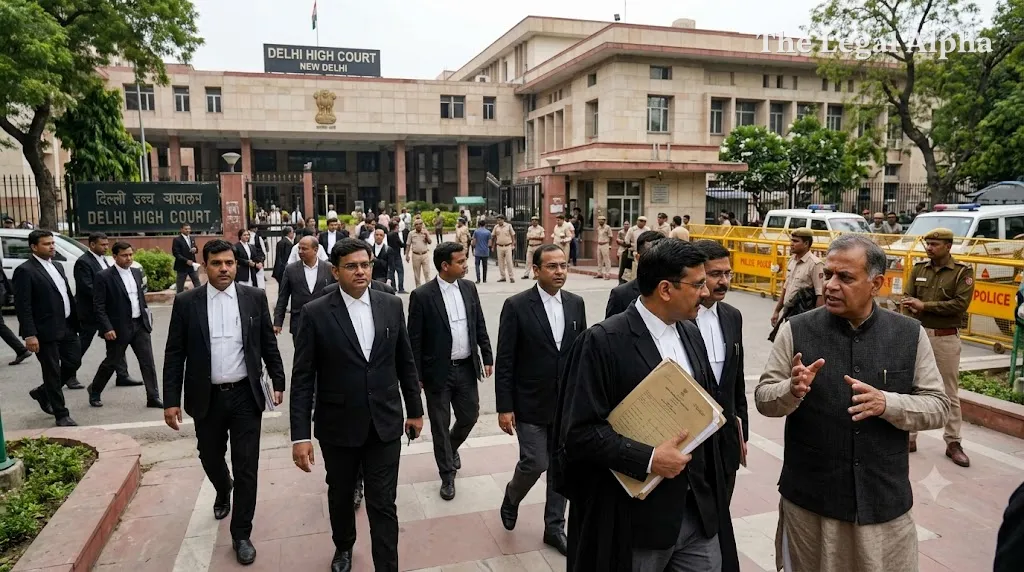
The Delhi High Court declined an urgent, same-day hearing on an application moved by civil rights activist and Association for Protection of Civil Rights (APCR) secretary Nadeem Khan, who approached the court citing apprehensions of imminent preventive detention and house arrest by Delhi Police.
Khan’s counsel mentioned the matter for urgent listing, stating that police officers had orally warned him late Thursday night that he could be placed under house arrest to prevent potential demonstrations in the capital. The petitioner submitted that he was scheduled to travel to Kolkata and had no intention of participating in any demonstration. The High Court observed that there was no written restraining order or travel ban placed on record and scheduled the hearing for the upcoming week instead of taking it up immediately.
Legal Topic
Area of Law: Constitutional & Criminal Procedure Law
Sub-topic: Preventive Detention / Right to Personal Liberty and Freedom of Assembly
Core Legal Issue
The matter addresses the threshold required for constitutional courts to intervene under writ jurisdiction against anticipated or informal police restraints where no formal written prohibitory order has been served.
Specifically, the controversy centers on whether verbal police warnings of preventive house arrest warrant urgent judicial intervention when they threaten an individual's fundamental rights to liberty and free movement under Articles 19 and 21 of the Constitution.
What Did the Court / Authority Decide?
The Delhi High Court declined to take up the matter on an urgent same-day basis.
During oral mentioning, the bench queried who had legally prevented the activist from traveling, pointing out the absence of any formal written communication or official order imposing house arrest or a travel embargo. While the bench refused an immediate hearing, it confirmed that the matter would be taken up in the ordinary course and listed it for Monday. The underlying substantive petition remains pending.
Key Legal Points
-
Judicial reluctance to grant emergency, same-day listings grounded purely on oral police intimations without written orders or verifiable records of restraint.
-
The procedural requirement that claims of unlawful restraint or impending preventive detention must establish a tangible, demonstrable fetter on liberty rather than unsubstantiated apprehension.
-
Challenges directed against routine, sweeping police denials or restrictions on democratic assembly at designated protest venues such as Jantar Mantar.
-
Scrutiny of informal "house arrests" under preventive justice provisions, which circumvent standard statutory safeguards such as production before a magistrate.
Relevant Law
-
Article 19(1)(a), (b), and (d) of the Constitution of India (guaranteeing freedoms of speech, peaceful assembly without arms, and movement throughout the territory of India).
-
Article 21 and Article 22 of the Constitution of India (protection of life, personal liberty, and safeguards against arbitrary arrest and detention).
-
Sections governing preventive action and dispersal of assemblies under the Bharatiya Nagarik Suraksha Sanhita, 2023 / Code of Criminal Procedure, 1973.
-
Supreme Court directives in D.K. Basu v. State of West Bengal concerning procedural compliance and mandatory records during detention and arrest.
Arguments of the Parties
Petitioner / Applicant
Advocate Shahrukh Alam, representing the activist, argued that urgent intervention was necessary because the matter directly touches upon fundamental personal liberty. Counsel submitted that the petitioner had already been subjected to arbitrary house arrest previously and faced fresh threats of detention based on verbal communications from law enforcement. The petitioner asserted that he had pre-booked travel tickets to Kolkata, had no intention of participating in any demonstration, and that the state cannot arbitrarily restrain an individual’s movement through informal police pressure without legal authority.
Respondent / State
While the petition was not formally heard on merits, the state machinery maintains broad powers to take preemptive measures to maintain public order and prevent potential law-and-order disturbances during sensitive public demonstrations. The court also noted on record that no written restraint or prohibition had been formally issued against the petitioner's travel.
Why Does It Matter?
The practice of putting political activists, dissenters, and community leaders under informal or de facto "house arrest" ahead of planned protests has increasingly drawn criticism from civil rights groups. Because police often enforce these restraints via verbal notices or heavy stationing of personnel outside homes rather than formal arrest memos, citizens are frequently left without a formal order to challenge in court.
The High Court’s stance highlights the practical hurdle litigants face when attempting to obtain emergency judicial relief against informal administrative coercion. The eventual adjudication of Khan's petition could set an important standard regarding administrative accountability, the legality of unrecorded detentions, and compensation for procedural overreach by police authorities.
Legal Takeaway
Constitutional courts generally require tangible documentary evidence—such as a written order or formal notice—before exercising extraordinary urgent jurisdiction against alleged administrative restraints. Informal or verbal police directives remain difficult to challenge immediately, underscoring the ongoing legal tension between preventive policing and constitutional protections for personal mobility.
Sources
Primary Source:
-
Oral proceedings and mentioning before the High Court of Delhi (Court listing record, October 2026).
Additional Sources:
-
LiveLaw, Social Activist Nadeem Khan Moves Delhi High Court Against His Detention, Challenges Police Restrictions, October 2026.
-
The Indian Express, Activist Nadeem Khan says he could be detained, put under house arrest, Legal Bureau, October 2026.