Preventive Detention Cannot Circumvent Bail: Gauhati High Court Quashes NSA Custody of Activist Pranab Doley Citing Malice in Law
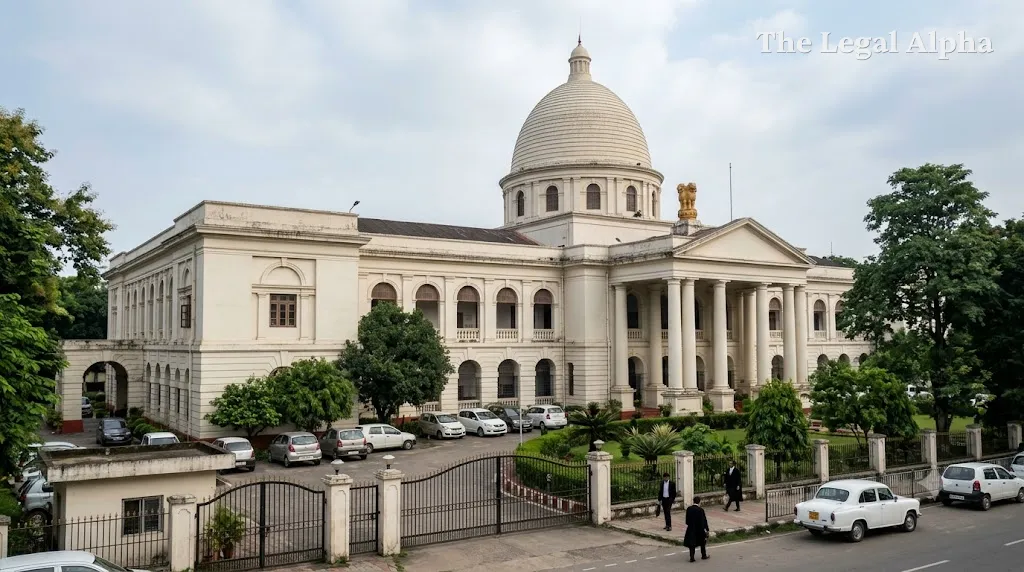
The Gauhati High Court set aside the preventive detention of indigenous rights activist Pranab Doley under the National Security Act, 1980, ordering his immediate release after 117 days in custody.
Doley had been arrested in mid-July 2026 in connection with demonstrations opposing a luxury hospitality development near the Kaziranga National Park landscape. Although a sessions court in Golaghat granted him regular bail on July 29, 2026, the Assam government invoked the National Security Act the very next day, preventing his actual release. A Division Bench comprising Justice Kalyan Rai Surana and Justice Susmita Phukan Khaund held the detention order legally unsustainable, pointing out substantive procedural defects and observing that invoking preventive detention immediately to thwart judicial bail amounted to malice in law.
Legal Topic
Area of Law: Constitutional Law / Preventive Detention
Sub-topic: Habeas Corpus / Abuse of Preventive Powers / Procedural Safeguards under Article 22
Core Legal Issue
The primary question before the High Court was whether the executive can lawfully deploy extraordinary preventive detention powers under the National Security Act to keep an accused person incarcerated immediately after an ordinary criminal court has granted them regular bail.
The court specifically evaluated whether the grounds relied upon by the detaining authority possessed a proximate and rational nexus to national security or public order, and whether non-compliance with statutory disclosure mandates rendered the detention order void ab initio.
What Did the Court Decide?
The Gauhati High Court allowed the writ petition and quashed the detention order (bearing no. eCF-821601/81, dated July 30, 2026). The Bench directed the authorities to release Doley forthwith, provided he was not required in connection with any other lawful case.
The court ruled that the state had failed to satisfy the threshold requirements necessary to justify preventive detention. Emphasizing the doctrine of "malice in law," the Bench underscored that deploying preventive laws simply because regular penal statutes seem burdensome or because an individual secured regular bail from a competent court undermines constitutional liberty.
Key Legal Points
-
Lack of Proximate Nexus: The authorities relied on stale, historical FIRs and charge sheets that lacked any immediate temporal or causal connection to the activist’s current activities.
-
Malice in Law: Using executive detention merely as a tactical measure to nullify regular judicial bail constitutes an impermissible circumvention of ordinary criminal justice and an abuse of power.
-
Violation of Mandatory Procedural Safeguards: The detaining authority failed to provide the detainee with relevant copies of the materials and documents relied upon in the grounds of detention, severely infringing on his right to make an effective representation.
-
Unexplained Inaction on Representations: The failure of the state apparatus to expeditiously consider and dispose of the detainee's statutory representation violated constitutional guarantees.
Relevant Law
-
National Security Act, 1980: Section 3 (Power to make orders detaining certain persons) and provisions governing procedural timelines and advisory board reviews.
-
Constitution of India: Article 21 (Protection of life and personal liberty) and Article 22(5) (Mandatory obligation to communicate grounds of detention and afford earliest opportunity of representation).
-
Judicial Precedents: Established Supreme Court jurisprudence holding that preventive detention cannot substitute for the penal code and that "malice in law" arises when a statutory power is exercised for an unauthorized purpose.
Arguments of the Parties
Petitioner Counsel for Doley argued that the detention order was issued with an oblique motive solely to prevent his release on regular bail granted by the Golaghat sessions court. It was contended that the relied-upon past cases had no living link or proximity to any imminent threat to public order or national security. Furthermore, the defense pointed out that critical underlying materials were withheld from the detainee, denying him his fundamental right under Article 22(5) to submit a meaningful representation.
Respondent / State The state authorities submitted that preventive custody was necessary to maintain public order and prevent potential disruption, given the detainee’s history of mobilizing protests in ecologically sensitive areas. The State argued that the administrative authority had formed its subjective satisfaction based on multiple prior complaints and police reports, warranting preventive intervention.
Why Does It Matter?
The decision reinforces judicial boundaries around executive preventive powers in India. District administrations frequently face criticism for invoking stringent statutes like the NSA immediately after an accused receives bail in ordinary criminal matters.
By classifying such conduct as "malice in law" and strictly enforcing procedural compliance—such as supplying base documents and demonstrating proximate links—the Gauhati High Court reaffirms that administrative detention cannot be used as an end-run around the regular judicial bail system. This strengthens safeguards for civil society activists, environmental advocates, and citizens exercising democratic protest against arbitrary executive deprivation of liberty.
Legal Takeaway
Executive authorities cannot resort to preventive detention simply to keep a person behind bars after an ordinary court has granted bail. Any detention order founded on stale allegations or procedural omissions—such as failing to supply source materials or promptly consider representations—will be treated as malice in law and struck down.
Sources
Primary Source: Gauhati High Court Order/Judgment in Writ Petition (Criminal) challenging Detention Order No. eCF-821601/81, delivered by the Division Bench of Justice Kalyan Rai Surana and Justice Susmita Phukan Khaund.
Additional Sources: Official court reporting and proceedings covering the Gauhati High Court ruling in the Pranab Doley detention matter.