Delhi Court Declines FIR Against Chief Minister Over Bureaucracy Analogy, Citing Absence of Malicious Intent Under Section 299 BNS
A Delhi court rejected a criminal application demanding the registration of a First Information Report (FIR) against Delhi Chief Minister Rekha Gupta over public statements referencing Lord Hanuman while critiquing administrative lethargy. The complaint arose out of an address delivered at a Delhi Transport Corporation (DTC) event at ISBT Kashmere Gate, where the Chief Minister remarked that government officials tend to act only when their figurative tails catch fire.
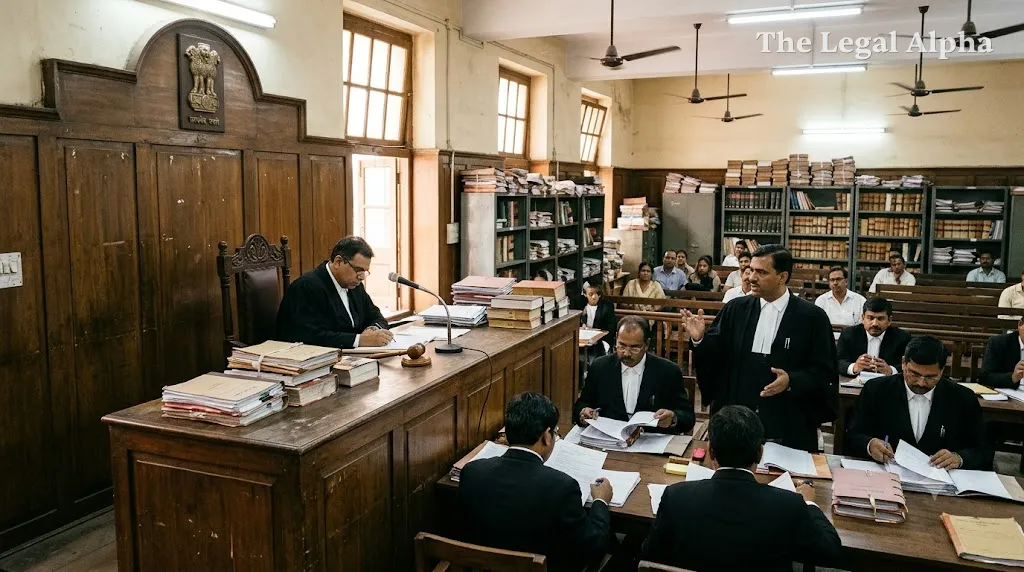
The complainant asserted that equating bureaucratic inaction with the deity insulted religious sentiments. Additional Chief Judicial Magistrate Ashwani Panwar of the Rouse Avenue Courts dismissed the plea for a police investigation, finding that the speech aimed at government efficiency and lacked any deliberate intent to disparage religion.
Legal Topic
-
Area of Law: Criminal Law & Procedure
-
Sub-topic: Pre-cognizance Police Investigation / Offences Against Religion (Section 299 BNS & Section 223 BNSS)
Core Legal Issue
The court had to determine whether an analogy linking bureaucratic working style to a mythological event meets the threshold of a deliberate and malicious act intended to outrage religious feelings under Section 299 of the Bharatiya Nyaya Sanhita (BNS).
A secondary procedural issue was whether the magistrate should order a police investigation under the Bharatiya Nagarik Suraksha Sanhita (BNSS) when the identity of the speaker, the audio-visual material, and the venue were already fully available to the complainant without state intervention.
What Did the Court Decide?
The magistrate declined to direct the police to register an FIR, ruling that the record demonstrated no prima facie deliberate or malicious intent to insult religious beliefs. The court noted that the speaker's comparison targeted the performance of government employees rather than religious tenets.
Procedurally, the court observed that all relevant facts—the speaker, the venue, and the statement itself—were already in the complainant's possession, eliminating the need for coercive police machinery. However, the court did not extinguish the grievance entirely; it permitted the complainant to lead pre-cognizance evidence under Section 223 of the BNSS, scheduling the recording of the complainant's statement for November 19. The question of taking formal cognizance or issuing process will be decided after that examination.
Key Legal Points
-
Target of the Speech: Context matters when assessing penal provisions against speech; drawing a colloquial or mythological parallel to criticize administrative delays does not inherently constitute hostility toward the deity or the faith.
-
Requisite Mens Rea: To invoke Section 299 of the BNS, the complaint must prima facie show a "deliberate and malicious intention" to outrage religious feelings, which cannot simply be presumed from rhetorical hyperbole.
-
Threshold for Ordering an FIR: Magistrates are not required to refer every complaint for a police investigation if the complainant can procure the evidence, summons, and recordings without the investigative powers of the police.
-
Preservation of Private Complaint Procedure: Refusal to order an FIR does not terminate a grievance; the applicant retains the statutory route to proceed as a private complainant by deposing witnesses under Section 223 BNSS.
Relevant Law
-
Section 299, Bharatiya Nyaya Sanhita, 2023 (BNS): Penalizes deliberate and malicious acts intended to outrage religious feelings of any class by insulting its religion or religious beliefs.
-
Section 223, Bharatiya Nagarik Suraksha Sanhita, 2023 (BNSS): Governs the examination of complainants and witnesses in private complaints and mandates an inquiry process prior to taking cognizance.
-
Judicial Precedent: Reaffirms the foundational principle laid down in landmark jurisprudence (such as Ramji Lal Modi v. State of U.P.) that penal speech laws penalize only deliberate, calculated malice, not casual, inadvertent, or rhetorical expressions.
Arguments of the Parties
Complainant
Advocate Sanjeet Kumar, representing complainant Ram Niwas Sharma, contended that the Chief Minister made derogatory comments during an official function in full public view. The complainant argued that equating government officials with Lord Hanuman and using colloquial expressions about catching fire wounded the religious sentiments of devotees, making out a clear case under penal provisions governing insults to religion.
Respondent and Police
In its Action Taken Report submitted before the court, the Delhi Police submitted that no cognizable offence was made out. The police stated that when evaluated in its entirety, the speech was aimed at highlighting administrative accountability and did not exhibit derogatory or hateful intent toward the deity.
Why Does It Matter?
This ruling underscores judicial resistance toward using blasphemy and religious insult provisions as tactical instruments against political or administrative speech. By strictly enforcing the requirement of deliberate malice, the court protects public discourse from being chilled by hypersensitive or decontextualized complaints.
Additionally, the order provides clear guidance on the procedural filter under the new criminal codes (BNSS): magistrates will not expend state investigative resources on disputes where the alleged statement is publicly documented and requires no recovery, seizure, or custodial inquiry.
Legal Takeaway
A criminal investigation under Section 299 of the BNS cannot be initiated merely because a religious analogy was used in poor taste or rhetorical frustration; deliberate and malicious intention to cause insult remains an indispensable legal requirement.
Sources
-
Primary Source: Order of the Additional Chief Judicial Magistrate Ashwani Panwar, Rouse Avenue District Courts, New Delhi (In re: Ram Niwas Sharma v. Rekha Gupta, under Section 223 BNSS / Section 299 BNS, decided November 6, 2026).
-
Additional Sources: Delhi Police Action Taken Report; Proceedings reported via LiveLaw and ANI.