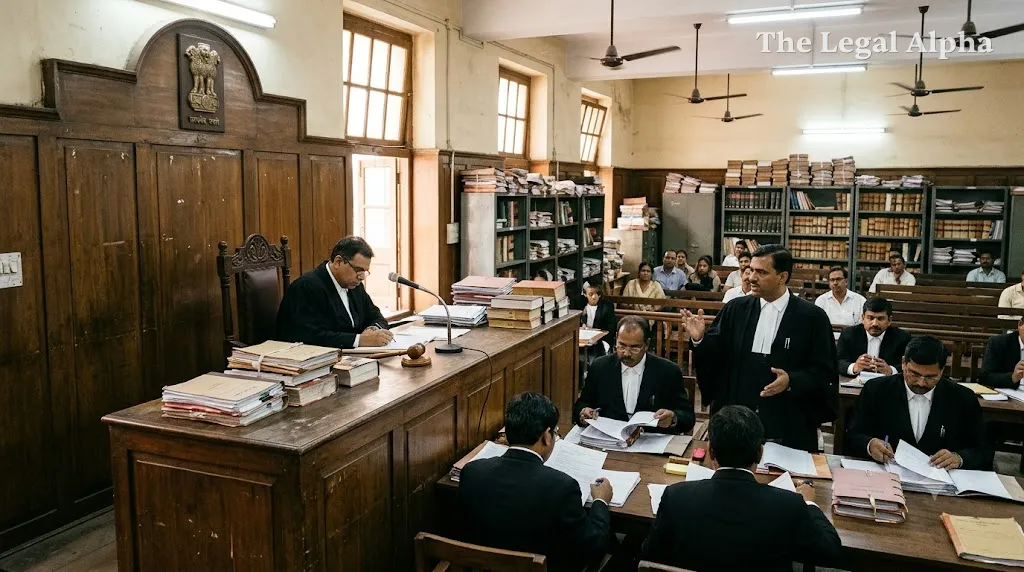
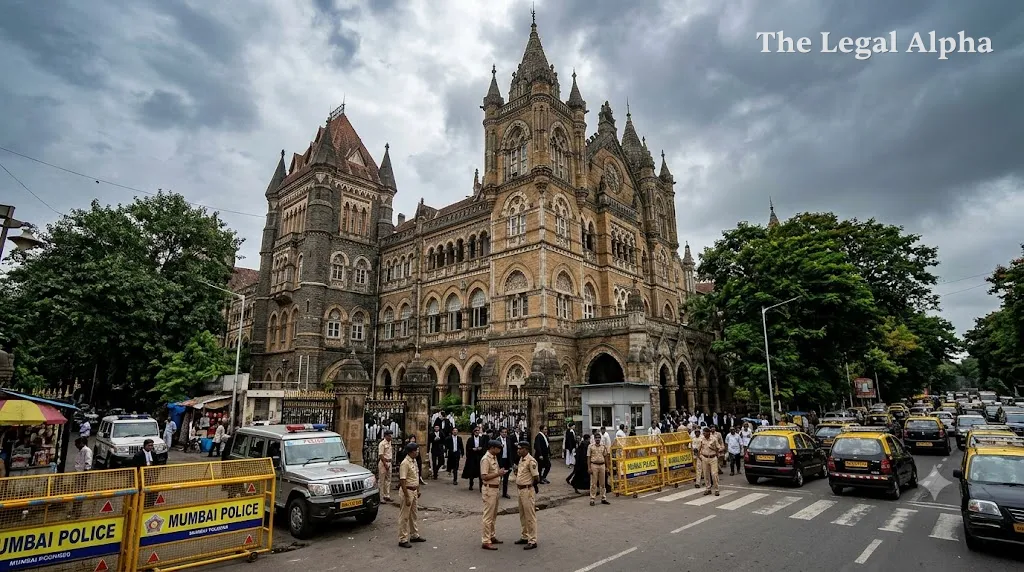
Allahabad High Court Rebukes Uttar Pradesh Police Over Unlawful Detention and Questionable CCTV Failures, Imposing Costs for Civil Liberty Violations
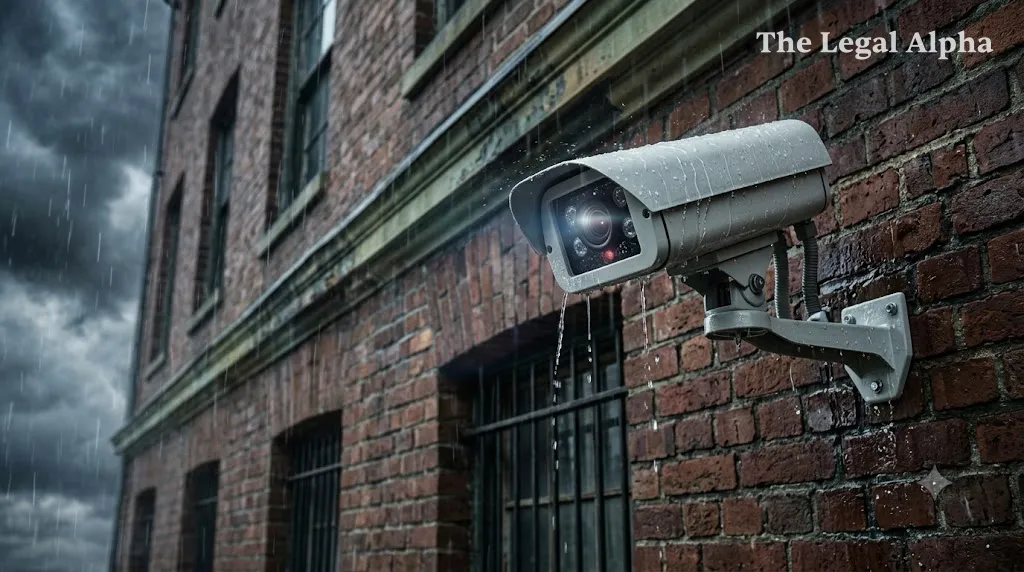
The Allahabad High Court intervened in an alleged case of unlawful police detention after law enforcement authorities failed to substantiate their custody timeline with mandated station surveillance. The matter reached the court through a habeas corpus plea brought by a daughter seeking the release of her father, who was detained by police officers in civilian clothes outside the Nangal Police Station in Bijnor district and kept in unauthorized custody for two days prior to an official arrest on September 7.
When the division bench demanded station surveillance records to verify the period of detention, the state claimed the video feed was entirely missing, attributing the breakdown to rainwater seeping through a network cable during a thunderstorm. Rejecting this explanation, the court held that the repeated loss of digital evidence across police facilities pointed to a deliberate pattern of evading judicial scrutiny.
Legal Topic
-
Area of Law: Constitutional Law and Criminal Procedure
-
Sub-topic: Habeas Corpus, Unlawful Detention, and Station Surveillance Compliance
Core Legal Issue
The primary legal question before the court was whether law enforcement authorities can shield themselves from allegations of unlawful custody by presenting routine claims of technical failure or environmental damage to CCTV systems.
The bench examined whether the systematic absence of mandatory station footage warrants an adverse legal presumption against the police, establishing prima facie illegal detention under Article 21 and Article 22 of the Constitution.
What Did the Court / Authority Decide?
A division bench comprising Justice Atul Sreedharan and Justice Achal Sachdev allowed the habeas corpus petition, finding the claim of illegal pre-arrest detention fully established by the state’s failure to deliver the camera records. The court directed the immediate release of the detainee and ordered the Uttar Pradesh government to pay ₹20,000 in costs.
The judges delivered a severe reprimand, describing the erosion of civil liberties in Uttar Pradesh as alarming and observing that fundamental rights infringements have become standard practice within the state’s policing apparatus. While addressing the individual release, the court noted that the systemic failure of CCTV maintenance throughout police stations across the state remains under broader consideration in a reserved judgment.
Key Legal Points
-
Police agencies cannot bypass constitutional guarantees against unauthorized custody through convenient assertions of technical or natural equipment damage.
-
The inexplicable withholding or non-availability of mandatory station camera records creates a strong adverse inference against the prosecution regarding alleged illegal confinement.
-
Strict adherence to arrest protocols and transparent digital logging is an indispensable prerequisite for safeguarding personal liberty under fundamental law.
-
Repeated instances of missing digital footage across police stations demonstrate non-compliance with apex court mandates on station oversight.
Relevant Law
-
Article 21, Constitution of India: Guarantee of the right to personal life and liberty, requiring state deprivation of freedom to follow just, fair, and reasonable procedure.
-
Article 22(1) and 22(2), Constitution of India: Mandatory protections against arbitrary arrest and detention, including production before a magistrate within twenty-four hours.
-
Paramvir Singh Saini v. Baljit Singh & Others (2021, Supreme Court of India): Binding directives requiring operational CCTV systems with audio-visual recording capabilities in every police station to prevent custodial abuse.
Arguments of the Parties
Petitioner The petitioner maintained that the detainee was unlawfully taken into custody without lawful justification or formal recording two days before the formal arrest date. Counsel asserted that plainclothes personnel carried out the interception and that the station administration deliberately withheld video footage to conceal the period of unconstitutional detention.
The State The state resisted the petition by submitting an affidavit from the local Station House Officer. The government argued that the formal arrest took place strictly according to procedural requirements in connection with an extortion complaint and asserted that camera records could not be produced due to an unavoidable equipment failure triggered by rainwater entering the cable lines during a thunderstorm.
Why Does It Matter?
This ruling directly tackles an institutional loophole frequently cited in custodial litigation: the convenient malfunction of recording infrastructure whenever constitutional abuses are alleged. By refusing to accept environmental or technical excuses at face value, the High Court signals to lower police hierarchy that the absence of court-mandated CCTV footage will not serve as a safe harbor against contempt or adverse factual findings.
The judgment reinforces constitutional oversight for citizens facing arbitrary custody and emphasizes that station cameras are not administrative suggestions, but binding evidentiary safeguards. It places affirmative accountability on state home departments to maintain functional digital equipment or bear the legal and financial consequences of failing to do so.
Legal Takeaway
Law enforcement authorities cannot defeat habeas corpus claims by relying on sudden electronic or environmental malfunctions in station CCTV systems. When police fail to produce mandatory custody footage without credible justification, constitutional courts are entitled to draw an adverse inference of illegal detention and order immediate relief alongside monetary costs.
Sources
Primary Source:
-
High Court of Judicature at Allahabad, Division Bench Order in Habeas Corpus Writ Petition concerning unlawful detention at Nangal Police Station, District Bijnor (Coram: Justice Atul Sreedharan and Justice Achal Sachdev, decided November 3, 2026).
Additional Sources:
-
High Court Registry Records, Habeas Corpus Writ Petition No. 1117 of 2026 (relating to state-wide police CCTV functionality).
-
Supreme Court of India Directives in Paramvir Singh Saini v. Baljit Singh (2021) 1 SCC 184.