Orissa High Court Denies Bail to Three Police Personnel in 2017 Custodial Death Case
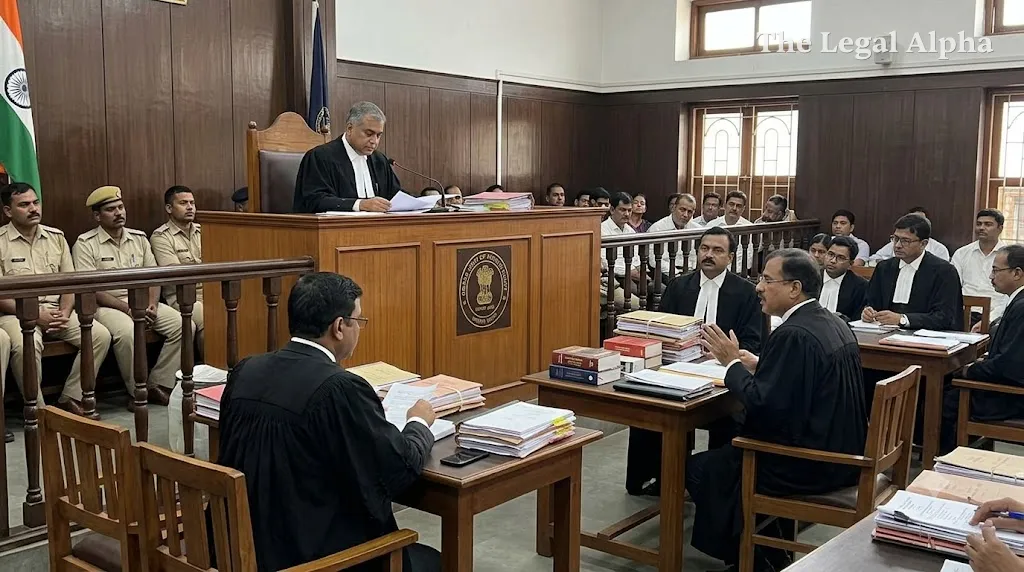
The Orissa High Court rejected the bail applications of three police personnel accused of involvement in the custodial death of 28-year-old Akash Mahuria inside the Jeypore Town police station in Koraput district. The incident dates back to January 30, 2017, and the case was subsequently taken over for investigation by the CID-Crime Branch. Justice V. Narasingh denied the release of the accused, underscoring that releasing them at this stage could undermine the sanctity of the trial and compromise judicial proceedings.
Legal Topic
-
Area of Law: Criminal Law & Constitutional Law
-
Sub-topic: Bail Jurisprudence / Custodial Death / Article 21 Rights
Core Legal Issue
Can bail be granted to police officers accused of custodial violence resulting in death merely on the grounds of prolonged pre-trial detention, and is an individual’s constitutional right to life under Article 21 compromised or diminished if they have a prior criminal history?
What Did the Court Decide?
-
Rejection of Bail: The High Court dismissed the bail pleas filed by the three accused police personnel (Constable Debendra Kumar Paik, Assistant Sub-Inspector Krushna Chandra Behera, and Sub-Inspector Siba Prasad Sahu).
-
Protection of Evidence: The court emphasized that releasing the accused at this juncture could jeopardize the integrity of key witnesses, leaving liberty open to renew the plea before the trial court after principal witnesses have been examined.
-
Expedited Trial: The court directed the trial court to make every endeavor to conclude the trial proceedings as expeditiously as possible.
Key Legal Points
-
Rule of Law: A society governed by the rule of law expects discipline, not death in custody; police custody is not a license to keep constitutional protections at bay.
-
Universality of Article 21: The fundamental right to life under Article 21 of the Constitution is not contingent upon the criminal antecedents or social status of an individual, regardless of any prior charges.
-
Prolonged Custody Is Not a Sole Ground: Extended pre-trial incarceration alone does not constitute an absolute ground for bail in grave offenses involving alleged police atrocities.
-
Contradictory Evidence: The presence of 24 distinct bodily injuries noted on the deceased directly conflicts with claims of an accidental fall.
Relevant Law
-
Constitution of India: Article 21 (Protection of life and personal liberty)
-
Code of Criminal Procedure (CrPC / BNSS): Provisions governing bail in serious, non-bailable offenses
-
Indian Penal Code (IPC / BNS): Provisions addressing culpable homicide, murder, and custodial torture
Arguments of the Parties
-
The Petitioners (Accused Police Personnel):
-
Argued that the injuries were accidental, sustained when the victim fell from a motorcycle while attempting to evade arrest.
-
Contended that prolonged pre-trial incarceration since August 2025 justified the grant of bail.
-
-
The State / Prosecution:
-
Asserted that the deceased was subjected to severe physical torture and fatal assault within police custody, supported by post-mortem documentation identifying 24 injuries.
-
Argued that medical reports had been manipulated to obscure the cause of death and that releasing the accused would threaten the safety of key witnesses and undermine trial proceedings.
-
Why Does It Matter?
This ruling reinforces the constitutional mandate that law enforcement officials are not above the law. The legal authority entrusted to the police to protect the public cannot be turned into a shield of immunity when human rights are violated. It firmly establishes for criminal courts that a person's prior criminal history does not dilute or strip away their fundamental right to life and bodily integrity.
Legal Takeaway
Police custody is a legal responsibility, not an authorization to inflict violence or disregard fundamental rights. An individual's past criminal record cannot justify the deprivation of their constitutional right to life, and prolonged pre-trial detention cannot serve as an automatic entitlement to bail when the integrity of the trial and witness testimony remains at risk.
Sources
-
Primary Source: Order of the Orissa High Court (Justice V. Narasingh, Cuttack).
-
Additional Sources: Reports and case coverage by The New Indian Express and Kalinga TV.