Omission in Medical History Does Not Weaken Sexual Assault Testimony: Kerala High Court
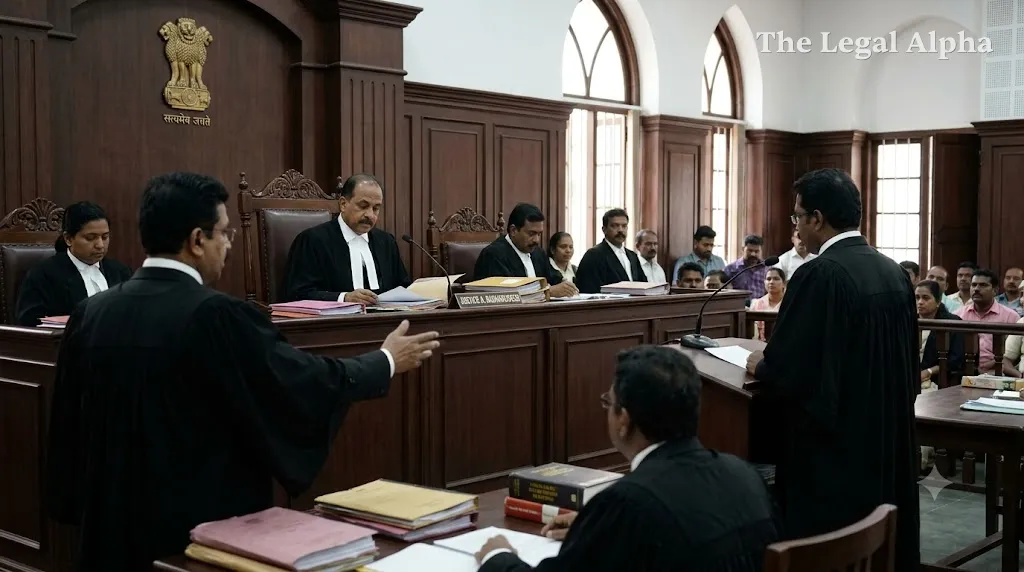
The Kerala High Court declined to interfere with the conviction and 20-year sentence of an appellant found guilty of aggravated penetrative sexual assault under the Protection of Children from Sexual Offences (POCSO) Act.
The convict challenged the trial court’s findings on the ground that the minor survivor had not detailed both alleged instances of sexual assault while narrating her history to the examining medical officer. Ruling on the appeal, Justice A. Badharudeen held that a medical examination report serves primarily a diagnostic and clinical purpose rather than an investigative one. Consequently, a survivor is not required to narrate every minute detail of the crime to an examining doctor in the exact manner expected before law enforcement officers or a Magistrate.
Legal Topic
Area of Law: Criminal Law / Evidence Law
Sub-topic: Evidentiary Value of Medical History in POCSO Prosecutions
Core Legal Issue
The primary question before the court was whether an omission in the patient history recorded by an examining medical doctor qualifies as a material omission or contradiction under criminal procedure, sufficient to discredit the survivor's direct testimony.
The court examined whether the failure of a sexual assault survivor to recount the exact chronology and multiple occurrences of assault during a clinical examination diminishes the credibility of her detailed depositions given under Section 164 of the CrPC and during cross-examination at trial.
What Did the Court Decide?
The High Court dismissed the criminal appeal and affirmed both the conviction and the 20-year rigorous imprisonment handed down by the Special Court.
Justice A. Badharudeen observed that unlike statements recorded under Section 161 or Section 164 of the CrPC, a medical history taken by a doctor is not read over to the patient for verification, addition, or denial. Because the survivor has no opportunity to confirm or correct what the doctor writes down, missing factual details in the hospital history cannot be treated as material omissions carrying adverse legal consequences. The court also noted that the statutory minimum punishment of 20 years for aggravated penetrative sexual assault under Section 5(j)(ii) and Section 5(l) read with Section 6 of the POCSO Act cannot be reduced.
Key Legal Points
-
Medical records serve clinical and scientific diagnostic purposes, not the formal documentation requirements of investigative record-keeping.
-
A sexual assault survivor suffering trauma cannot be expected to reproduce the complete factual sequence of the offense before an examining doctor.
-
Because medical officers do not read over history notes to the patient to ensure accuracy or completeness, omissions in such reports cannot be treated as material contradictions under evidentiary rules.
-
Credible and consistent testimony provided before a Magistrate and in court takes precedence over minor gaps in clinical history summaries.
Relevant Law
-
Protection of Children from Sexual Offences (POCSO) Act, 2012: Sections 3(a), 4, 5(j)(ii), and 5(l) read with Section 6.
-
Indian Penal Code, 1860: Sections 342 (wrongful confinement), 376(2)(n) (repeated rape), 450 (house-trespass), and 506(ii) (criminal intimidation).
-
Code of Criminal Procedure, 1973: Sections 161, 164, and 357(1)(b).
-
Indian Evidence Act, 1872: Section 145 (cross-examination as to previous statements in writing).
Arguments of the Parties
Petitioner / Appellant
The appellant argued that the medical history documented by the examining doctor did not reference two separate instances of penetrative assault. The defense contended that this gap constituted a material contradiction that undermined the prosecution's case, asserting that the charges of repeated aggravated penetrative sexual assault could not stand.
Respondent / State
The State submitted that the survivor had explicitly deposed to both occurrences before the trial court and had previously given consistent statements before the Magistrate. The prosecution maintained that the brief history given to the doctor was merely an overview for medical assessment and that the physical findings and DNA evidence fully corroborated the survivor's sworn testimony.
Why Does It Matter?
Defense strategies in sexual offense trials frequently hinge on contrasting brief statements recorded in medical injury sheets against comprehensive court depositions. This ruling reinforces the evidentiary boundary between clinical diagnostics and statutory investigation.
By clarifying that medical officers are not investigative scribes and that survivors are not required to provide exhaustive legal statements during clinical checkups, the High Court shields vulnerable survivors from having their credible court testimony dismantled purely due to administrative omissions in hospital records.
Legal Takeaway
Omissions in the history noted by an examining doctor cannot be treated as material contradictions to discredit a sexual assault survivor's testimony. A medical exam exists to assess physical health and gather forensic evidence, not to serve as an exhaustive substitute for formal depositions.
Sources
Primary Source:
High Court of Kerala, Shilpi v. State of Kerala, Criminal Appeal No. 662 of 2023, Neutral Citation: 2026:KER:78263 (Judgment dated October 8, 2026, per A. Badharudeen, J.).
Additional Sources:
Kerala High Court Case Status System and Special Court (POCSO) Records.