Agrawal Infrabuild Moves ₹1,200 Crore Resolution Plan to Revive Ludhiana Talwandi Toll Roads Under the IBC
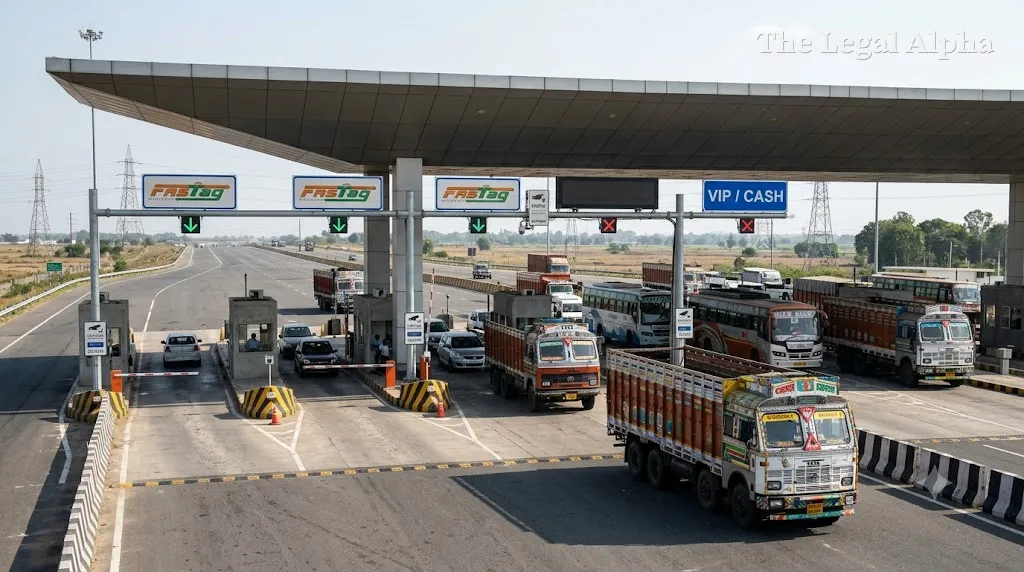
Agrawal Infrabuild Private Limited submitted a comprehensive resolution plan valued at approximately ₹1,200 crore to take over and turn around Ludhiana Talwandi Toll Roads Private Limited. The corporate debtor, a special purpose vehicle incorporated to construct and operate highway stretches under concession agreements, was admitted into the Corporate Insolvency Resolution Process (CIRP) before the National Company Law Tribunal.
The bid represents an effort to restructure the concessionaire's stressed debt, inject fresh capital, and resolve complex contractual overlaps involving the National Highways Authority of India (NHAI) alongside pending arbitration claims. Full-service law firm Kochhar & Co represented and advised the applicant on formulating the turnaround strategy, navigating evaluation matrices, and drafting the final resolution scheme.
Legal Topic
-
Area of Law: Insolvency and Bankruptcy Law
-
Sub-topic: Corporate Restructuring / Resolution Plan Formulation / Infrastructure Concessions
Core Legal Issue
The primary legal challenge centres on structuring an executable resolution plan for an infrastructure Special Purpose Vehicle (SPV) whose sole operational value lies in a concession agreement issued by a statutory authority (NHAI).
A compliant resolution applicant must balance the strict requirements of Section 30(2) of the Insolvency and Bankruptcy Code (IBC) — such as treating different classes of financial and operational creditors fairly — with the public law constraints of infrastructure projects. This requires harmonising ongoing arbitral claims and termination clauses under concession contracts without triggering regulatory disqualifications or contravening the evaluation matrices approved by the Committee of Creditors (CoC).
What Did the Court / Authority Decide?
The resolution proposal has been formally structured and tendered to the Resolution Professional and the CoC for commercial and legal evaluation under the Request for Resolution Plan (RFRP) framework.
The plan encompasses debt resolution mechanisms, an equity infusion model, creditor-class payout allocations, and proposed treatments for arbitral awards and ongoing disputes arising from the underlying highway concession. The proposal remains subject to commercial approval by the statutory majority of the CoC and subsequent sanction by the adjudicating authority under Section 31 of the IBC.
Key Legal Points
-
Concession Rights as Key Assets: In highway and infrastructure insolvency, the commercial feasibility of a resolution plan hinges upon the preservation and regularisation of the project concession agreement, ensuring termination rights are managed within the statutory moratorium.
-
Integrated Treatment of Arbitration: Structuring resolution offers for concessionaires requires clear demarcation of contingent assets, including ongoing arbitral claims against statutory bodies, to determine whether claims pass to the applicant or are liquidated to satisfy pre-CIRP debts.
-
Compliance with RFRP and Section 29A: The resolution plan must satisfy the criteria set out in the Information Memorandum and evaluation matrix, while ensuring the applicant is fully compliant with Section 29A eligibility filters.
-
Equitable Creditor Waterfall: The debt recast must meet statutory distribution floors mandated under Section 30(2)(b), ensuring operational creditors receive amounts not less than their liquidation value.
Relevant Law
-
Insolvency and Bankruptcy Code, 2016:
-
Section 29: Review of the Information Memorandum and asset-liability parameters.
-
Section 29A: Eligibility thresholds for resolution applicants.
-
Section 30(2): Statutory requirements for mandatory resolution plan covenants.
-
Section 31: Approval of resolution plans by the Adjudicating Authority.
-
-
Insolvency and Bankruptcy Board of India (Insolvency Resolution Process for Corporate Persons) Regulations, 2016: Regulations 36A through 39 governing the RFRP, evaluation matrix, and CoC submission protocols.
-
Arbitration and Conciliation Act, 1996: Provisions governing the prosecution and settlement of concession-related arbitral disputes during corporate restructuring.
Arguments of the Parties
Resolution Applicant (Agrawal Infrabuild Private Limited): According to the resolution applicant's approach, the ₹1,200 crore offer presents a viable economic turnaround for the highway corridor, providing required fund infusions, clear payouts for creditor buckets, and a legally sound roadmap to resolve long-standing operational delays and arbitration issues with the concession grantor.
Lenders / Corporate Debtor Stakeholders: The lenders require any submitted plan to strictly adhere to the evaluation matrix and maximise asset value, while demanding that statutory liabilities, public concession terms, and liquidation thresholds are addressed transparently before receiving voting approval.
Why Does It Matter?
Stressed toll road projects often face a stalemate because their economic viability depends on statutory concessions, project termination clauses, and multi-year arbitration proceedings against public authorities.
Agrawal Infrabuild's bid illustrates how strategic bidders structure private capital entry into distressed public-private partnership (PPP) assets under the IBC framework. It underscores that reviving an infrastructure debtor requires combining corporate restructuring with public-procurement dispute resolution. This provides a blueprint for debt resolution across toll road portfolios facing prolonged distress.
Legal Takeaway
For infrastructure resolution plans to succeed, prospective applicants must address more than standard debt haircuts; they must reconcile the contractual dynamics of concession agreements and ongoing arbitration disputes alongside statutory IBC mandates. A viable turnaround requires aligning the commercial bid with public-law concession obligations and creditor priority rules.
Sources
-
Primary Source: Submission of Resolution Plan and Legal Advisory Disclosures by Kochhar & Co. for Ludhiana Talwandi Toll Roads Private Limited under the Insolvency and Bankruptcy Code, 2016.
-
Additional Sources: Bar & Bench Dealstreet Disclosures; NCLT Mumbai CIRP Admission Records (CP (IB) 517/MB/2023).