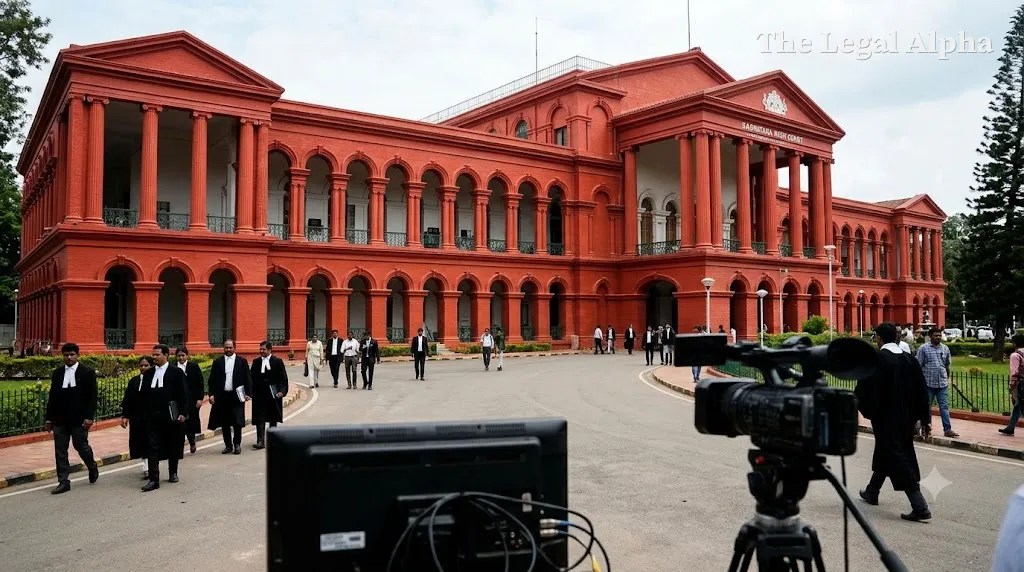
Kerala High Court Invalidates PITNDPS Preventive Detention Due to Unexplained Administrative Delay

The High Court of Kerala set aside a preventive detention order passed under the Prevention of Illicit Traffic in Narcotic Drugs and Psychotropic Substances Act, 1988 (PITNDPS Act) against a woman accused of recurrent drug offences.
The detenue, Kamarunnisa C.V., had been implicated in six narcotics cases, the most recent being registered in April 2025 involving the alleged possession of 4.331 kg of ganja. While she obtained bail in that matter in June 2025, the sponsoring authority forwarded proposals in July and August 2025 seeking her preventive detention. The formal detention order was issued in October 2025.
Her daughter, Sajina C.V., approached the High Court through a writ of habeas corpus challenging the detention. A Division Bench comprising Justice Anil K. Narendran and Justice Muralee Krishna S. quashed the detention order and ordered her immediate release, holding that prolonged, unexplained lethargy between the last alleged prejudicial act and the detention snapped the "live link" necessary to justify preventive restraint.
Legal Topic
-
Area of Law: Criminal Law & Preventive Detention
-
Sub-topic: Prevention of Illicit Traffic in Narcotic Drugs / Personal Liberty under Article 22
Core Legal Issue
The legal controversy turned on whether an unexplained administrative delay between the commission of the last prejudicial activity, the sponsoring of preventive action, and the actual execution of a detention order invalidates the subjective satisfaction of the detaining authority.
The court had to examine whether undue procrastination severed the causal nexus between the alleged illicit conduct and the immediate necessity of detaining a person without trial, as well as whether authorities must attempt to cancel regular court bail before resorting to preventive detention laws.
What Did the Court Decide?
The Division Bench allowed the writ petition and quashed the preventive detention order, directing that the detenue be released forthwith unless required in connection with any other case.
The court ruled that the detaining authority failed to offer any credible explanation for the substantial gap between the last alleged offence and the detention order. This delay breached the strict constitutional and statutory time imperatives demanded under Article 22 of the Constitution.
However, the Bench clarified that the State is not under an obligation to first seek cancellation of regular bail as an indispensable condition before invoking preventive detention, emphasizing that preventive detention and bail cancellation operate on distinct legal planes.
Key Legal Points
-
Live Link Doctrine: A preventive detention order is justified only if there is proximate temporal proximity between the last prejudicial act and the order. Unreasonable delay breaks this causal chain and vitiates the authority’s subjective satisfaction.
-
Strict Constitutional Scrutiny: Because preventive detention bypasses normal trial safeguards, the court's role is one of "eternal vigilance" under Article 22 of the Constitution, demanding procedural exactness and zero tolerance for bureaucratic lethargy.
-
Burden on the State: When a delay occurs between investigation milestones and the final detention order, the entire burden rests on the detaining authority to account for every phase of elapsed time.
-
Detention vs. Cancellation of Bail: Seeking cancellation of bail is not a legal substitute or prerequisite for preventive detention; both mechanisms serve different objectives under criminal jurisprudence.
Relevant Law
-
Section 3(1), Prevention of Illicit Traffic in Narcotic Drugs and Psychotropic Substances Act, 1988 (PITNDPS Act): Power to make orders detaining certain persons to prevent illicit traffic in narcotic drugs.
-
Section 20(b)(ii)(B), Narcotic Drugs and Psychotropic Substances Act, 1985 (NDPS Act): Offence relating to intermediate quantity of cannabis.
-
Article 22 of the Constitution of India: Constitutional protections against arbitrary arrest and preventive detention.
Arguments of the Parties
-
The Petitioner argued: The detention order suffered from severe administrative delay that severed the proximate nexus between the last registered crime and the preventive order. It was further contended that the detenue was already released on regular court bail with conditions, and the State had failed to demonstrate any fresh prejudicial activities during that period or seek bail cancellation before depriving her of liberty.
-
The State contended: The detenue had a history of repeated involvement in illicit drug trade, spanning six criminal cases, making her a habitual offender who posed a continuous threat to public health and order. The respondents submitted that the time taken was consumed by administrative verification and inter-departmental consultations, which did not diminish the genuine necessity of preventive restraint.
Why Does It Matter?
This ruling underscores that the exceptional powers granted under preventive detention statutes cannot be treated as an administrative routine. Even in serious narcotics cases where public interest is acute, law enforcement and executive authorities must act with promptness. The decision provides a clear reminder that administrative inertia will prove fatal to preventive detention orders, ensuring that constitutional guarantees of liberty remain protected against systemic delay.
Legal Takeaway
Preventive detention orders will be quashed if executive authorities fail to explain significant delays between the alleged offence and the detention order, as delay snaps the vital legal link between past conduct and future threat. While authorities are not legally required to apply for bail cancellation first, they must act with prompt dispatch at every stage of preventive action.
Sources
-
Primary Source: High Court of Kerala, Sajina C.V. v. Union of India and Others, W.P.(Crl.) No. 973 of 2026, Neutral Citation: 2026:KER:77216, Judgment dated October 8, 2026 (Per Muralee Krishna S. and Anil K. Narendran, JJ.).
-
Additional Sources: Court record and proceedings under PITNDPS Act & NDPS Act, 1988.