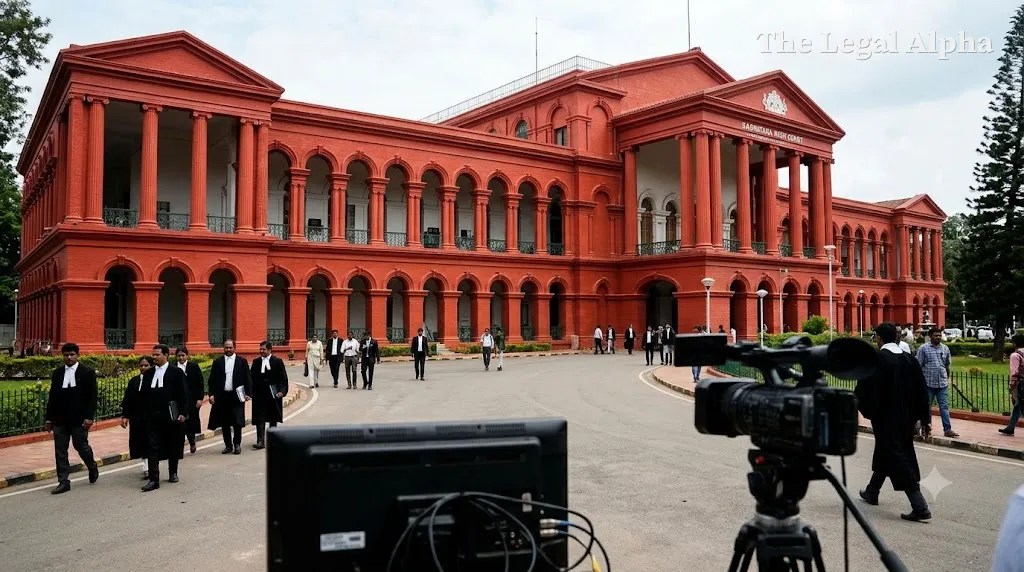
Fixing India's Arbitration Bottleneck: Why an In-House Appellate Mechanism Could Ease Court Overreach

Indian commercial dispute resolution continues to face a major roadblock: the tendency of domestic arbitral awards to end up stuck in prolonged court litigation. While arbitration is intended to offer rapid, conclusive dispute resolution outside traditional courtrooms, Section 34 set-aside challenges in commercial courts and High Courts routinely turn into de facto retrials, dragging out disputes for years.
To tackle this persistent backlog and safeguard party autonomy, commercial practitioners and legal reformers are proposing an internal, hybrid appellate arbitral mechanism. Under this framework, parties can opt to have arbitral awards reviewed on substantial points of law by an internal appellate arbitral bench before—or in lieu of—extensive judicial intervention, addressing the systemic tension between finality and legal correctness.
Legal Topic
Area of Law: Dispute Resolution / Commercial Law
Sub-topic: Domestic Arbitration & Enforcement
Core Legal Issue
The fundamental legal problem centers on how to provide a mechanism to correct errors of law in domestic arbitration without triggering open-ended judicial review.
Under the existing statutory scheme, courts are constrained by strict legislative limits against reassessing evidence or interfering on merits. At the same time, when an award suffers from an apparent legal flaw or patent illegality, parties routinely file Section 34 petitions, which effectively forces courts into extensive substantive reviews that undermine the speed and finality of the process.
What Did the Court / Authority Decide?
The debate operates against key judicial pronouncements from the Supreme Court of India, which have progressively curtailed the scope of court interference under Section 34 and Section 37, while upholding party autonomy to structure arbitral procedures:
-
The Supreme Court has repeatedly affirmed that courts hearing Section 34 petitions do not act as regular courts of appeal and cannot modify or rewrite an arbitral award; they can only uphold it or set it aside entirely.
-
At the same time, Indian arbitration law does not prohibit multi-tiered or internal appellate arbitral arrangements if agreed upon in the contract, a principle validated in institutional settings.
-
Legal and policy reform committees have debated codifying internal appellate dispute bodies within institutional frameworks to filter out unmerited court challenges and deliver enforceable, final awards faster.
Key Legal Points
-
Section 34 of the Arbitration and Conciliation Act, 1996 restricts judicial interference strictly to specific statutory grounds, explicitly barring courts from reappreciating evidence.
-
Courts possess no inherent power to modify an award under Section 34; a defective award must either stand or be quashed, leaving parties back at square one unless an internal review tier intervenes.
-
A hybrid appellate model creates an internal tribunal tier empowered to examine manifest legal errors by mutual agreement, preserving party autonomy and resolving disputes within private dispute resolution channels.
-
Reducing the reliance on High Courts for appellate reviews prevents domestic arbitrations from turning into prolonged, multi-stage commercial litigations.
Relevant Law
-
Arbitration and Conciliation Act, 1996:
-
Section 34: Application for setting aside arbitral awards.
-
Section 37: Appealable orders.
-
Section 28: Rules applicable to substance of dispute and patent illegality standard.
-
-
Key Precedents: Supreme Court rulings governing non-modification of awards (Project Director, NHAI v. M. Hakeem) and limits on reviewing the merits of domestic awards (Associate Builders v. DDA and Ssangyong Engineering & Construction Co. Ltd. v. NHAI).
Arguments of the Parties
Proponents of an Appellate Arbitral Model
Supporters argue that court-driven award challenges run counter to the promise of commercial arbitration. They maintain that offering an optional, fast-track internal appeal allows commercially sophisticated parties to correct glaring legal errors without bearing the multi-year delays of the public court docket. Furthermore, it avoids the all-or-nothing outcome where a court quashes an award entirely, forcing the parties to re-arbitrate from scratch.
Skeptics and Opposing Views
Opponents contend that introducing an extra layer of arbitration risks creating an additional layer of delay and costs, potentially diluting the core principle of finality. They argue that Section 34 already strikes a deliberate legislative balance, and that creating an internal appellate process could be exploited by well-resourced losing parties to stall enforcement.
Why Does It Matter?
For businesses operating in India, the primary risk in domestic arbitration has never been the arbitration itself, but the years-long litigation cycle that follows once an award is rendered.
If institutional rules and commercial contracts incorporate structured, time-bound appellate tiers, parties can resolve legal disputes cleanly within private forums. This shifts complex reviews away from overburdened commercial benches, limits the grounds for subsequent court intervention, and strengthens India’s position as an efficient, business-friendly arbitration jurisdiction.
Legal Takeaway
Judicial review under Section 34 cannot be used as an appeal to rewrite flawed arbitral awards. Establishing an internal, contract-based appellate tribunal allows parties to fix serious legal errors quickly while protecting the finality and enforceability of their awards from endless court proceedings.
Sources
Primary Source:
The Arbitration and Conciliation Act, 1996 (Sections 28, 34, and 37); Supreme Court of India precedents on judicial interference in arbitral awards (NHAI v. M. Hakeem, Associate Builders, and Ssangyong Engineering).
Additional Sources:
Policy recommendations, institutional arbitration frameworks, and legal commentary on structural reforms in Indian domestic arbitration.