Mumbai Police Commissioner Orders Inquiry Against Officer Over Premature Closure of Caste Certificate Forgery Case, Transfers Probe to Crime Branch
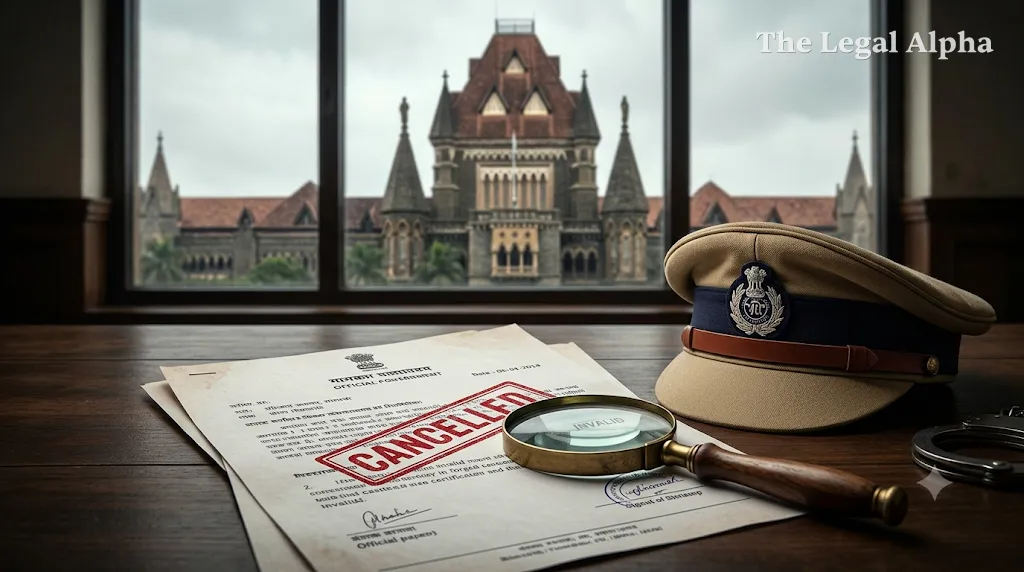
Mumbai Police Commissioner Deven Bharti has informed the Bombay High Court that a preliminary inquiry has been ordered against a Chembur police inspector for hastily closing a criminal investigation into allegations of caste certificate forgery against former municipal corporator Ramesh Kamble.
The development arises out of a writ petition filed before the Bombay High Court by advocate Chitra Salunke on June 30, 2026. Salunke had lodged a criminal complaint at the Chembur police station on April 2, 2026, accusing Kamble of cheating, forgery, and fabricating public records. Kamble had previously won the 2002 Brihanmumbai Municipal Corporation (BMC) election from Ward 192 (Borla North–Deonar Abattoir), a seat reserved for Scheduled Castes, on the strength of a certificate identifying him as a "Hindu Mahar". That certificate was invalidated by a Caste Scrutiny Committee in November 2005 after finding he was Christian by birth—a decision that led to his disqualification and attained judicial finality in 2016.
Salunke alleged that despite this history, Kamble procured a fresh caste certificate in 2025 identifying himself as a "Buddhist Mahar" from another issuing authority in an attempt to re-enter electoral politics. After a Division Bench of Justices A.S. Gadkari and Kamal Khata sharply criticized the Chembur police in September 2026 for filing a 500-page "C-Summary" (closure) report while the petition was pending, the Mumbai Police Commissioner filed an affidavit detailing corrective actions.
Legal Topic
Area of Law: Criminal Procedure and Administrative Law
Sub-topic: Police Investigation Accountability / Misuse of Caste Certificates
Core Legal Issue
The core legal question before the Bombay High Court is whether an investigating officer can legitimately terminate a criminal probe into serious allegations of public document fabrication by filing a closure report without conducting a substantive inquiry, particularly when judicial scrutiny of the investigation is underway.
Connected to this is the scope of supervisory duty held by senior police leadership to transfer an investigation and initiate departmental accountability when an officer fails to examine key documentary evidence—such as the procurement of a subsequent caste certificate after an earlier certificate was conclusively invalidated.
What Did the Court / Authority Decide?
Following the Bombay High Court’s September 23, 2026 order directing the Mumbai Police Commissioner to review the entire case record and submit a detailed response, the police leadership took several administrative and procedural steps:
-
Transfer of Investigation: The probe has been removed from the Chembur police station and transferred to the Mumbai Crime Branch (DCB Unit-6) to ensure an impartial and thorough investigation.
-
Departmental Inquiry: On October 9, 2026, the Additional Commissioner of Police (East Region) instituted a preliminary inquiry against the original investigating officer, Police Inspector Anand Sahane, noting in the affidavit that he had "acted precipitously".
-
Withdrawal of Closure Report: Chembur police have formally moved an application before the concerned court to withdraw the C-Summary closure report.
-
Expansion of Scope: The Crime Branch has been instructed to investigate not only the original allegations but also the validity and procurement process of the second caste certificate issued in 2025, as well as the potential complicity of any public servants or third parties who facilitated it.
While the police have initiated these corrective measures, the application to withdraw the closure report remains pending before the trial court, and the High Court is continuing to monitor the petitioner’s plea seeking a transfer to the state Crime Investigation Department (CID).
Key Legal Points
-
Judicial Oversight of Investigations: Under Article 226 of the Constitution and Section 482 of the Code of Criminal Procedure (now Section 528 of the Bharatiya Nagarik Suraksha Sanhita, 2023), High Courts possess the jurisdiction to intervene when an investigation is conducted in a perfunctory manner designed to shield an accused or overreach judicial proceedings.
-
Duty to Investigate Complicity of Public Officials: When allegations involve the repeated issuance of disputed statutory certificates despite prior judicial invalidation, investigating agencies must examine systemic collusion rather than treating the matter as a closed administrative dispute.
-
Finality of Caste Scrutiny Findings: Once a Caste Scrutiny Committee invalidates a caste claim and that order is upheld by constitutional courts, the factual finding regarding the claimant's original status carries binding evidentiary weight in subsequent administrative and criminal proceedings.
-
Withdrawal of C-Summary Reports: A C-Summary report—filed when police conclude a case is neither true nor maliciously false, often due to mistake of fact or civil nature—cannot be used to bypass substantive criminal liability where prima facie allegations of forgery exist.
Relevant Law
-
Maharashtra Scheduled Castes, Scheduled Tribes, De-notified Tribes (Vimukta Jatis), Nomadic Tribes, Other Backward Classes and Special Backward Category (Regulation of Issuance and Verification of) Caste Certificate Act, 2000: Governs the issuance, verification, and cancellation of caste certificates in Maharashtra, and prescribes criminal penalties for obtaining false caste certificates (Section 11) and for issuing authorities who knowingly grant false certificates (Section 13).
-
Indian Penal Code, 1860 / Bharatiya Nyaya Sanhita, 2023: Provisions governing cheating, forgery of valuable security or public records, and using forged documents as genuine (historically Sections 420, 465, 467, 468, and 471 IPC; corresponding provisions under Sections 318, 336, 338, and 340 BNS).
-
Code of Criminal Procedure, 1973 / Bharatiya Nagarik Suraksha Sanhita, 2023: Provisions relating to further investigation (Section 173(8) CrPC / Section 193(9) BNSS) and final closure reports.
Arguments of the Parties
-
Petitioner (Advocate Chitra Salunke): Represented by senior advocate Rajiv Chavan, the petitioner argued that the local police deliberately conducted a lackadaisical probe to protect Kamble. She contended that despite the 2005 invalidation of his earlier certificate attaining finality in 2016, Kamble obtained a new "Buddhist Mahar" certificate in 2025 to contest upcoming elections. She sought a transfer of the investigation to the state CID to ensure neutrality.
-
State / Mumbai Police: Through the Commissioner’s affidavit, the police acknowledged that the initial investigating officer acted hastily and failed to conduct a deeper probe. The State submitted that corrective measures—including transferring the case to the Crime Branch, seeking withdrawal of the closure report, and initiating a departmental inquiry against the officer—have already been implemented to ensure a fair and comprehensive investigation.
Why Does It Matter?
This case highlights the strict accountability expected of law enforcement officers when handling complaints involving electoral fraud and the misuse of constitutional reservations. Affirmative action seats in local bodies are meant to ensure representation for historically marginalized communities; obtaining false caste credentials undermines both electoral integrity and constitutional protections.
Furthermore, the Bombay High Court’s intervention demonstrates that filing a voluminous closure report without genuine investigative groundwork will not insulate investigating officers from judicial scrutiny or departmental consequences. By expanding the probe to scrutinize issuing authorities and third parties, the Crime Branch’s investigation could set an important precedent for how administrative lapses in re-issuing invalidated caste certificates are prosecuted in Maharashtra.
Legal Takeaway
Investigating officers cannot use premature closure reports to sidestep thorough probes into document forgery, especially when the matter is under High Court scrutiny. When a caste certificate is invalidated with judicial finality, any subsequent attempt to obtain a fresh certificate invites criminal investigation not just against the applicant, but also against any public officials who facilitated its issuance.
Sources
Primary Source:
Affidavit filed by Mumbai Police Commissioner Deven Bharti before the Bombay High Court; Interim Orders of the Bombay High Court (Division Bench of Justices A.S. Gadkari and Kamal Khata) in Writ Petition filed by Adv. Chitra Salunke.
Additional Sources:
Hindustan Times reports on Bombay High Court proceedings (October 7, 2026 and November 15–16, 2026).