Misrepresenting Supreme Court Filing to Stall Employees' DA Payment: Punjab & Haryana High Court Issues Contempt Notice to Punjab Chief Secretary
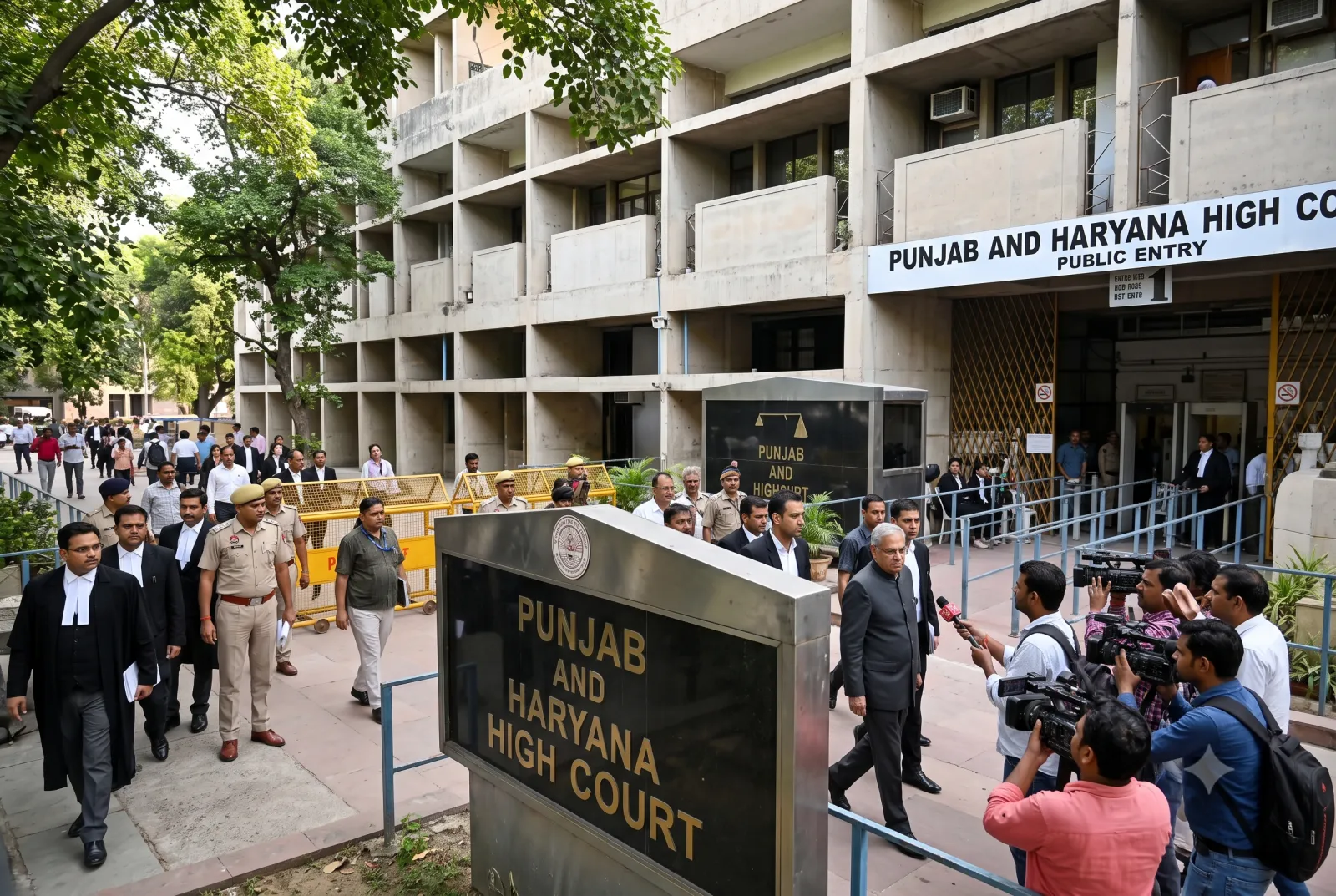
The High Court of Punjab and Haryana has issued a show-cause notice for criminal contempt of court against Punjab Chief Secretary K.P. Sinha for allegedly making false statements regarding the status of a Supreme Court appeal to delay the disbursement of pending Dearness Allowance (DA) to state government employees.
A division bench comprising Chief Justice Ashwani Kumar Mishra and Justice Rohit Kapoor summoned the physical presence of the state's senior-most civil servant after discovering that the Punjab government had misrepresented facts before the bench. In August 2026, the High Court had directed the state and its power corporation to disburse long-overdue Dearness Allowance arrears. When faced with enforcement, the Chief Secretary assured the Court that a Special Leave Petition (SLP) had been re-filed before the Supreme Court after curing all procedural defects.
Upon examining the official Supreme Court Registry status, the High Court discovered that the defects had not been cured and that a defective petition had merely been re-submitted after a month's delay. Terming the conduct a prima facie deliberate attempt to mislead the judiciary and stall compliance, the Court initiated contempt proceedings and ordered the Chief Secretary to appear in person.
Legal Topic
Area of Law: Contempt of Court / Service Law
Sub-topic: Criminal Contempt under Section 2(c) / Misrepresentation by Public Officials & Enforcement of Dearness Allowance
Core Legal Issue
Does an executive authority's deliberate misrepresentation regarding the filing and status of a Supreme Court appeal to stall the execution of a binding High Court judgment constitute criminal contempt of court under Section 2(c) of the Contempt of Courts Act, 1971?
Furthermore, can a state government withhold the payment of legally accrued Dearness Allowance to its employees by artificially prolonging defective filings before the apex court?
What Did the Court Decide?
The Division Bench issued a formal show-cause notice to Punjab Chief Secretary K.P. Sinha, directing him to explain why criminal contempt proceedings should not be initiated against him.
Rejecting the state's explanations, the Court observed that when a senior official represents that an appeal has been re-filed, it implies that filing defects have been cured. Re-filing an uncured, defective petition a month later was held to be a prima facie calculated attempt to mislead the Court.
The High Court directed the Chief Secretary to remain personally present before the bench on Friday to answer the contempt charges, refusing to accept mere administrative explanations tendered by the state's law officers.
Key Legal Points
- The High Court initiated criminal contempt proceedings against the top executive officer of the State of Punjab for making misleading statements regarding Supreme Court filings.
- The bench ruled that presenting a defective appeal as a cured re-filing before the court constitutes a prima facie calculated attempt to misrepresent facts and obstruct the administration of justice.
- Chief Justice Ashwani Kumar Mishra observed that state functionaries cannot cite illusory or defective apex court filings as a shield against contempt proceedings for non-compliance with binding High Court judgments.
- The underlying dispute concerns the non-payment of legally accrued Dearness Allowance (DA) arrears to Punjab Government and PSPCL employees, which the High Court had mandated in August 2026.
- The Court ordered the mandatory personal physical appearance of Chief Secretary K.P. Sinha on the next date of hearing.
Relevant Law
- Section 2(c) and Section 12 of the Contempt of Courts Act, 1971: Definition of criminal contempt (acts scandalizing the court, prejudicing judicial proceedings, or obstructing the administration of justice) and punishment.
- Article 215 of the Constitution of India: Inherent power of High Courts as courts of record to punish for contempt of themselves.
- Order XXI of the Supreme Court Rules, 2013: Procedures governing the removal of registry defects and re-filing of Special Leave Petitions.
- Article 300A of the Constitution of India: Protection against arbitrary deprivation of earned financial entitlements, such as Dearness Allowance.
Arguments of the Parties
For the Contemnor / State of Punjab:
Advocate General of Punjab Maninderjit Singh Bedi submitted that the State Government had re-filed the Special Leave Petition before the Supreme Court Registry on October 1, 2026. Counsel argued that there was no deliberate intention to mislead the High Court and that any lingering defects noted by the Supreme Court Registry were procedural in nature and emerged subsequent to the re-filing, requesting the bench to dispense with the personal presence of the Chief Secretary.
Against the State / Employee Petitioners:
Counsel representing the employee unions contended that the State Government has adopted a persistent strategy of evasion to deny thousands of employees their legitimate Dearness Allowance dues. It was argued that the state deliberately lodged an intentionally defective SLP in the apex court and sat on the registry objections for a month solely to weave a false narrative of pendency before the High Court, which constitutes a textbook obstruction of the administration of justice.
Why Does It Matter?
This development highlights the growing judicial intolerance towards government agencies that employ dilatory tactics to evade complying with employee welfare judgments. Government departments across India frequently attempt to buy time in contempt proceedings by claiming that an appeal has been "filed" in the Supreme Court, even though the filing is often kept deliberately defective in the registry without being cleared for listing.
By piercing the bureaucratic veil and directly summoning the Chief Secretary for criminal contempt, the Punjab & Haryana High Court sends an unmistakable message across public administration: misleading a constitutional court regarding the status of appellate proceedings is an act of contempt that carries personal penal liability. For government employees, the ruling ensures that executive inertia cannot indefinitely withhold hard-earned statutory allowances.
Legal Takeaway
The Punjab & Haryana High Court has established that falsely claiming an appeal has been re-filed in the Supreme Court to stall contempt proceedings constitutes criminal contempt. State officials cannot use intentionally defective filings before the apex court as an excuse to delay complying with binding judicial orders mandating the payment of employees' Dearness Allowance.
Sources
Primary Source: Order of the Division Bench of the High Court of Punjab & Haryana comprising Chief Justice Ashwani Kumar Mishra and Justice Rohit Kapoor in the contempt proceedings against Chief Secretary, Punjab (Hearing dated October 6, 2026).
Additional Sources: LiveLaw Punjab & Haryana High Court Report; Bar & Bench Coverage.