Stock Trading Gains Must Be Counted as Income for Matrimonial Maintenance: Karnataka High Court Enhances Payout to ₹1.2 Lakh
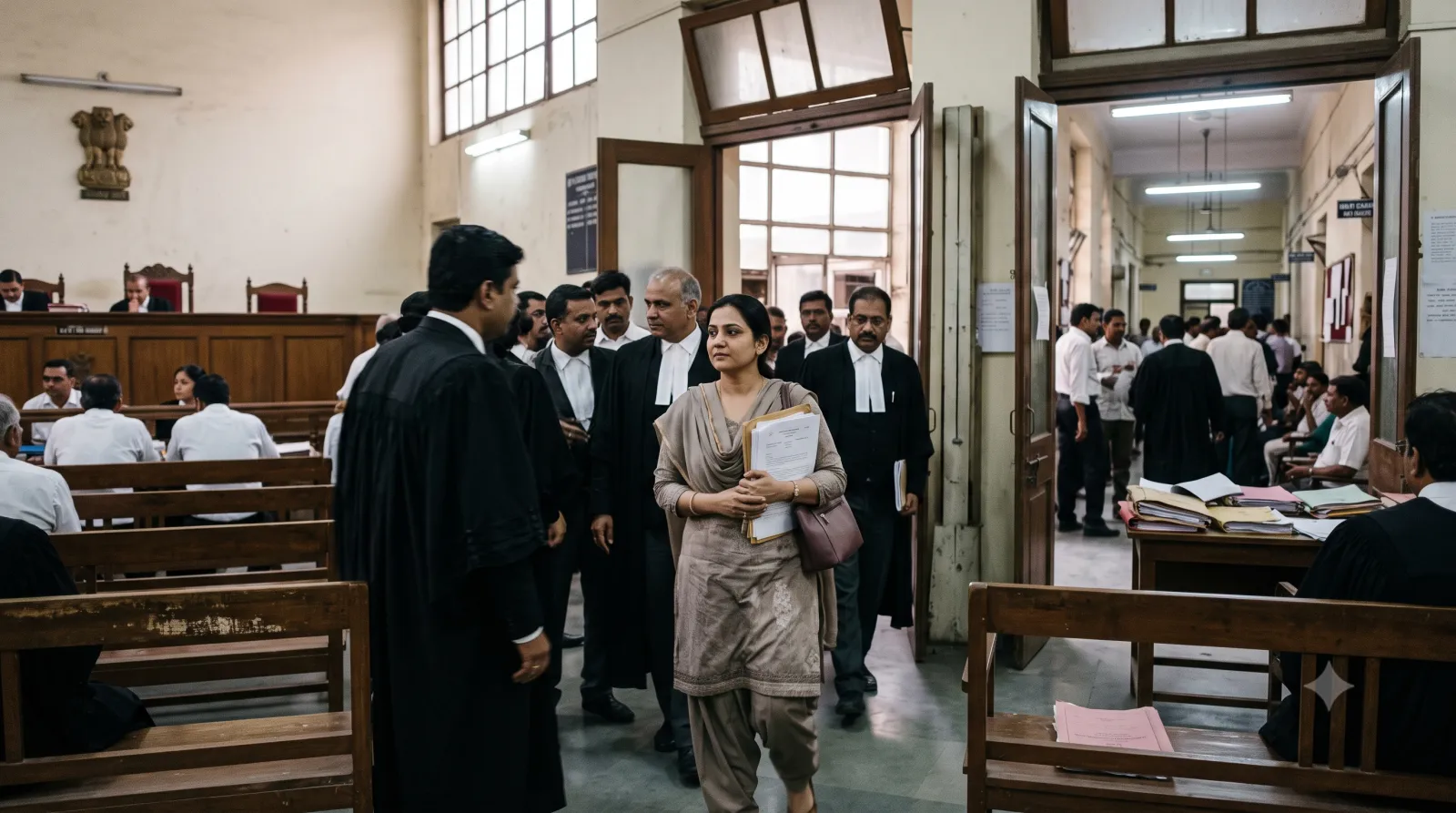
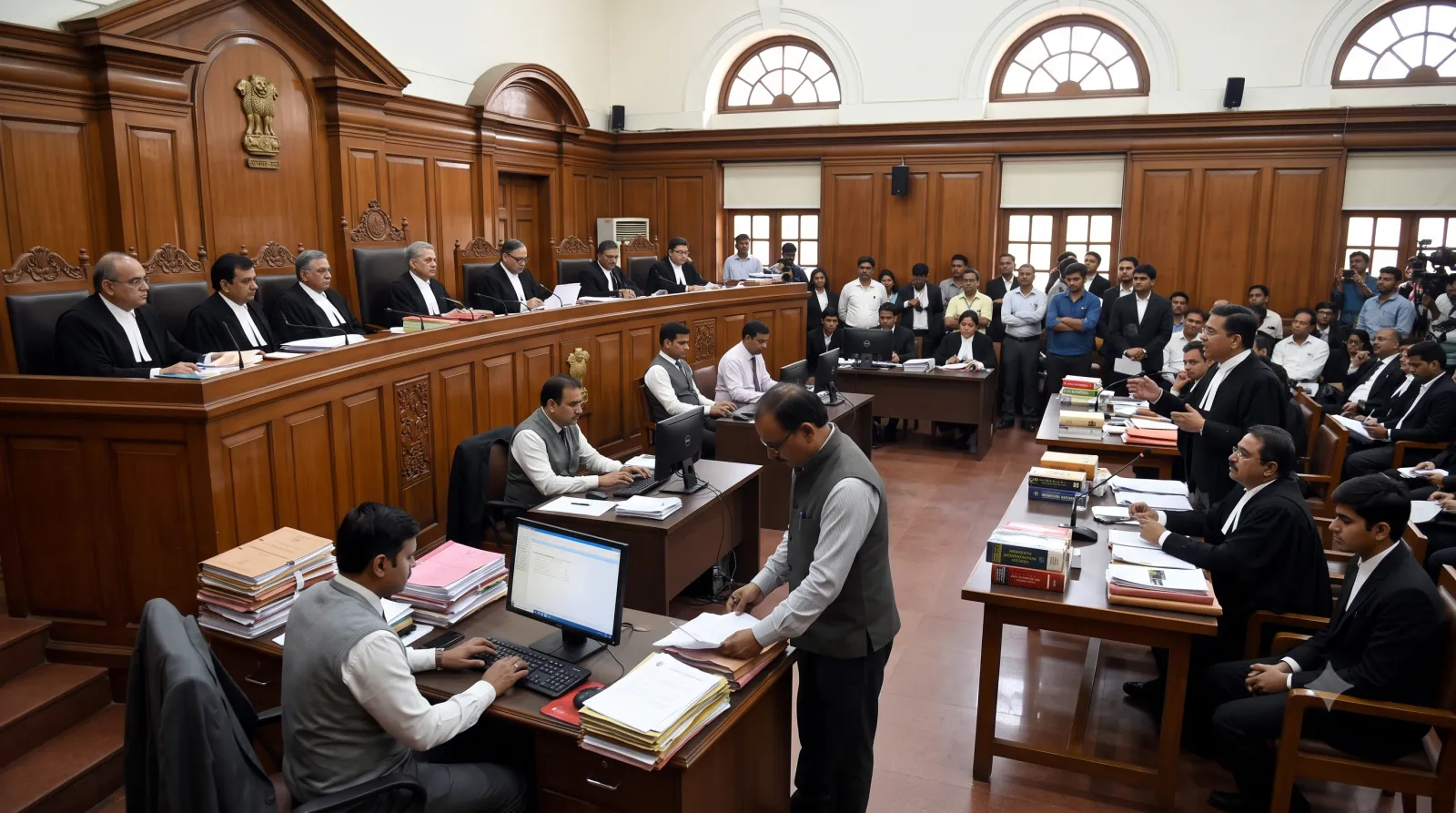
The High Court of Karnataka has ruled that earnings and capital gains derived from the sale of shares and securities constitute an integral part of a husband's income and must be considered when determining maintenance for his estranged wife and minor child.
Justice Lalitha Kanneganti adjudicated cross-petitions filed by an estranged couple challenging a Family Court order that had granted ₹50,000 per month in maintenance after the wife lost her employment due to severe medical ailments. The husband resisted higher maintenance by arguing that his income from stock trading was variable and capital in nature, and therefore could not be treated as regular monthly salary.
Rejecting the husband's arguments and enhancing the monthly maintenance to ₹1.2 lakh, the High Court held that financial capacity cannot be assessed by looking narrowly at basic salary while ignoring substantial liquidity generated from market investments. The Court also criticized the Family Court for ignoring the wife's non-discretionary home loan EMIs and educational expenses, directing the husband to pay arrears and fully fund the child's ongoing schooling.
Legal Topic
Area of Law: Family & Matrimonial Law
Sub-topic: Assessment of Spousal Maintenance / Inclusion of Capital Gains & Stock Market Earnings in Total Income
Core Legal Issue
Do earnings, capital gains, and profits realized from the sale of shares, stocks, and investments form part of a husband's total income for the purpose of fixing maintenance under Section 24 of the Hindu Marriage Act, 1955 and Section 125 of the Code of Criminal Procedure?
Furthermore, can a family court overlook fixed non-discretionary liabilities—such as home loan EMIs and school fees—when evaluating the financial needs of an unemployed, medically incapacitated wife and minor child?
What Did the Court Decide?
The High Court allowed the wife's revision petition and dismissed the husband's challenge, substantially enhancing the maintenance awarded by the Family Court.
Justice Lalitha Kanneganti increased the monthly maintenance from ₹50,000 to ₹1.2 lakh per month, payable from the date of the Family Court's order.
The Court also rectified the trial court's refusal to grant interim relief from the date of application, awarding ₹30,000 per month from the filing date until the date the wife lost her job. Additionally, the bench ordered the husband to reimburse the child's school fees for the 2024–25 academic year and continue bearing all future educational expenses directly.
Key Legal Points
- The Karnataka High Court established that a spouse's earnings from the sale of shares and investments form part of their total financial capacity and must be considered in maintenance calculations, even if such gains are variable.
- The bench held that maintenance cannot be restricted to a bare subsistence allowance based solely on fixed salary slips when the spouse commands substantial capital market wealth.
- The Court ruled that family courts are legally bound to factor in non-discretionary fixed obligations, including existing home loan EMIs and child care costs, when computing reasonable maintenance.
- Justice Lalitha Kanneganti held that where a wife loses employment due to verified medical incapacity, the husband bears the legal and moral obligation to provide adequate maintenance matching their marital standard of living.
- The High Court affirmed that maintenance must normally relate back to the date of the application to prevent the defaulting spouse from benefiting from litigation delays.
Relevant Law
- Section 24 of the Hindu Marriage Act, 1955: Maintenance pendente lite and expenses of proceedings.
- Section 125 of the Code of Criminal Procedure, 1973: Order for maintenance of wives, children, and parents.
- Section 19 of the Family Courts Act, 1984: High Court revisional jurisdiction against orders of Family Courts.
- Rajnesh v. Neha (2021) 2 SCC 324: Landmark Supreme Court guidelines mandating comprehensive disclosure of assets, income, and liabilities in matrimonial maintenance proceedings.
Arguments of the Parties
Petitioner / Wife:
Represented by counsel, the wife submitted that the Family Court's grant of ₹50,000 per month was grossly inadequate and failed to reflect the family's upper-middle-class lifestyle. She pointed out that she had developed serious medical complications that left her unable to work, while simultaneously having to pay a monthly housing loan EMI of ₹47,106 and child schooling expenses. The wife placed bank records demonstrating that the husband routinely traded shares and mutual funds, earning substantial annual capital gains that augmented his high standard of living.
Respondent / Husband:
The husband contended that the Family Court's award was already excessive and sought its reduction. Counsel argued that income derived from trading or liquidating shares is sporadic, volatile, and capital in nature, which cannot be equated to stable monthly income. The husband maintained that his regular salary was heavily depleted by personal expenses and tax deductions, arguing that the wife possessed professional qualifications and ought to seek fresh employment rather than claiming inflated maintenance.
Why Does It Matter?
This ruling directly addresses a common strategy employed by affluent spouses in matrimonial disputes: suppressing true financial capacity by artificially deflating salary slips while parking substantial wealth in shares, mutual funds, and equity portfolios. In contemporary white-collar professions, performance stock units (RSUs), equity trading, and mutual fund liquidations often exceed basic fixed pay.
By ruling that share trading gains must be incorporated into maintenance assessments regardless of market variability, the Karnataka High Court closes a significant loophole in financial discovery. The decision aligns maintenance jurisprudence with modern asset realities, ensuring that dependent spouses and children receive realistic maintenance commensurate with the family's actual wealth rather than artificial tax-planning figures.
Legal Takeaway
The Karnataka High Court has clarified that profits and capital gains from the sale of shares and securities must be included when computing a husband's income for spousal and child maintenance. Family courts cannot overlook market wealth or non-discretionary home loan liabilities, and must award maintenance that realistically reflects the affluent marital lifestyle of the parties.
Sources
Primary Source: Judgment of the High Court of Karnataka in the cross-petitions challenging the Family Court interim maintenance order (Decided by Justice Lalitha Kanneganti, reported on October 6, 2026).
Additional Sources: LiveLaw Karnataka High Court Report; LiveLaw Family Law Digest.