Three High Court Chief Justices Sworn in as Supreme Court Judges: Apex Court Strength Reaches 37 with Three Sitting Women Judges
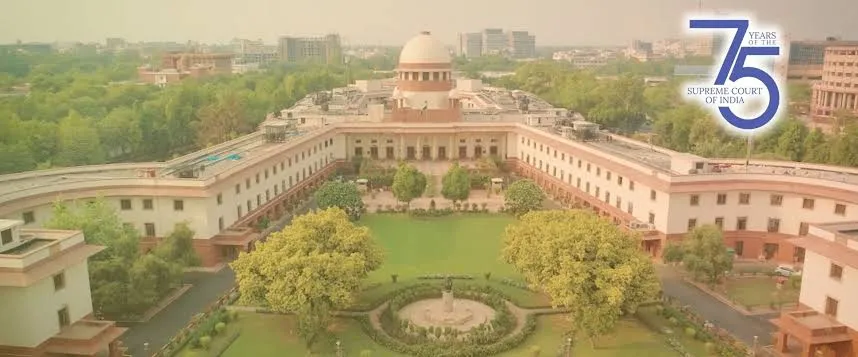
The Supreme Court of India has reached a near-complete working strength of 37 judges following the swearing-in of three newly elevated judges by Chief Justice of India Surya Kant.
In an official swearing-in ceremony held at the Supreme Court, oath of office was administered to Justice Sunita Agarwal (former Chief Justice of Gujarat High Court), Justice Devendra Kumar Upadhyaya (former Chief Justice of Delhi High Court), and Justice Aparesh Kumar Singh (former Chief Justice of Telangana High Court). The Central Government formally notified their appointments following the recommendations made by the Supreme Court Collegium on September 28, 2026.
The elevations mark a significant institutional milestone for the apex court. Following the enactment of the Supreme Court (Number of Judges) Amendment Act, 2026, which expanded the sanctioned strength from 34 to 38 judges, the court is now functioning with 37 judges, leaving only a single vacancy. Furthermore, Justice Sunita Agarwal's induction elevates the representation of women on the apex bench to three sitting judges, alongside Justice B.V. Nagarathna and Justice V. Mohana.
Legal Topic
Area of Law: Constitutional Law / Judicial Administration
Sub-topic: Article 124(2) Collegium Appointments / Expansion of Apex Court Bench Strength & Gender Representation
Core Legal Issue
How does the expansion of the Supreme Court's sanctioned strength under the Supreme Court (Number of Judges) Amendment Act, 2026, combined with the Collegium's recommendations under Article 124(2), balance institutional capacity against unprecedented case pendency exceeding 80,000 cases?
Furthermore, how does the Collegium framework address regional high court representation and gender diversity while elevating senior High Court Chief Justices to the apex court?
What Did the Court Decide?
The institutional development culminated in the formal execution of presidential warrants of appointment and the administration of oaths under the Third Schedule of the Constitution of India.
Chief Justice of India Surya Kant administered the oath of office to all three judges, formally integrating them into the judicial roster to preside over division and constitutional benches.
With the induction of three seasoned High Court Chief Justices, the Supreme Court now operates at near-peak capacity with 37 judges, significantly boosting the court's daily hearing capacity across civil, criminal, and constitutional matters.
Key Legal Points
- The Supreme Court's working strength rose to 37 judges (including the Chief Justice of India), leaving only one vacancy against the newly revised statutory limit of 38 judges.
- The expansion follows the statutory enforcement of the Supreme Court (Number of Judges) Amendment Act, 2026, which received Presidential assent in August to tackle apex court pendency.
- With Justice Sunita Agarwal's elevation, the Supreme Court now features three sitting women judges (Justices B.V. Nagarathna, V. Mohana, and Sunita Agarwal), marking the second woman judge elevated under the CJI Surya Kant-led Collegium.
- All three appointees bring extensive administrative leadership as former Chief Justices: Justice Agarwal (Gujarat), Justice Upadhyaya (Delhi and Bombay), and Justice Singh (Telangana and Tripura).
- The elevations ensure balanced geographic representation across the parent High Courts of Allahabad and Jharkhand on the Supreme Court bench.
Relevant Law
- Article 124(2) of the Constitution of India: Appointment of Judges of the Supreme Court by the President after consultation with the Collegium.
- Third Schedule to the Constitution of India: Form of oath or affirmation to be made by Judges of the Supreme Court.
- Supreme Court (Number of Judges) Amendment Act, 2026: Parliamentary enactment increasing the maximum strength of Supreme Court judges from 34 to 38.
- Supreme Court Advocates-on-Record Association v. Union of India (1993) 4 SCC 441 & Special Reference No. 1 of 1998 (1998) 7 SCC 739: Foundational precedents governing the primacy and consultative procedure of the Collegium system.
Arguments of the Parties
Collegium Rationale & Judicial Administration:
The Supreme Court Collegium, comprising the Chief Justice of India and the senior-most companion judges, recommended the appointments on September 28, 2026, emphasizing merit, integrity, administrative competence as High Court Chief Justices, and the urgent necessity of filling judicial vacancies under the newly expanded sanctioned strength. The Collegium underscored that elevating seasoned Chief Justices directly enhances the apex court's capacity to dispose of constitution bench references and clearing backlogs.
Union Government / Ministry of Law and Justice:
The Central Government processed and notified the presidential warrants of appointment on October 5, 2026, underscoring its commitment to working cooperatively with the judiciary to operationalize the 2026 statutory amendment. The executive highlighted that rapid notifications ensure that judicial benches remain fully staffed to uphold the rule of law and deliver speedy justice.
Why Does It Matter?
The addition of three senior judges to the Supreme Court has immediate and far-reaching implications for India's judicial machinery. With the apex court facing a pendency of over 80,000 cases and multiple five-judge and seven-judge Constitution Benches requiring constitution, having 37 sitting judges enables the Chief Justice to allocate judicial work across more simultaneous benches without halting regular appellate rosters.
Moreover, the appointment of Justice Sunita Agarwal reinforces the vital imperative of gender representation in superior judicial offices. As only the twelfth woman judge in the history of the Supreme Court of India, her elevation alongside sitting judges Justice Nagarathna and Justice Mohana sends an encouraging signal to women practitioners across the Bar and subordinate judiciary, fostering greater institutional diversity at the highest level of Indian jurisprudence.
Legal Takeaway
The swearing-in of Justices Sunita Agarwal, Devendra Kumar Upadhyaya, and Aparesh Kumar Singh brings the Supreme Court of India to a working strength of 37 judges, near its newly expanded statutory capacity of 38. By simultaneously strengthening judicial capacity and elevating a third woman judge to the bench, the appointments enhance the apex court's operational ability to tackle constitutional backlogs while advancing gender diversity in the higher judiciary.
Sources
Primary Source: Official Swearing-in Ceremony and Notification of Appointments by the Ministry of Law and Justice, Government of India, and Supreme Court of India (Event dated October 6, 2026).
Additional Sources: LiveLaw Apex Court Report; LiveLaw Women in Judiciary Analysis; Bar & Bench Coverage.