Mass Preventive Detentions Ahead of Jantar Mantar Stir Trigger Scrutiny Over Civil Liberties and Right to Peaceful Assembly
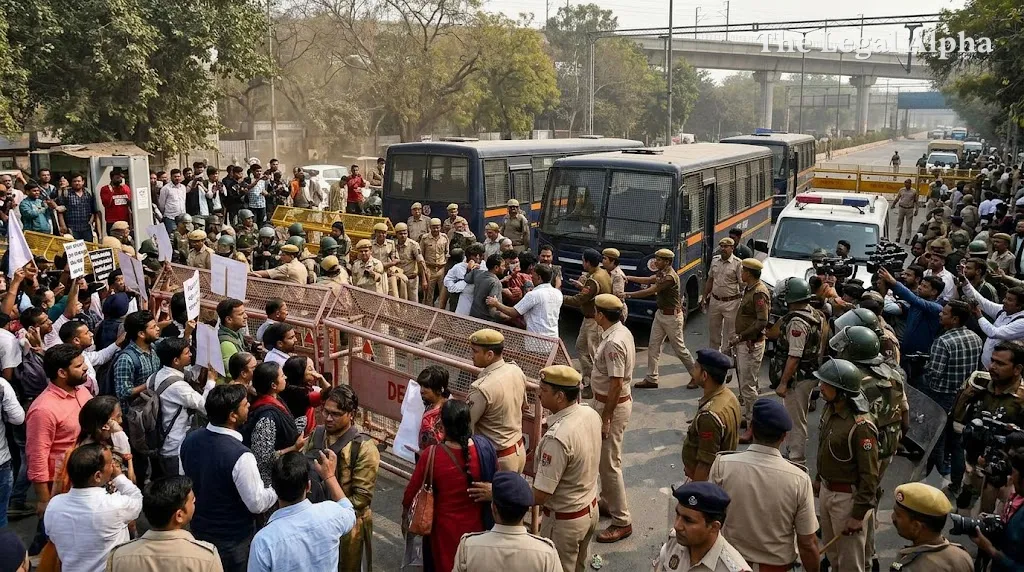
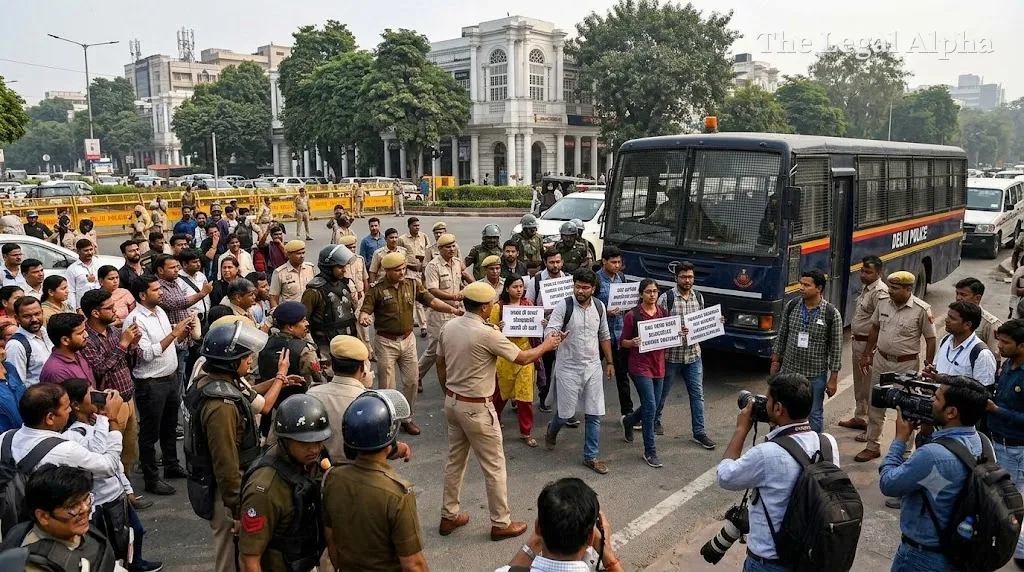
Delhi Police and law enforcement authorities initiated a sweeping security operation across the National Capital Region, detaining several political figures, activists, and prominent commentators to prevent a planned demonstration at Jantar Mantar. The protest, organized around demands concerning the Election Commission of India and the tenure of Chief Election Commissioner Gyanesh Kumar, saw widespread transit curbs and preemptive custody orders.
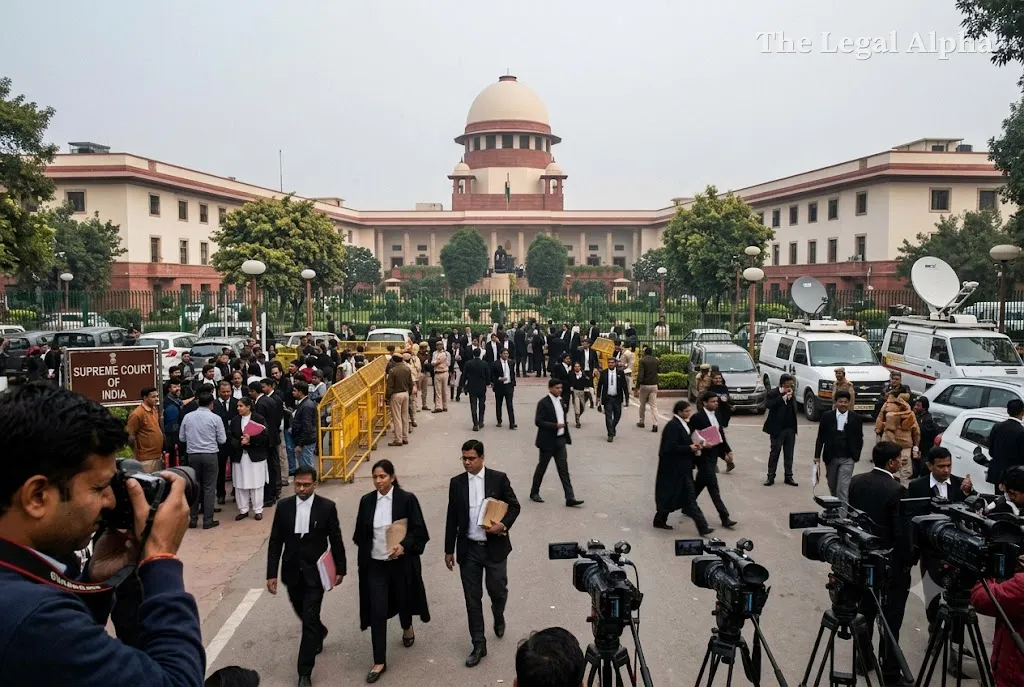
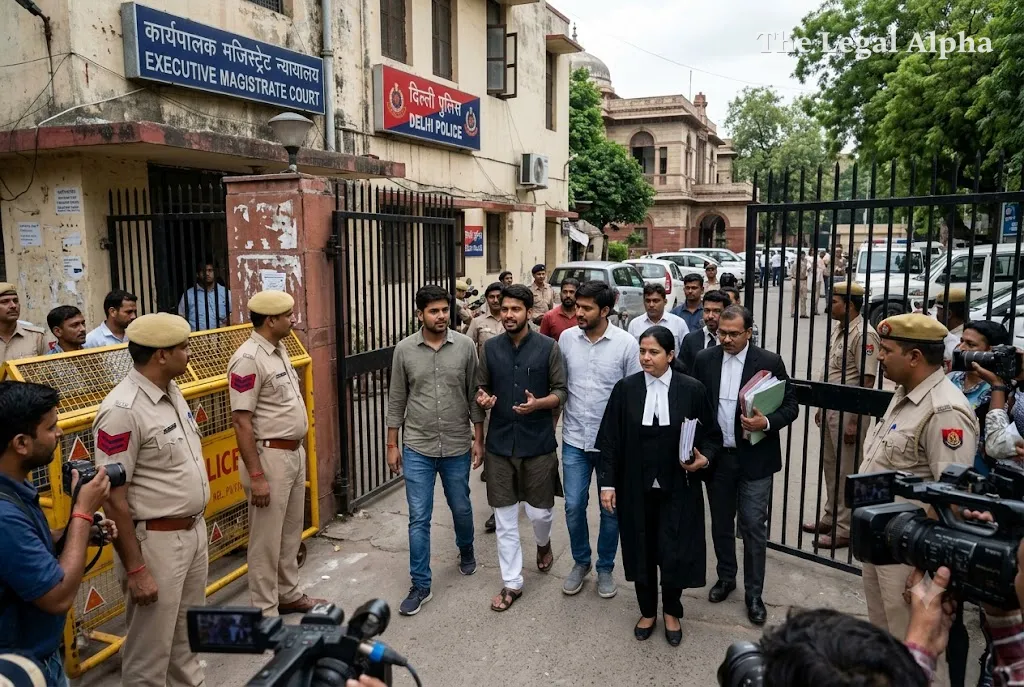
Key figures—including Cockroach Janta Party representatives Abhijeet Dipke, Saurav Das, and Ashutosh Ranka—were apprehended upon arrival at Delhi airport, while commentator Dhruv Rathee was detained from his Gurugram residence under preventive provisions. The detentions, accompanied by metro station closures and heavy barricading, swiftly prompted emergency legal challenges before both the Executive Magistrate and the Supreme Court of India over state overreach and the infringement of assembly rights.
Legal Topic
Area of Law: Constitutional Law / Criminal Procedure
Sub-topic: Preventive Detention and Fundamental Rights of Peaceful Assembly
Core Legal Issue
The controversy turns on the constitutional validity and proportionality of deploying preventive detention powers and public-order restrictions to suppress a planned public demonstration.
Specifically, the matter questions whether law enforcement can invoke preventive custody without establishing proximate, credible threats to public order, and whether blanket transit shutdowns and pre-emptive apprehensions impermissibly extinguish the fundamental freedoms of movement and peaceful assembly guaranteed under Articles 19 and 21 of the Constitution.
What Did the Court / Authority Decide?
The detained organizers—Abhijeet Dipke, Saurav Das, and Ashutosh Ranka—were produced before an Executive Magistrate at the Delhi Cantt Police Station, where they were released upon executing a personal bond undertaking to maintain peace. YouTuber Dhruv Rathee was separately released from custody after hours of administrative holding without formal charges.
Concurrently, a special bench of the Supreme Court intervened following urgent applications regarding transit shutdowns and detentions. The apex court directed authorities to avoid unlawful detentions of peaceful demonstrators and ordered the restoration of regular public transport services, emphasizing that security restrictions must satisfy the test of proportionality.
Key Legal Points
-
Doctrine of Proportionality: State action restricting mass movement and public assembly must not exceed the minimum necessary measures required to preserve public order.
-
Threshold for Preventive Custody: Preventive detention powers under criminal procedural statutes require tangible apprehension of cognizable offenses, rather than speculative or political disagreement.
-
Procedural Safeguards under Article 22: Individuals placed under administrative or preventive custody must be promptly informed of the grounds and afforded access to legal counsel.
-
Integrity of Designated Protest Spaces: Recognized civic venues such as Jantar Mantar cannot be rendered effectively inaccessible through preemptive transit blockades without cogent justification.
Relevant Law
-
Constitution of India: Article 19(1)(a) (Freedom of Speech and Expression), Article 19(1)(b) (Right to Assemble Peaceably), and Article 21 (Protection of Life and Personal Liberty).
-
Code of Criminal Procedure, 1973 / Bharatiya Nagarik Suraksha Sanhita, 2023: Provisions governing preventive arrests (Sections 107/151 CrPC; Sections 126/170 BNSS) and bond executions before Executive Magistrates.
-
Judicial Precedent: Anita Thakur v. Govt. of J&K (2016) and Mazdoor Kisan Shakti Sangathan v. Union of India (2018), affirming the right to peaceful protest in designated national zones subject only to reasonable, non-arbitrary statutory restrictions.
Arguments of the Parties
Petitioners and Detained Citizens Counsel for the organizers and demonstrators argued that the state executed an arbitrary pre-censorship of physical assembly by picking up individuals prior to any unlawful assembly or breach of peace. They submitted that denying access to legal counsel, impounding personal devices, and shutting down urban transit infrastructure violated fundamental liberties and amounted to constructive administrative coercion.
State and Law Enforcement Authorities The administration and police authorities contended that the measures were preventive interventions aimed at maintaining law and order in the heart of the national capital. They submitted that large unvetted gatherings at sensitive administrative sectors carry high risks of disruption and traffic paralysis, justifying precautionary detentions and venue access controls under statutory powers.
Why Does It Matter?
The events underline ongoing friction between administrative preventive powers and the constitutional right to dissent in public spaces. Blanket pre-emptive actions set a concerning standard when routine preventive detention mechanisms are used to preempt assembly before an event occurs.
For the legal system, the apex court's scrutiny reinforces that while law enforcement retains discretion to regulate public order, transit lockouts and pre-dawn detentions cannot bypass constitutional guardrails of reasonableness and fair procedure.
Legal Takeaway
Preventive detention is an exceptional administrative measure, not an instrument for preemptively suppressing peaceful political assemblies. State authorities must balance public order against core constitutional rights under Article 19, ensuring that any restraint imposed remains demonstrably proportionate and procedurally compliant.
Sources
Primary Source:
-
Supreme Court of India & Executive Magistrate Proceedings (Orders regarding public transport continuity and personal bond releases at Delhi Cantt Police Station)
Additional Sources:
-
Delhi Police Administrative Bulletins and Public Advisories
-
News coverage via The Hindu, Hindustan Times, and ETV Bharat (October 10–11, 2026)