Delhi Executive Magistrate Discharges Detained CJP Leaders on One-Year Peace Bond
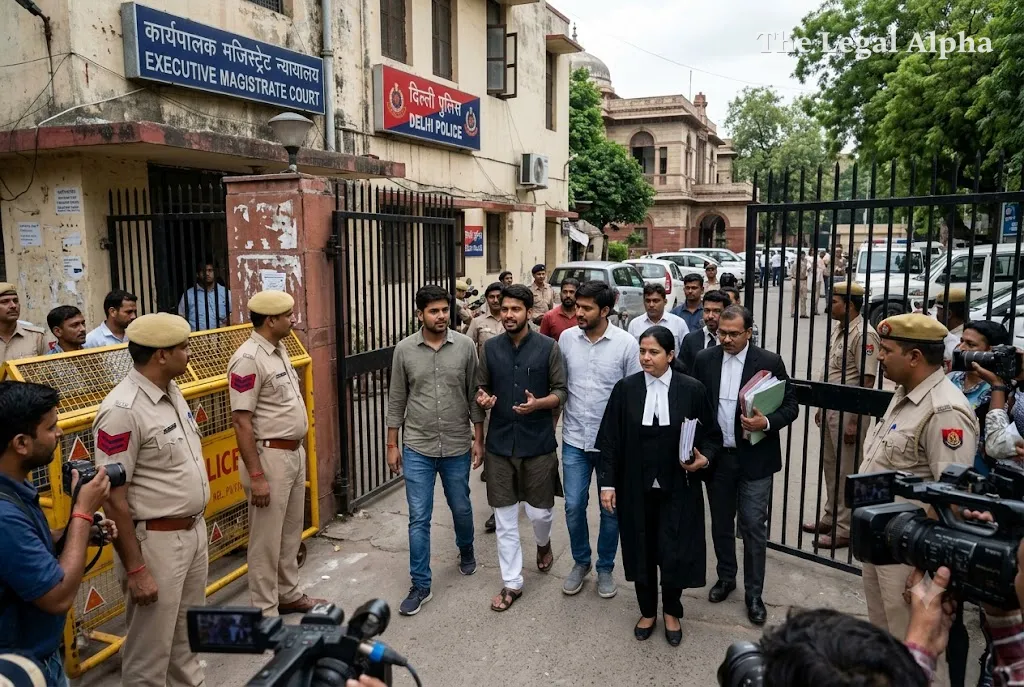
An Executive Magistrate in New Delhi ordered the release of Cockroach Janata Party (CJP) leaders Abhijeet Dipke, Saurav Das, and Ashutosh Ranka following their preventive detention by law enforcement. The three political leaders were intercepted and detained by Delhi Police inside their aircraft shortly after landing at the national capital’s airport ahead of a scheduled demonstration at Jantar Mantar.
Following their detention, the leaders were held at the Delhi Cantonment Police Station and produced before the Executive Magistrate within the mandatory statutory window of twenty-four hours. The magistrate directed their release subject to the execution of surety bonds ensuring the maintenance of peace and public order.
Legal Topic
Area of Law: Criminal Procedure and Preventive Justice
Sub-topic: Preventive Detention / Security for Keeping the Peace
Core Legal Issue
The proceeding examined whether law enforcement authorities could justify the ongoing detention of political organizers under preventive statutory mechanisms, and under what conditions an Executive Magistrate may direct their release to prevent imminent apprehension of public disorder.
Specifically, the inquiry centered on the balance between police powers to avert potential breaches of the peace during planned public protests and the procedural safeguards that govern pre-charge detentions.
What Did the Court / Authority Decide?
The Executive Magistrate ordered the immediate discharge of all three individuals from police custody, declining any further extension of detention.
To mitigate concerns regarding potential law and order disruptions, the release was conditioned upon each individual furnishing a bail and surety bond of Rs 50,000. Additionally, the magistrate bound the leaders to a formal undertaking that they will not engage in any activity that breaches public peace or tranquility for a period of one year.
Key Legal Points
-
Preventive custody under criminal procedural law cannot extend beyond twenty-four hours without judicial or magisterial sanction.
-
Section 151 of the erstwhile Code of Criminal Procedure (and its corresponding provision under Section 170 of the Bharatiya Nagarik Suraksha Sanhita) serves strictly as an anticipatory measure to forestall cognizable offences, not as punitive custody.
-
Magisterial proceedings under peace-keeping provisions require an objective assessment before requiring individuals to execute security bonds.
-
The imposition of a peace bond under Section 107 CrPC / Section 126 BNSS functions as a conditional release mechanism rather than a criminal conviction or penal sentence.
Relevant Law
-
Section 151, Code of Criminal Procedure, 1973 (corresponding to Section 170, Bharatiya Nagarik Suraksha Sanhita, 2023) — Arrest to prevent the commission of cognizable offences.
-
Section 107, Code of Criminal Procedure, 1973 (corresponding to Section 126, Bharatiya Nagarik Suraksha Sanhita, 2023) — Security for keeping the peace in other cases.
-
Article 21 and Article 22(2), Constitution of India — Protection of personal liberty and the mandatory requirement of production before a magistrate within twenty-four hours.
Arguments of the Parties
Detainees / CJP Representatives
Counsel representing the leaders argued that the detention was arbitrary and amounted to an unlawful curtailment of the fundamental right to peaceful protest. They contended that law enforcement had no actionable material demonstrating an imminent design to commit cognizable offences, and therefore continued detention was wholly unjustified.
Delhi Police / State
Police authorities submitted that preventive apprehension was necessary to preserve public peace and maintain order across sensitive zones in the capital. They maintained that unauthorized assembly and mass mobilizations posed potential security risks, justifying preventive intervention and the requirement of security bonds to deter future disruption.
Why Does It Matter?
This development highlights the statutory boundaries surrounding preventive policing during politically sensitive protests. While state authorities frequently deploy preventive detention provisions to manage demonstrations and prevent disruptions, the statutory framework ensures that the police cannot hold detainees indefinitely without executive oversight.
The order demonstrates the standard procedural off-ramp in such disputes: rather than permitting custodial confinement, executive authorities rely on peace bonds to preserve public tranquility while honoring the liberty safeguards embedded in procedural law.
Legal Takeaway
Preventive detention under Indian criminal procedure is strictly time-limited and designed to prevent imminent offences, not punish dissent. When individuals are detained prior to public assemblies, executive magistrates routinely balance public order concerns against personal liberty by releasing detainees upon security bonds for maintaining peace.
Sources
Primary Source: Order of the Executive Magistrate, Delhi Cantonment, dated October 11, 2026.
Additional Sources: Statements by legal representatives and Delhi Police records regarding proceedings under Sections 107/151 CrPC (Sections 126/170 BNSS).