Internet Blackout Around Kartavya Path Reaches Supreme Court
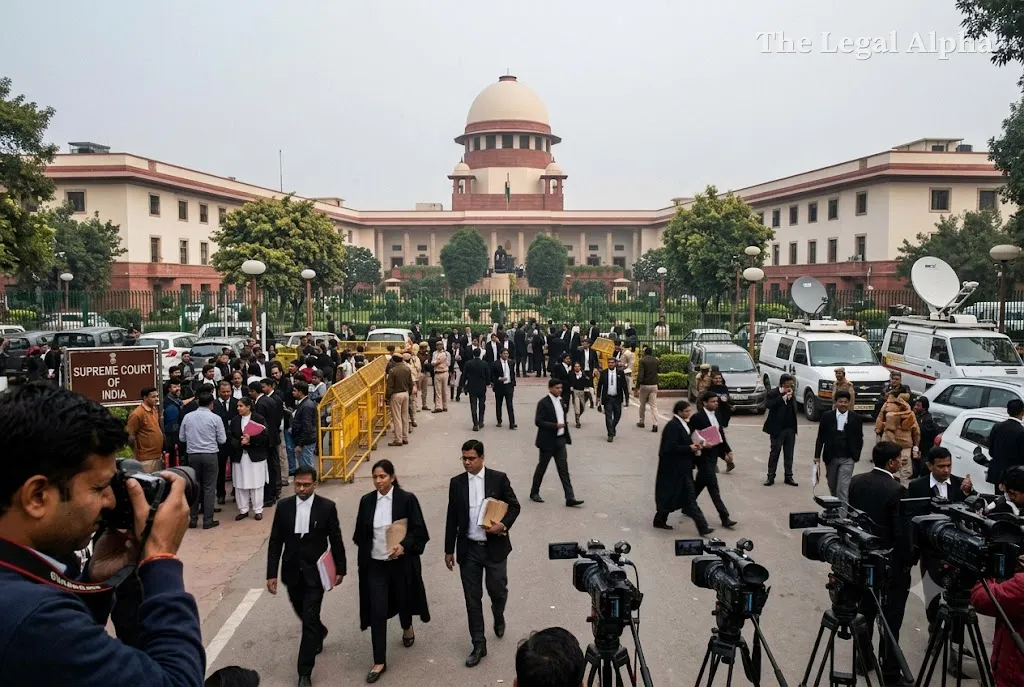
A public interest litigation has reached the Supreme Court challenging the Union Government's decision to suspend mobile internet connectivity in Central Delhi during demonstrations demanding the resignation of Chief Election Commissioner Gyanesh Kumar.
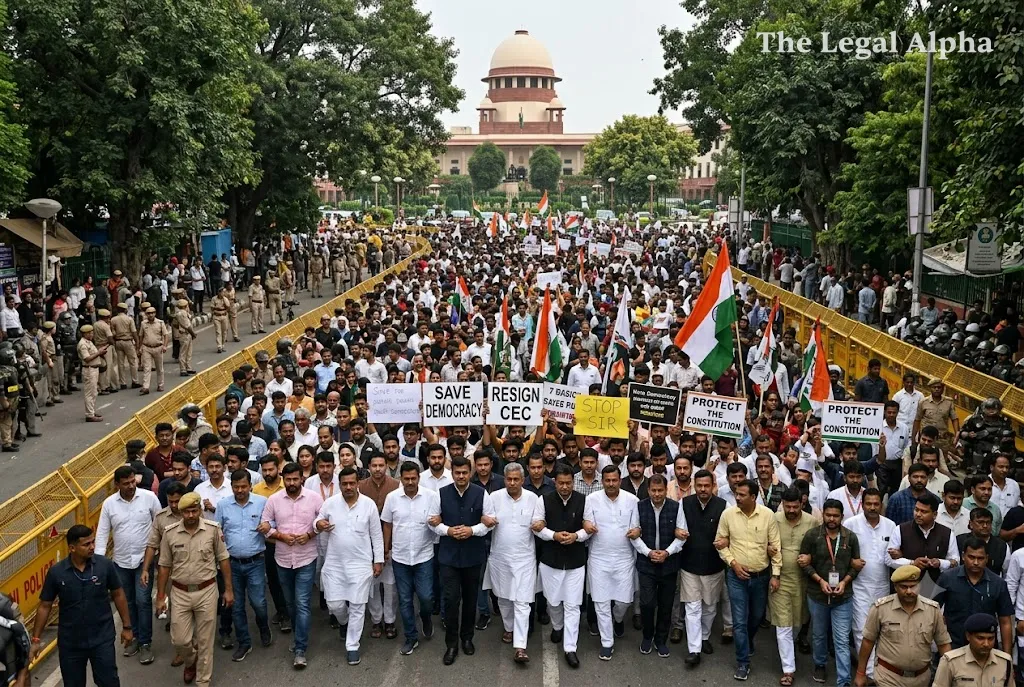
The Ministry of Home Affairs imposed a localized digital blackout covering a four-kilometer radius around the Janpath–Kartavya Path intersection. The shutdown took effect on the night of October 9 and continued through October 10 to preempt a planned protest demonstration at Jantar Mantar. The petitioner contends that shutting off internet access in the heart of the national capital was an excessive measure that disrupted daily life, suppressed lawful communication, and breached established constitutional benchmarks on proportionality.
Legal Topic
-
Area of Law: Constitutional Law & Administrative Law
-
Sub-topic: Fundamental Freedoms / Telecommunications Regulation / Judicial Review of Executive Orders
Core Legal Issue
The petition asks whether administrative authorities can deploy geographic telecommunications shutdowns as a routine preventive crowd-control mechanism without satisfying the strict proportionality test established by the Supreme Court.
Specifically, the Court is asked to assess whether temporary internet suspensions comply with the statutory threshold of "public emergency" or the imperative to prevent "public safety" risks, or whether blanket connectivity blackouts constitute an impermissible prior restraint on civil liberties.
What Did the Court Decide?
The Supreme Court entertained urgent applications surrounding the crackdown, asserting that life and personal liberty remain equally vital for all stakeholders, including citizens, protestors, and law enforcement.
While the apex bench has actively intervened on broader mobility curbs—directing that transit lifelines like the Delhi Metro and rail links cannot face a complete, blanket shutdown—the challenge to the internet suspension order has been placed under close judicial scrutiny. The Court has scheduled hearings to examine the legality of the administrative curbs and review whether authorities overstepped procedural boundaries.
Key Legal Points
-
Doctrine of Proportionality: The petition stresses that state authorities must pursue the least intrusive measures possible to maintain public order before resorting to total communication blackouts.
-
Constitutional Right to Access Information: Freedom of speech, trade, and occupation exercised over the internet enjoys constitutional protection under Part III of the Constitution.
-
Scrutiny of Administrative Necessity: The plea calls for judicial oversight into whether administrative authorities documented a genuine "public emergency" prior to issuing suspension directives.
-
Public Order vs. Law and Order: The petition highlights the legal boundary between local law enforcement challenges and broad systemic threats that genuinely justify emergency executive powers.
Relevant Law
-
Constitution of India: Article 19(1)(a) (freedom of speech and expression), Article 19(1)(g) (right to practice any profession, trade, or business), Article 21 (right to life and personal liberty), and Article 32 (remedies for enforcement of fundamental rights).
-
Indian Telegraph Act, 1885: Section 5(2) (power of the government to take possession of licensed telegraphs and order interception/suspension of communications during a public emergency).
-
Temporary Suspension of Telecom Services (Public Emergency or Public Safety) Rules, 2017: Statutory procedures governing the competent authority, necessity checks, and review committee oversight for communication blackouts.
-
Judicial Precedent: Anuradha Bhasin v. Union of India (2020), which affirmed that indefinite or disproportionate internet shutdowns are unconstitutional and required mandatory publication of all suspension orders.
Arguments of the Parties
The Petitioner The petitioner argued that suspending mobile data across an extensive central district disproportionately targets peaceful assembly and penalizes ordinary citizens, commuters, and local professionals. It was submitted that authorities failed to exhaust less intrusive policing measures and that such preemptive digital blockades run contrary to procedural safeguards laid down in the Anuradha Bhasin ruling.
The State and Law Enforcement The authorities contended that targeted, temporary curbs on mobile connectivity were necessary to prevent large-scale unauthorized mobilizations and avoid potential disruption in high-security administrative zones. The State maintained that the measures were temporary, localized within a defined perimeter, and strictly required to preserve public safety amid planned mass gatherings.
Why Does It Matter?
This legal challenge tests the boundaries of state authority in utilizing digital kill switches to manage civil protests in major metropolitan areas. Because contemporary commerce, transportation networks, and basic civic services rely heavily on digital communication, an internet suspension causes extensive economic and personal disruption extending well beyond active participants in a demonstration.
If the Supreme Court reinforces tighter compliance standards under the Telecom Suspension Rules, administrative bodies across the country will face a higher evidentiary burden before treating digital blackouts as an ordinary policing tactic.
Legal Takeaway
Government-mandated internet suspensions are exceptional emergency remedies, not ordinary tools for urban crowd management. Any suspension of telecommunication services must demonstrably satisfy the tests of necessity, proportionality, and procedural transparency under the Indian Telegraph Act and constitutional jurisprudence.
Sources
Primary Source:
-
Supreme Court of India: Record of Proceedings / Special Bench Mentions (October 9–11, 2026).
-
Ministry of Home Affairs: Order for Temporary Suspension of Telecom Services (Public Safety / Emergency), issued under the Indian Telegraph Act, 1885.
Additional Sources:
-
High-level reporting on public demonstrations, transit regulations, and Supreme Court filings from October 2026.