Delhi Police Detain Protesters and Journalists at Connaught Place and Press Club Despite Judicial Directives on Unlawful Restraint
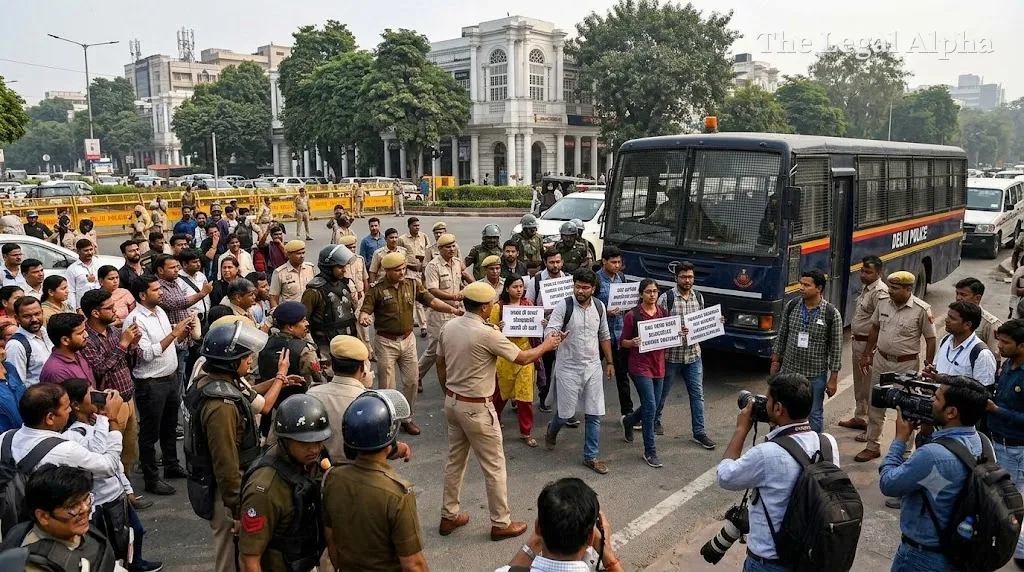
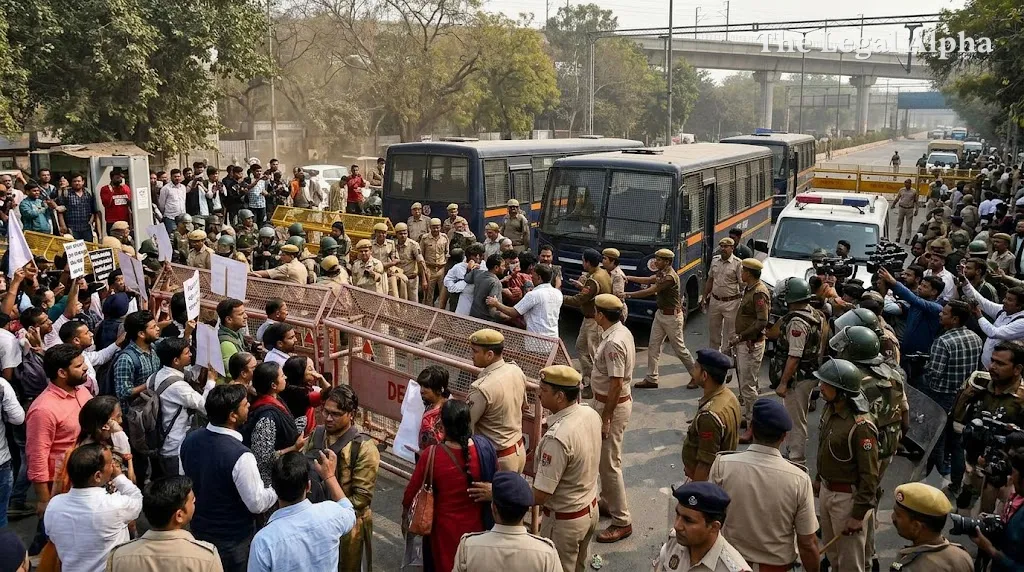
The Delhi Police rounded up and detained approximately one hundred individuals across central New Delhi, including Connaught Place, the Press Club of India, and RK Ashram Marg. The action was aimed at intercepting groups heading toward Jantar Mantar to participate in demonstrations demanding the resignation of Chief Election Commissioner Gyanesh Kumar over alleged electoral roll revisions.
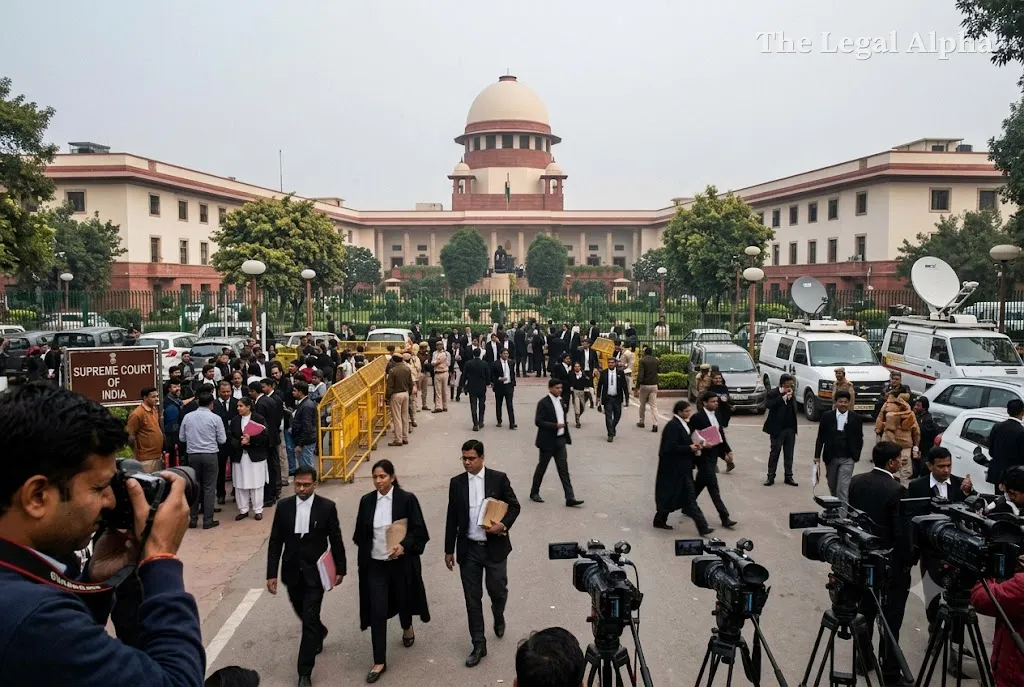
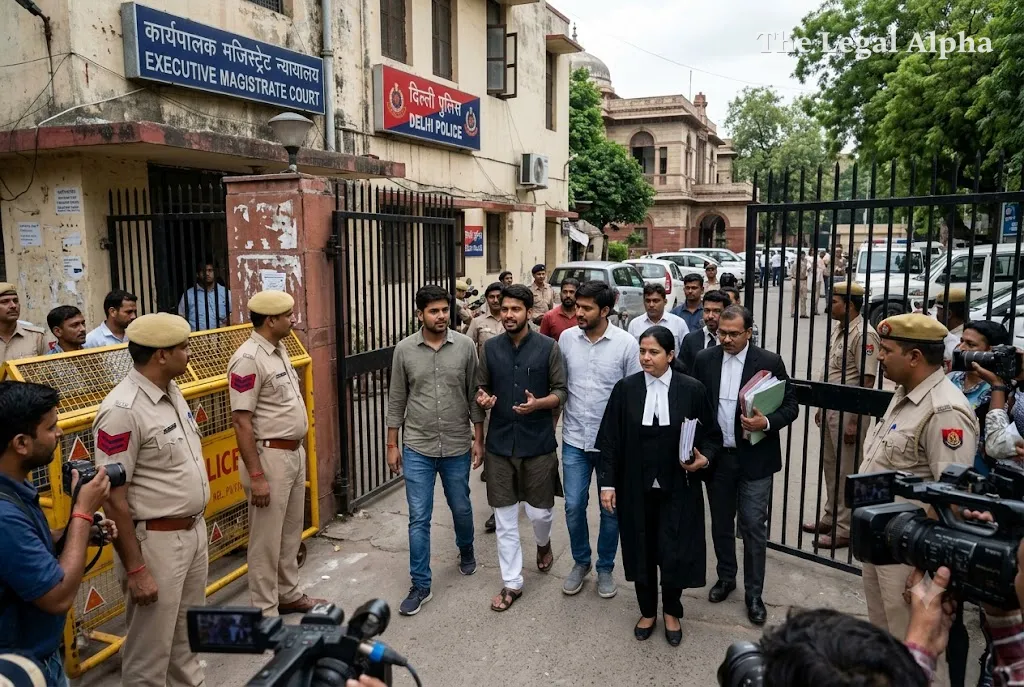
Among those placed into police custody were multiple working media professionals—comprising correspondents and video journalists from national print dailies and digital news platforms—alongside injured protesters and bystanders. The widespread detentions took place against the backdrop of earlier Supreme Court directions cautioning authorities against unlawful detentions and arbitrary restrictions on movement during public assemblies.
Legal Topic
Area of Law: Constitutional Law / Criminal Procedure
Sub-topic: Preventive Detention, Freedom of Assembly, and Press Freedom
Core Legal Issue
The principal legal issue concerns the permissible constitutional limits of preventive restraint and assembly control exercised by law enforcement authorities under criminal procedural statutes. Specifically, it tests whether executive authorities can deploy blanket preventive detentions and sweep in journalists and non-protesters without fulfilling the statutory prerequisites of imminent cognizable danger or individual subjective satisfaction, particularly in direct tension with judicial directives upholding fundamental freedoms.
What Did the Court / Authority Decide?
While the Supreme Court previously issued protective directions against arbitrary administrative roundups and curbs on essential travel and peaceful assembly, the police administration invoked general preventive powers under the Code of Criminal Procedure / Bharatiya Nagarik Suraksha Sanhita to secure transit hubs and the Jantar Mantar periphery.
The authorities rounded up individuals into police buses, transported them to multiple police stations, and subsequently released them after questioning, maintaining that the action was purely an administrative measure to prevent public disorder. The legality of this specific enforcement sweep and the alleged non-compliance with judicial safeguards remain subject to further scrutiny before appropriate judicial forums.
Key Legal Points
-
Preventive police custody without a formal arrest warrant is subject to strict statutory tests of reasonable apprehension of a cognizable offence rather than broad executive discretion.
-
Blanket curbs that restrict working journalists covering public demonstrations conflict with the freedom of the press implicitly protected under the freedom of speech and expression.
-
The exercise of police power to regulate protests must balance the maintenance of public order with constitutional rights guaranteeing peaceful assembly and free movement throughout the territory of India.
-
Administrative agencies are bound to adhere strictly to Supreme Court directives; any arbitrary use of preventive custody exposes the executing authorities to constitutional and procedural challenges.
Relevant Law
-
Article 19(1)(a), Constitution of India: Freedom of speech and expression, extending to press reporting.
-
Article 19(1)(b), Constitution of India: Right to assemble peaceably and without arms.
-
Article 19(1)(d), Constitution of India: Right to move freely throughout the territory of India.
-
Article 21, Constitution of India: Protection of life and personal liberty, safeguarding against arbitrary detention.
-
Sections 149–151 of the Code of Criminal Procedure (CrPC) / Sections 168–172 of the Bharatiya Nagarik Suraksha Sanhita (BNSS): Police powers regarding preventive arrest and interdiction of cognizable offences.
-
D.K. Basu v. State of West Bengal (1997): Supreme Court guidelines mandating transparent procedures and accountability during detentions and arrests.
Arguments of the Parties
Protesters, Journalists, and Civil Groups
Protesters contended that they were engaged in a peaceful public demonstration to question institutional conduct, an exercise protected under constitutional guarantees of assembly and speech. Legal representatives and media organisations argued that detaining accredited journalists reporting on public events constitutes an unconstitutional suppression of press freedom and flagrantly violates judicial orders against arbitrary detention.
Delhi Police and State Authorities
The police authorities maintained that the preemptive actions were necessary to preserve public peace, maintain law and order, and avert unauthorized blockades in high-security zones. Officials contended that the measures were preventive rather than punitive, aimed at regulating crowd density and ensuring security in sensitive administrative sectors of the capital.
Why Does It Matter?
This development highlights a recurring constitutional friction between executive public order enforcement and the exercise of civil liberties in high-profile administrative zones. By drawing working journalists and passersby into preventive net-sweeps, executive enforcement touches upon fundamental institutional boundaries:
-
It tests the threshold of judicial enforcement when administrative wings operate contrary to existing court guidelines on detentions.
-
It creates broader precedents for media protection, demonstrating how indiscriminate crowd-control tactics can chill independent reporting at protest sites.
-
It reinforces the need for clearly defined accountability mechanisms whenever preventive statutory powers are deployed against citizen assemblies.
Legal Takeaway
Preventive detention is an exceptional tool that requires objective, demonstrable apprehension of a cognizable offence, not a general instrument for protest management. Sweeping detentions that ensnare journalists and peaceful citizens risk overstepping statutory bounds and breaching judicial directives governing personal liberty.
Sources
Primary Source:
-
Supreme Court of India guidelines on arbitrary detention and unlawful restraint; Statutory provisions on preventive arrest under the CrPC / BNSS.
Additional Sources:
-
Report on police detentions in Central Delhi and Connaught Place, Hindustan Times (October 11, 2026).
-
Verified reporting on media and student detentions during Jantar Mantar protests, The Hindu and Scroll.in (October 2026).